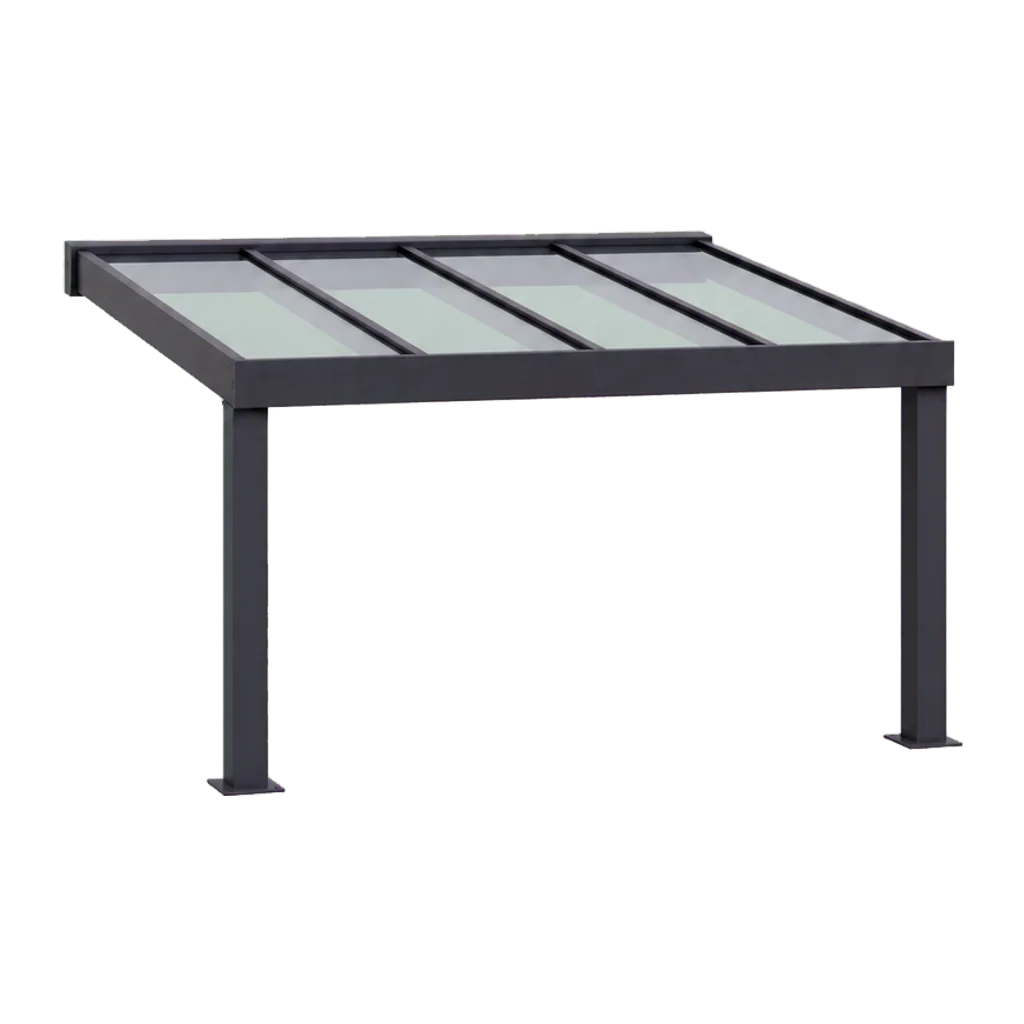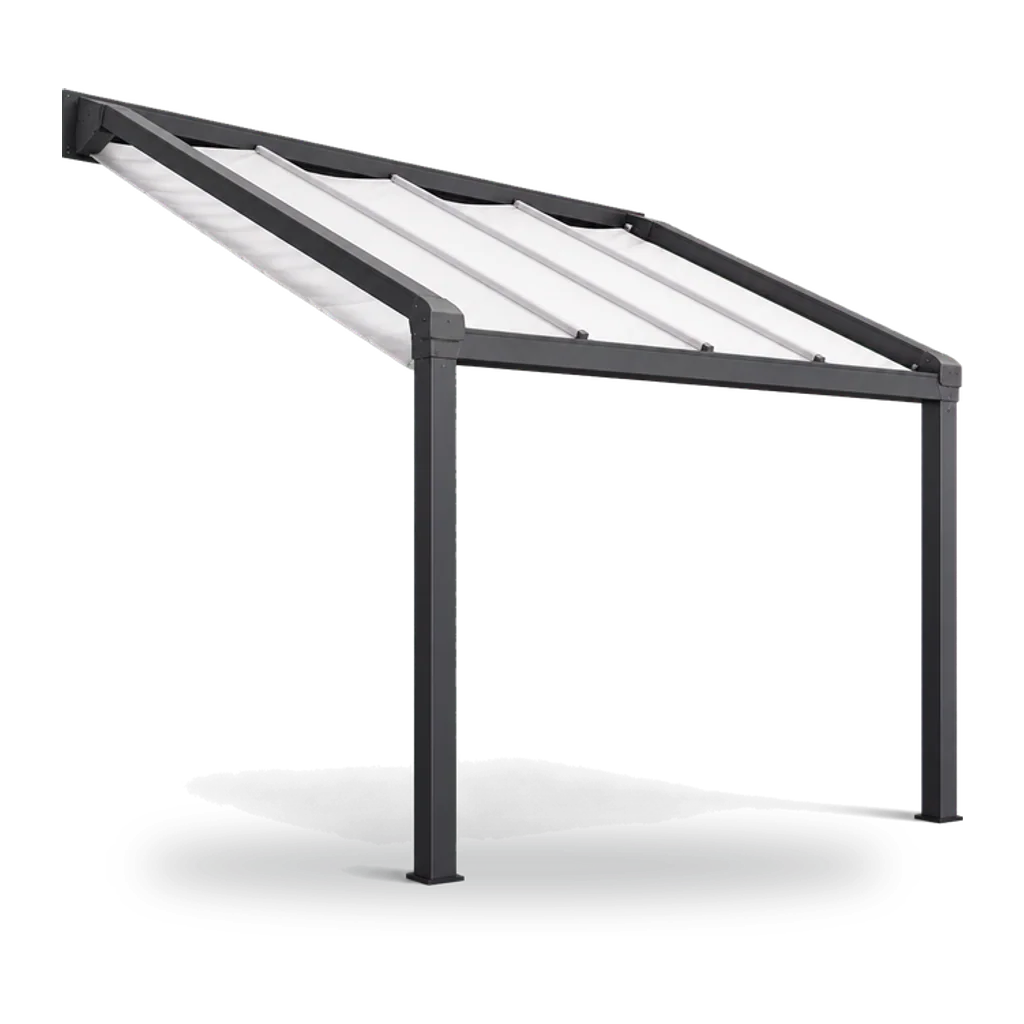

A buyer messages a veranda dealer a photo of their patio with a rough sketch drawn on top: a glass roof, anthracite frame, sized to fit between two existing walls. The message underneath reads, “something like this, what would it run us.”
There’s no price attached. There couldn’t be. The buyer sketched this on their phone, nothing they used knows what this dealer charges for a glass roof at that span, and nothing tells the dealer whether this particular inquiry is worth a callback today or next week. So the dealer does what most dealers still do: measures the sketch by eye, opens a spreadsheet, builds a quote by hand, and guesses at how serious the buyer is from the tone of the message. Two days later the quote goes out, and the buyer already has two other quotes from two other dealers, with no memory of which one moved fastest.
Verandas make this worse than most outdoor products, for one reason: the roof.
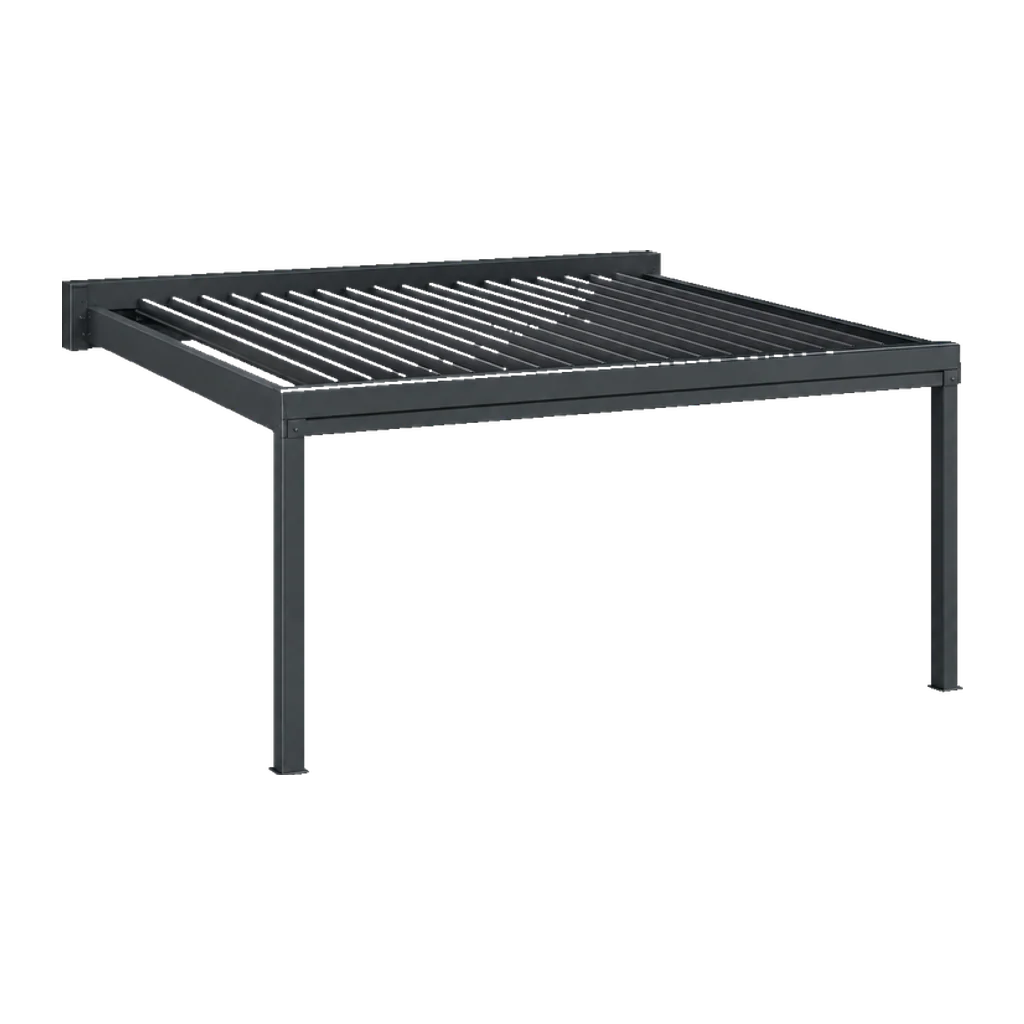
A pergola buyer picks a size and a finish. A veranda buyer is choosing what the space becomes. Glass turns it into a room that works in February and bakes in July without vents. Fabric is cheaper and moves in wind. Louvered opens and closes, and costs more than both. Those are not finishes. They are three different buildings at three different prices, and no photo of somebody else’s veranda answers which one belongs on your house.
That is the question a veranda configurator exists to answer.
The 3 jobs, and why the roof drives all of them#
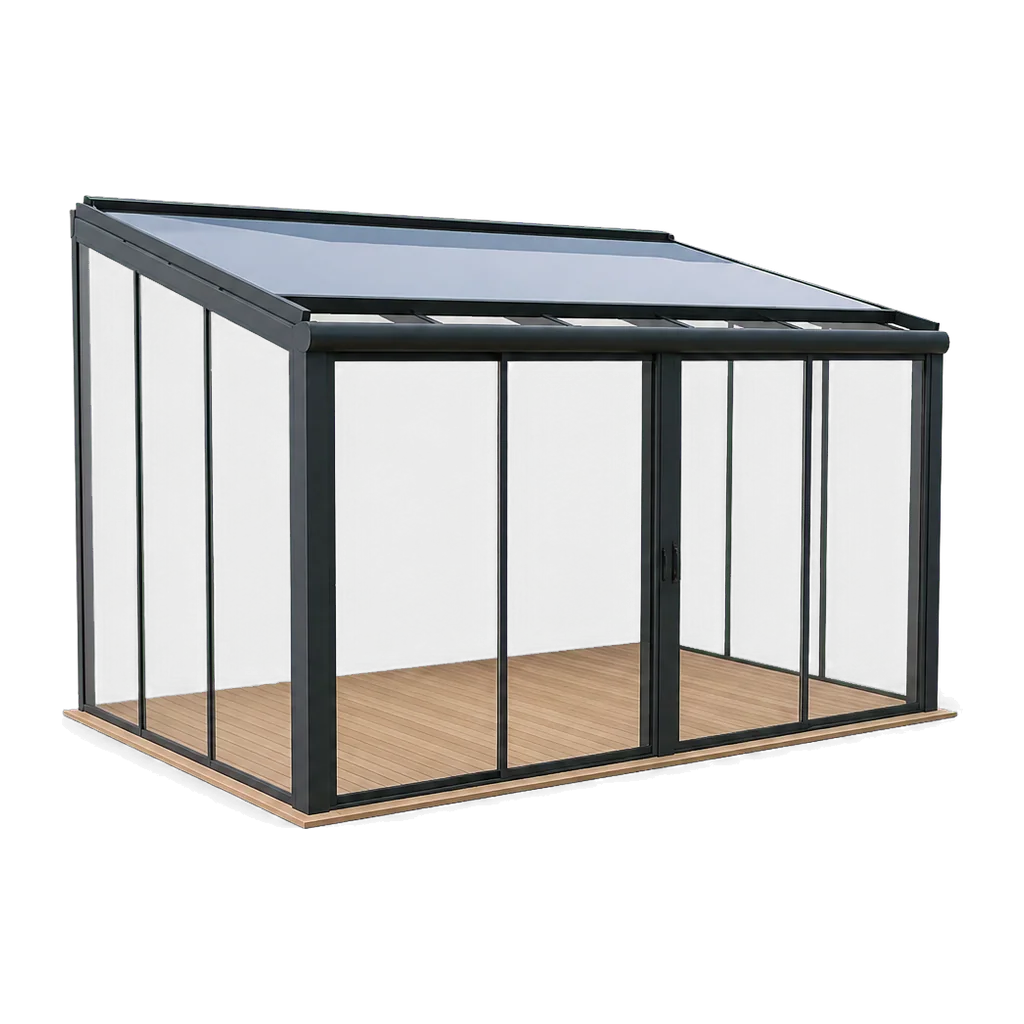
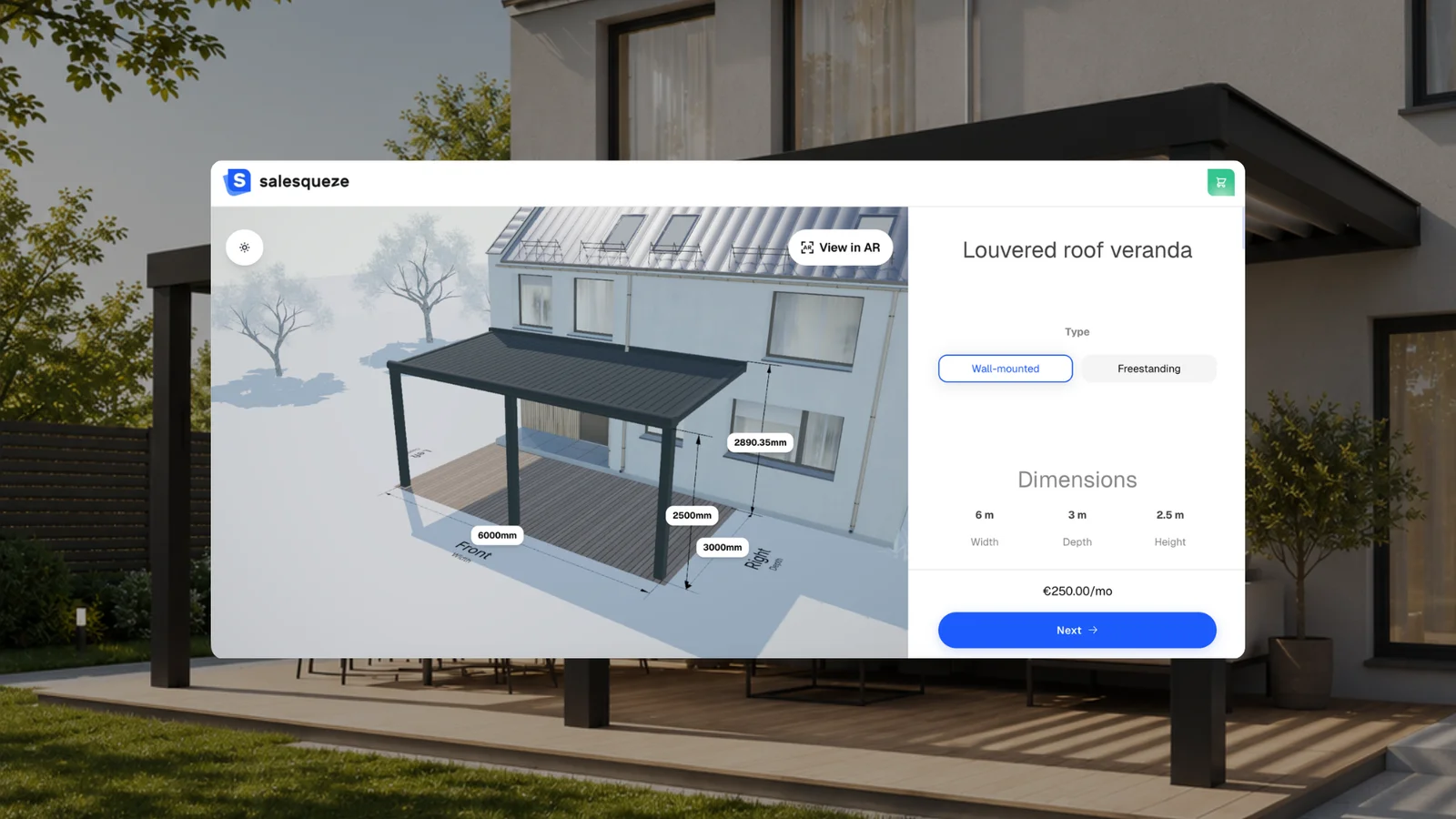
Seeing it. Glass roof, fabric roof or a louvered roof that opens. Fixed posts or a wall-mounted lean-to. Enclose the sides and it becomes a glass room instead. The buyer picks the roof and the frame colour, at their own size, against their own house, and the choice stops being abstract.
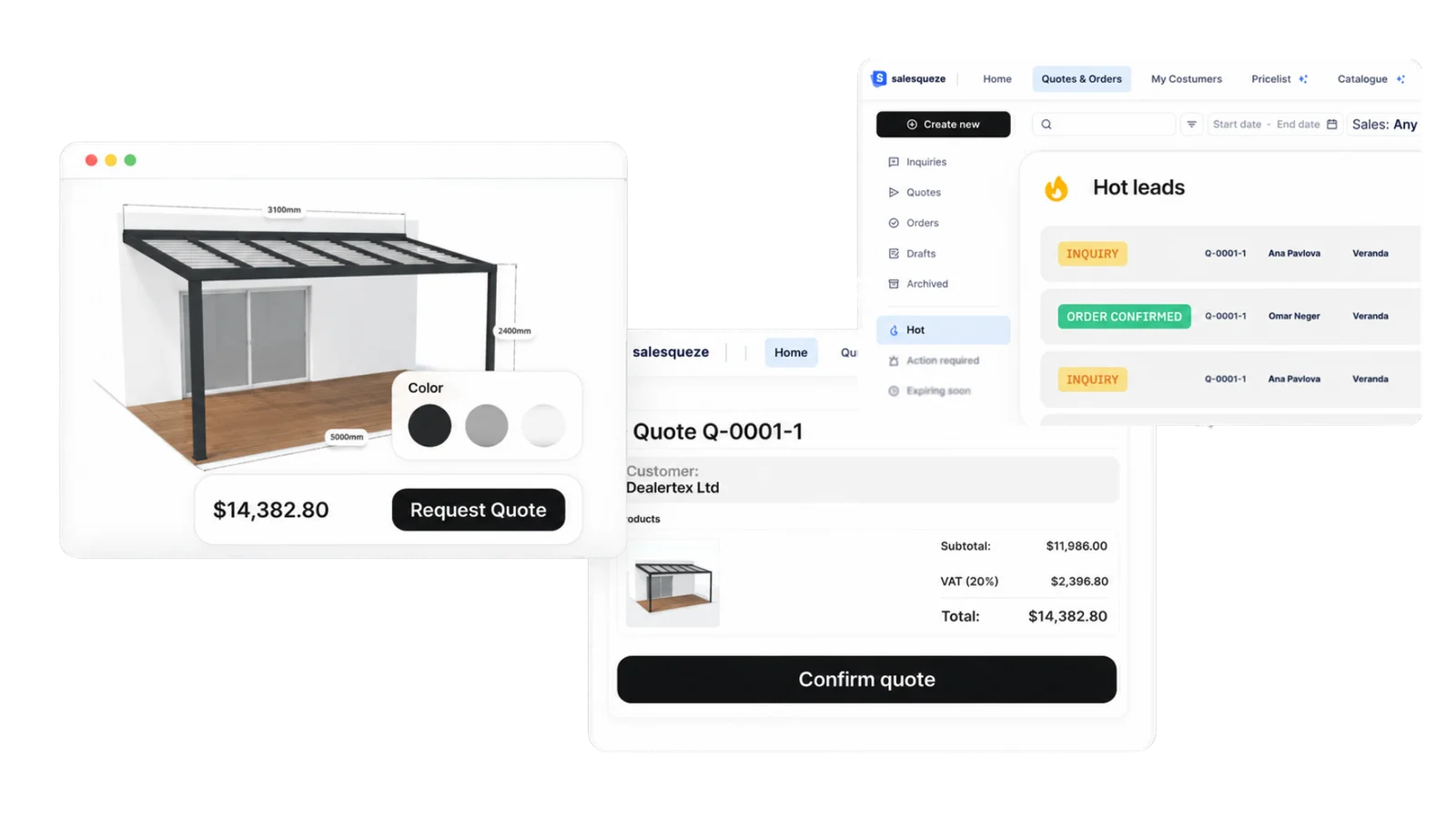
Pricing it. The roof choice is also the biggest single line in the quote, and it cascades. Glazing thickness changes the frame. Span changes the support. A motorised louvre changes the electrics. All of that has to resolve against the dealer’s real costs, not a brochure “from” figure.
Qualifying. A buyer who switched between glass and louvered four times and still submitted is weighing a real upgrade. One who picked the cheapest fabric option in 20 seconds is doing something else. Those signals arrive on their own, without anyone asking a qualifying question.
Skip any one and the tool is doing a third of the job.
See it working: build a glass roof veranda and watch the price move as the roof changes.
Where a picture-only tool leaves you stuck#
This stays invisible until an inquiry lands.
No real pricing. Any number it shows is a rough “from” figure with no link to your costs, region or margin. So it guesses, or it skips the price and leaves that conversation for later.
No rules. Which span needs extra support. Which glazing thickness the frame carries. Which motor fits which width. A picture tool renders whatever it is asked for, including a build that fails on install day. On a veranda that is not cosmetic. A glass roof at the wrong span is a structural problem.
No read on the buyer. A screenshot looks identical whether it took 20 minutes or 15 seconds. Every inquiry gets the same priority, and the morning goes on guesswork. See how other sellers closed that gap in the customer stories.
- 174 inquiries in 30 days One UK veranda dealer, after moving from static renders and manual quotes to a configurator that prices and flags serious buyers on its own.
- 5-8% industry close rate Typical for outdoor living sellers who are still quoting verandas from photos and a spreadsheet.
- 10-20% close rate with a configurator Sellers working priced, pre-qualified leads instead of a cold screenshot commonly land here.
- 80% unqualified inquiries Typical share of inbound leads that turn out to be browsers, not buyers, when nothing sorts them first.
Three tells that you need all of it#
- 01
Buyers ask you to compare roof types over the phone
Describing glass against louvered in words is the conversation a configurator removes. If reps are doing it daily, the website is not answering the main question.
- 02
Every design still needs a manual price
Retyping a roof type, a span and a glazing choice into a spreadsheet is manual work no matter how good the sketch was.
- 03
Every inquiry looks the same in the inbox
Without engagement signals on each design, there is no way to tell 15 minutes of configuring from 15 seconds of curiosity.
The one real exception is a business with no web traffic and no inquiries to sort. Getting seen matters more first. Past that point, all three jobs are needed now, not scheduled as an upgrade.
The line to take home#
The roof is the decision. Everything else on a veranda (frame colour, size, screens) is a preference the buyer settles quickly.
A picture-only tool shows all three roofs and prices none of them, so the buyer still cannot tell whether the glass version is 3,000 more or 12,000 more. That number is what decides the sale, and it is the one thing the sketch never carries.
The named numbers sit in the customer stories, next to the sellers who logged them.