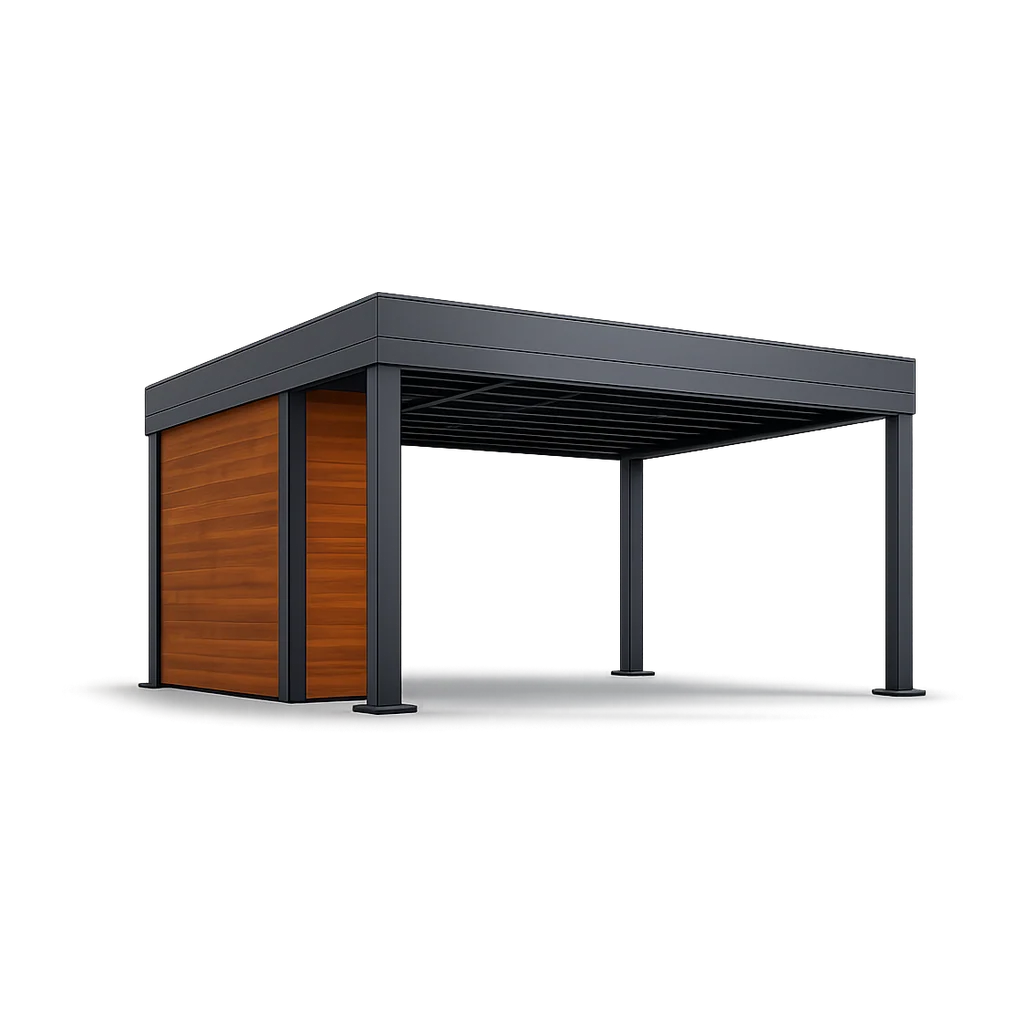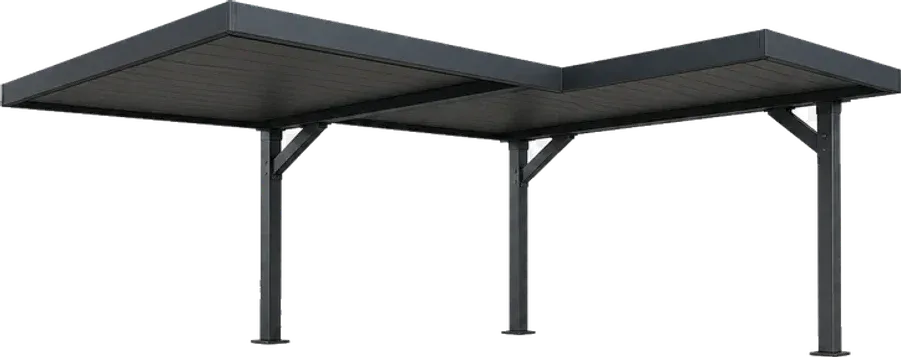

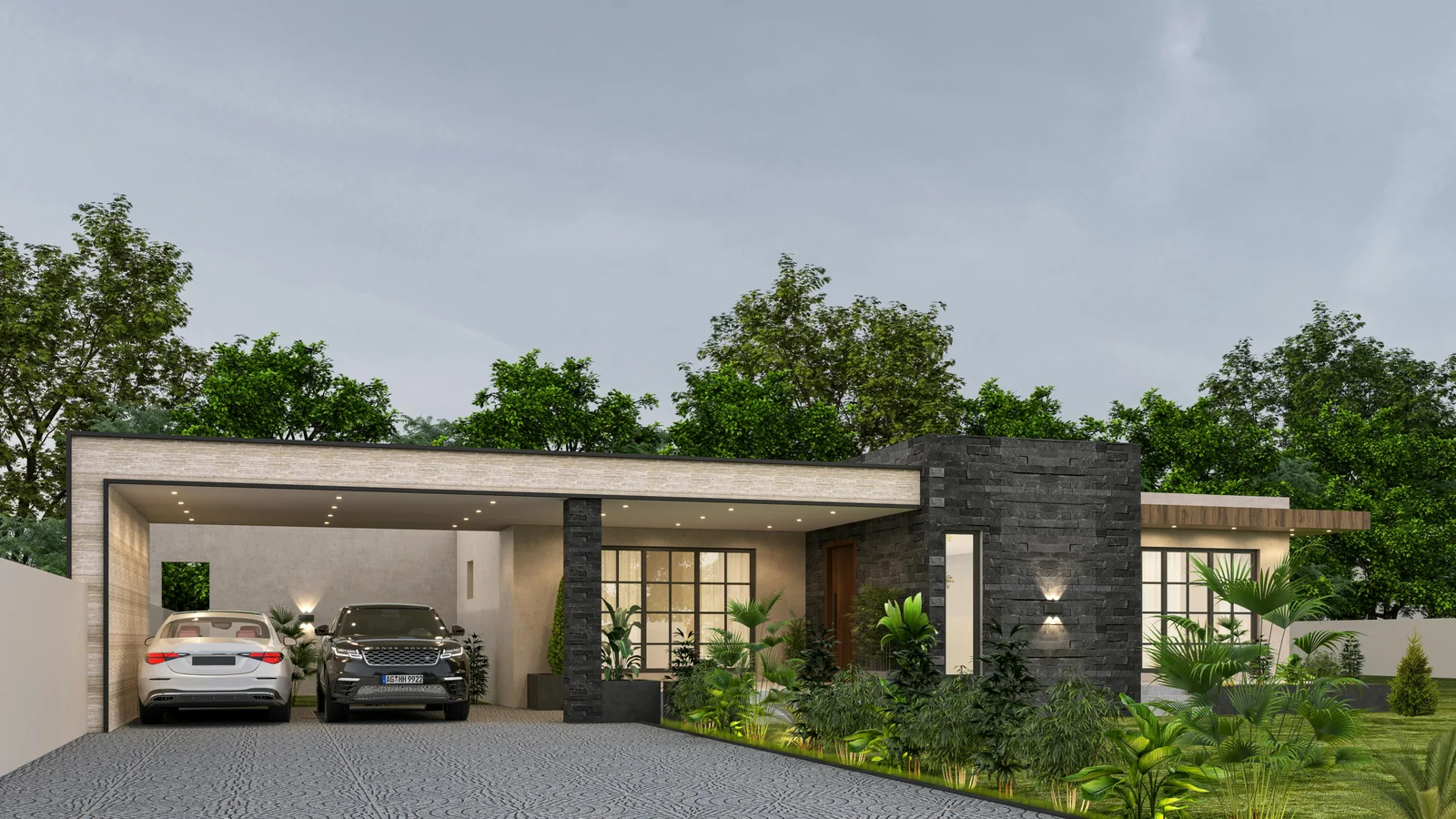
A carport design tool is a 3D configurator that lets a buyer build their own carport on screen: span, bay count, roof type, material, colour, car count. The carport draws itself, a real price sits under the model, and a designed PDF lands before they close the tab.
What it replaces is one of the cleanest broken sales loops in outdoor living. Buyer fills a form Tuesday. Dealer calls Wednesday to ask size and car count. Dealer drives out Friday to measure the driveway. Sketch and bracket-span lookup Monday, BOM email to the factory Tuesday, revised quote Thursday, email to the buyer Friday. By the time they read it, the carport has either been quoted twice by faster competitors, or the buyer has gone quiet.
The category cousin in B2B is CPQ, historically internal software for a sales rep. A carport design tool is the same job on the public website, run by the buyer, on a phone, at 9pm on a Sunday.
Why the carport buyer journey is the cleanest case for speed-to-quote#
Most outdoor living products carry a long option tree. A pergola has six finishes, four roof types, screens, lighting, heaters. A garden room adds insulation, glazing, partitions, electrics. A carport, by contrast, is short: span, bay count, roof type, material, and car count cover almost everything. A buyer who picks a double-bay aluminium carport with a flat roof has already given the dealer 80 percent of the spec.
Which means the math is not the bottleneck. The lookup tables exist, the factory has made the same five bay widths for ten years. The reason a carport quote takes three hours is the round trip between buyer and seller, repeated four or five times, with a forty-eight-hour wait on every leg. A carport design tool removes the round trip: the buyer makes the five choices in one sitting, the price computes against the same tables the dealer used to type by hand, the PDF lands.
What the buyer sees on screen#
A good carport configurator has three blocks and nothing else. In the centre, the 3D model with the buyer’s chosen cars parked underneath, so they can judge the shelter and the look on their own driveway in one glance. On the side, a short panel: span, bays, roof type, material, colour, accessories, six rows and no tabs. Under the model, one price, big, updated live the moment anything changes. At the bottom, one button: send me the quote.
The moment they see the cars under the structure with the price underneath, a carport stops feeling like a kitchen-table renovation and starts feeling like buying a car. Pick the trim, see the price, submit. That frame change is doing as much work as the speed change. Speed is why the buyer does not walk to a competitor; the frame is why they commit at all.
What changes about the dealer’s week#
Before, Monday opens with twelve contact-form lines: “interested in a carport for two cars, please call.” The dealer spends the morning asking what size and where. Three do not answer, two are price shopping, and by Thursday two of the four quoted have signed with a faster competitor.
After, Monday opens with twelve configured PDFs, each showing the carport the buyer built, spec and price already in the CRM. The dealer can see who spent four minutes configuring and submitted versus who bailed after swapping the roof six times. The first call is shorter and more often ends in a measure booking.
3D carport configurator saves us 15 minutes per quote. We’ve seen results like 40 percent increase in sales and almost 5x more leads.
The named numbers sit in the Armat case study: a thirty-year-old Slovenian carport manufacturer that was losing Friday-evening inquiries to Monday-morning replies. Result: +40 percent revenue in three months, 1,873 inquiries worth €12.3M in four months, 478 percent more quotes, no new sales hires.
- +40% Revenue in 3 months Armat (Slovenia, carports); no new sales hires.
- €12.3M Inquiry value Across four months of configurator-driven leads at Armat.
- 478% More quotes generated Armat: configurator vs the prior manual quoting baseline.
- 15 min Saved per inquiry Redirected from desk-time quoting into field selling.
Numbers from the live Armat case study.
How a carport buyer behaves in a configurator#
Most buyers change three to five settings before submitting, roof type most often, then material. Span and bay count usually get set once, since the buyer has already measured the driveway in their head. More than half of sessions run on mobile, and if the scene takes more than five seconds to render, the session ends inside the first ten. About 90 to 95 percent of buyers who submit pick a build already in the dealer’s standard catalogue, so shipping the standard catalogue first covers nearly everyone. The live configurator gallery shows what that standard catalogue looks like in production.
When a carport design tool is not the answer#
The residential carport market across the EU and UK typically runs €4,000 to €18,000 per build. At that ticket, one or two extra closed carports a month pays for the configurator, and the payback period sits inside the first quarter for most dealers.
What “live in 1 day” covers for a carport tool#
Day 1, the configurator is live with the dealer’s catalogue and base pricing, embedded with a small snippet, and the buyer can already configure, submit, and receive a priced PDF. Across week 1, the team tunes pricing to real cost rules and regional modifiers, brands the PDF, wires the CRM handoff, and fires ad-network events. By month 1, the reporting panel shows which ads and dealer locations produce the highest-intent configurations. A vendor quoting months for the same outcome is quoting a custom build of a category that already exists.
Monday’s inbox stops being a stack of contact-form callbacks and starts being a stack of priced quotes the dealer can act on before lunchtime. That is the whole shift.
People also ask.
What is a carport design tool?
A 3D configurator on a carport dealer's website where the buyer picks span, bays, roof type, material, and car count, sees it render, and gets a priced PDF on submit. It does in 60 seconds what the dealer used to do across three hours and four emails.
How long does the manual carport quote loop really take?
For most dealers, 3 to 8 hours of human time spread across 5 to 10 working days: site visit, hand sketch, table lookup, BOM email from the factory, revised quote, follow-up call. A carport design tool moves the whole spec to the buyer's browser and the priced PDF lands before they leave the page.
Why does carport configuration work so well compared to other outdoor products?
Because the spec is short. Span, bay count, roof type, material, and car count get you 90 percent of the way to a finished carport. Pergolas and garden rooms carry far more screens, finishes, and accessories.
How fast can a premade carport configurator go live?
1 to 10 days for a known catalogue. Generic 3D vendors that have not built a carport before usually quote 3 to 6 months, because they need to model the spans, posts, and roof systems from scratch.
What integrates with a carport design tool?
At minimum, a CRM, Meta and Google Ads (so paid campaigns optimise against real configurations instead of contact-form clicks), and the dealer's PDF template. Production handoff, a BOM to the factory, is the next layer for dealers who manufacture in-house.