

Blog visual selling

Pergola configurators: 5 buckets, 5 price points, 5 failure modes

When a pergola seller goes shopping for a configurator, the shortlist always lands in the same 5 buckets. Here is what each one is for, what each one costs, and the specific way each one tends to fall over once a real buyer touches it.

A workbench in a workshop with a wide selection of hand tools laid out together, used as a metaphor for evaluating different configurator tools side by side.

The first time a pergola seller goes shopping for a configurator, the search history reads like a wide open field. By the second week, the shortlist always collapses into the same five buckets. The names rotate. The categories do not.

This post covers what those five buckets really are, what each one is for, and the specific way each one tends to fall over once a real buyer touches it. There is no ranked list at the end. The right pick depends on what you sell and how many buyers visit your website in a week. The wrong pick is almost always a category mismatch.

A short note on what we mean by configurator. A pergola configurator is the tool on your website that lets a buyer design a pergola in 3D, see a real price, and receive a designed PDF before they pick up the phone. Four jobs: render, apply the configuration rules, price the build, hand the spec to your CRM. We covered this in more depth in the pergola configurator guide, which is the companion read.

1. Premade pergola vendors#

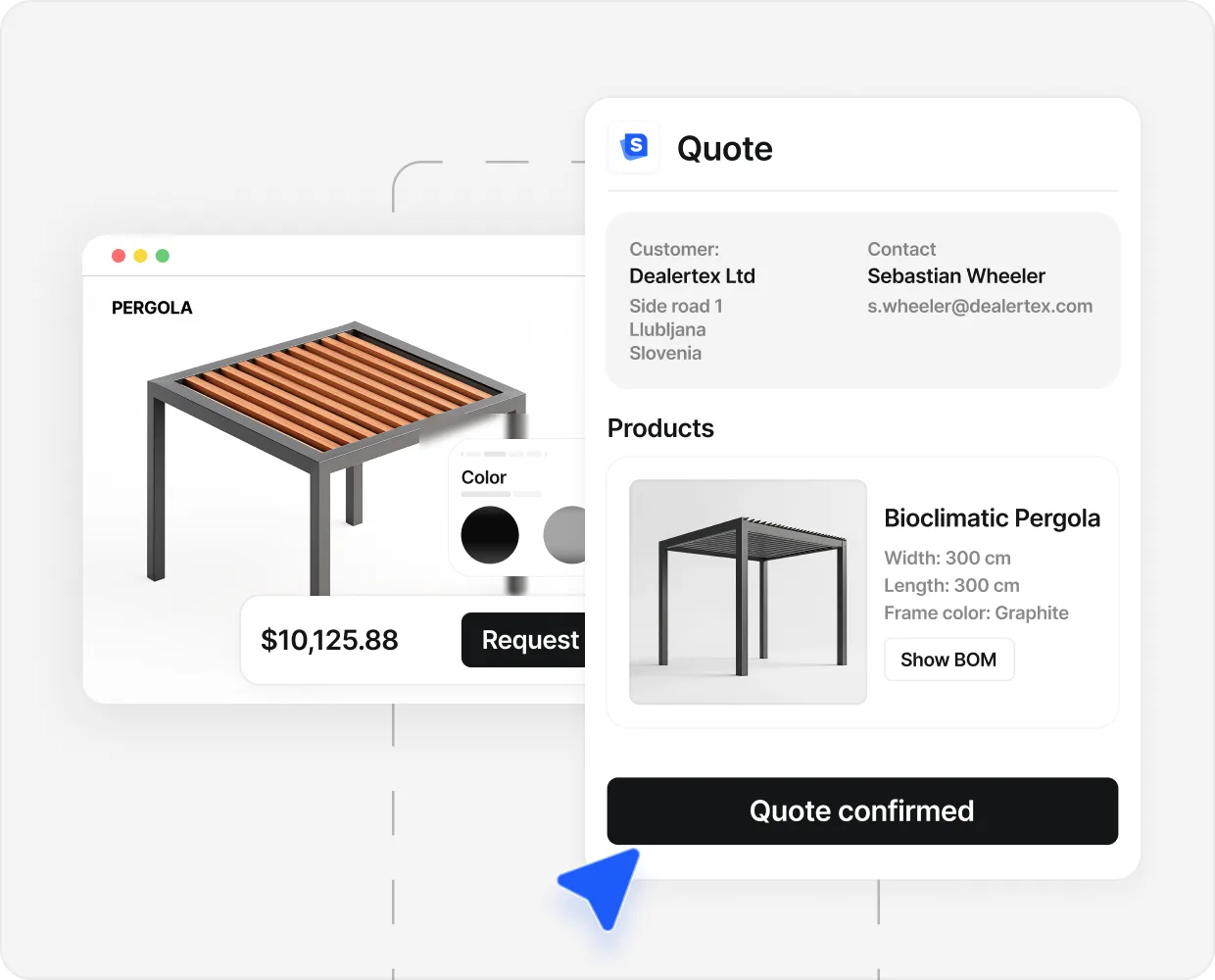
The first bucket is the one most pergola sellers eventually land in. A vendor that has already built pergola models, post systems, roof types, finishes, and a rule library, and sells that template as a monthly subscription with your branding on top. Live in 1 to 10 days, on your domain, with the priced PDF and the CRM handoff included.

What it is for. The standard pergola seller. Aluminium louvered, wooden, freestanding or wall-mounted, in the 8,000 to 35,000 euro range, with a real website that already gets traffic. The product line is recognisable. The configuration rules are 90 percent the same as every other seller in the category, with the last 10 percent being your specific finishes, accessories, and pricing.

By Monday morning, 40 percent of our inquiries already came in as configured 3D quotes. The first conversation was different from day one.

Stuart Dantzic, Caribbean Blinds (UK)

Where it breaks. If your product genuinely does not look like a standard pergola. If every build starts from a fresh structural sketch. If you sell a category the vendor does not cover. The premade promise depends entirely on whether the vendor already has the work done for your category. Ask for three reference customers in your exact product line, not in adjacent ones.

2. Custom freelance builds#

The second bucket is the freelancer or studio build. You hire a 3D developer or a small studio, they build a configurator from scratch around your product, and you own the code at the end of it. Typical price 30,000 to 60,000 dollars, typical timeline 3 to 6 months, typical second year is where the trouble starts.

What it is for. Genuinely one-of-a-kind product lines. The pergola seller doing something the premade vendors do not cover. The brand that wants the configurator as a piece of differentiated IP, not as software. The team that has an internal developer who can take the project over once the freelancer is gone.

Where it breaks. Year two. The freelancer ships in month four, hands you the code, and moves on to the next client. In month nine you change a finish or add an accessory and the small change becomes a quote you cannot get answered. The other risk is the rule library. A freelancer can render a pergola in three weeks. Encoding the 200 small rules that prevent the buyer from speccing a 5-metre louvered roof on the wrong post system takes three months and a real engineer. Most freelance builds skip that work and quietly leave it to your sales rep to clean up after the buyer.

3. Generic 3D configurator platforms#

The third bucket is the big horizontal player. Threekit, Configurix, the vendors that sell a 3D configurator engine across cars, furniture, sneakers, jewellery, modular kitchens, and anything else with a SKU. Enterprise pricing, enterprise sales cycle, enterprise dashboard. We wrote a longer head-to-head on this in SaleSqueze vs Configurix.

What it is for. Large enterprises with a dedicated configurator team, a configurator budget that does not flinch at 50,000 euros of setup, and a need to render dozens of unrelated product lines on one engine. If you sell pergolas and verandas and outdoor kitchens and indoor furniture and you want one tool for all of it, this category exists for you.

Where it breaks. They can render anything, which is the actual problem. A generic platform with no pergola template has to learn what a louvered roof is, how it behaves at 4.5 metres, which post is allowed with which screen colour, which dealer in which region sells which finish. You pay for that learning curve in setup hours and elapsed time. By the time the configurator goes live, the spring season has come and gone. The single-vertical seller almost always comes out ahead on a tool that already knows the category.

4. Drawing and planning tools#

The fourth bucket is the one that confuses the search results the most. SketchList, the Simpson Strong-Tie planner, SketchUp templates, Cedreo for exteriors. Desktop tools, usually a one-off licence in the hundreds of dollars, designed for a craftsman in a workshop sketching a pergola on a Tuesday afternoon.

What it is for. Sketching. Planning. Producing a clean drawing to print and walk into a site visit with. They are excellent for what they are. A workshop tool for a person who already knows what they are building.

Where it breaks. The moment you put one in front of a buyer. They run on a desktop, not a phone, and most of your traffic is on a phone. They do not capture a lead. They do not price the build at your real margin. They do not generate a designed PDF that lands in the buyer’s inbox with your brochure layout on it. They do not hand the spec to your CRM. They are not configurators in the four-jobs sense. They are excellent drawing tools the marketing pages occasionally try to dress up as configurators because the search volume is there. Use them on your side of the wall, not the buyer’s side. The full split between designer-facing and buyer-facing pergola design software is its own breakdown.

5. DIY website plugins#

The fifth bucket is the WordPress or Shopify plugin. A small 3D viewer that drops onto your site, costs a few tens of dollars a month or comes free with a theme, and lets the buyer rotate a model and pick a colour.

What it is for. The seller with one product, one finish, one size, and a thin pricing model. The hobbyist build. The Etsy-grade product page where the buyer is essentially picking a paint colour, not configuring a structure. There is a real use case for plugins. It is small.

Where it breaks. Everywhere a pergola does. A pergola is not a colour swap. It is a 12 to 20 variable build with rules between every variable and a price that depends on regional installation modifiers. A plugin gives you a 3D viewer with no rule library, no pricing engine that matches your real cost model, and no CRM handoff. The first ten buyers spec impossible builds. The eleventh emails to ask why the build cost is wrong. By month two the sales rep is back to quoting manually, but now with a 3D viewer the marketing site quietly forgot to switch off.

How to pick#

The buying decision is not “which of these five is best.” It is “which of these five matches the product I sell and the traffic I get.”

Three honest tests.

One. Do you sell a recognisable standard. If 80 percent of your buyers pick a configuration that looks like every other louvered pergola sold in the category, you belong in bucket one. The premade vendor has already done 80 percent of your work. If your product is genuinely never the same twice, bucket two or bucket three.

Two. What is your average sale value. Below 5,000 euros, the unit economics do not work for any of buckets one through three. The configurator subscription, the ad spend, and the wasted-quote rate cost more than the deals can pay for. Below 5,000 euros, stay in buckets four and five and keep the sales cycle manual. Above 5,000 euros, the configurator earns its keep. The premade pergola configurator gallery is a useful reference for what 12,000 euro average builds look like in 24 different markets.

Three. Does the vendor know pergolas, or do they know 3D. Ask for the demo to price a 4 by 5 metre louvered pergola with oak posts, integrated lighting, and a side screen, live, in the meeting. If the demo gets there in 30 seconds, the vendor knows pergolas. If the demo gets there next week, the vendor knows 3D and is about to learn pergolas on your project. Both are legitimate. Only one is what you wanted to buy.

The render is not the test. The render has been the easy part since 2017, when WebGL stopped being a novelty. The rule library, the pricing engine, the PDF, the CRM handoff are the test. That is where buying decisions get made and where ten-month regrets get earned.

Five buckets. One product. The right pick is the one that already knows what you sell, on a timeline that ships before spring.

People also ask.

What is a pergola configurator tool?

A pergola configurator tool is a piece of software that lets a buyer design a pergola in 3D on a seller's website, then receive a real price and a designed PDF without waiting for a sales call. Some tools cover all of that. Some only render. Some only price. Knowing which is which is most of the buying decision.

Which category fits a typical pergola seller?

If you sell aluminium louvered pergolas and your average sale is above 5,000 euros, a premade pergola tool tends to fit because the standard products, post systems, and rule library already exist. A custom freelance build fits if you sell something genuinely one-of-a-kind. Generic 3D platforms fit huge enterprises with a configurator team. Drawing-only and DIY plugins almost never fit a real revenue seller.

How much do pergola configurator tools cost?

Premade pergola tools run a per-seller monthly subscription. Generic 3D platforms quote 20,000 to 50,000 euros for setup before monthly. Freelance custom builds run 30,000 to 60,000 dollars plus maintenance. Drawing-only desktop tools sell as a one-off licence between 100 and 1,000 dollars. DIY website plugins are free or in the tens per month. Ask any vendor for an itemised quote against your real rules and dealer count.

Can I build a pergola configurator myself with a freelancer?

You can. Most of the freelance pergola builds I see come in around 30,000 to 60,000 dollars and take 3 to 6 months to ship. The risk is not the build. The risk is the second year, when the freelancer is gone and a small product change becomes a quote you cannot get answered. Treat freelance builds as throwaway prototypes or as deliberate IP, not as software you can maintain.

Do generic 3D configurator platforms work for pergolas?

They render anything, which is the problem. A generic platform with no pergola template has to learn what a louvered roof is, how it behaves at 4.5 metres, which post is allowed with which screen colour. You pay for that learning curve. Sellers with one product line and a normal margin almost always come out ahead on a tool that already knows the category.

What about a free drawing or planning tool?

Drawing tools are excellent for what they are, which is sketching a structure on a desktop in a workshop. They are not configurators. They do not run on a buyer's phone, do not capture a lead, do not price the build at your real margin, and do not hand the spec to your CRM. Use them in the workshop. Do not put them in front of a buyer.

What happens if I just install a website plugin and configure it myself?

You get a 3D viewer with no rule library, no pricing engine that matches your real cost model, and no CRM handoff. It looks like a configurator on a Tuesday and breaks the moment a real buyer specifies something impossible on a Thursday. Use a plugin if you sell one product, one finish, one size. Anything more and the maintenance time exceeds the licence saving.

How long should a real pergola configurator take to go live?

A premade tool built around pergolas goes live in 1 to 10 days. A generic 3D platform with no pergola template quotes 3 to 6 months. A freelance custom build runs similar to the generic timeline. The difference is whether the vendor already has pergola models, post systems, roof types, and rules wired, or whether you are paying them to learn the category on your project.

Start selling visually.

See SaleSqueze on your own product line.

Book a Demo
  • Live in 7 days
  • The build is free
  • Ready-made templates