
STEP 1: META ADS
Let people know you exist with Meta Ads
Learn how to run Meta ads that bring you 475 qualified leads in 60 days.
Everyone is doing Meta ads (but most are doing it wrong)
All of our most successful customers are running Meta ads on Facebook and Instagram.
But they’re not just running ads. They’re building a complete funnel around them.
So why do most businesses fail with Meta advertising?
Because they waste money on bad photos, wrong targeting, and send people to the wrong page. Then they give up and think “Meta ads don’t work.”
The result? You get hundreds of fake leads. People who filled out the form by mistake. Tire-kickers who just want to know the price. Or you hire an agency that burns through your budget with nothing to show for it.
Mathew from Spolding & Sons had the same problem:
“We tried quite a lot of different agencies with different setups, different price points, from reasonable to very expensive. The quality of leads was just non-existent. You’d ring people and they’d say ‘I didn’t give my details. I’m not interested.’”
Stuart from Caribbean Blinds experienced this too:
“Social media advertising just wasn’t a reliable stream of quality leads that were converting into orders. Extra leads resulted in extra work, not more sales.”
The problem isn’t Meta ads. The problem is how you use them.
When you do it correctly, Meta becomes your most predictable source of high-quality leads. Every single day.
The advertising change in 2025
In September 2025, Meta changed everything.
A lot of outdoor living businesses saw their ads stop working overnight. What used to bring them leads suddenly brought them nothing.
The change is called Andromeda. It’s a complete overhaul of how Meta shows your ads to people.
Before, you could tell Meta to show your ads to “people interested in home improvement” and it worked reasonably well.
Now, Meta’s artificial intelligence decides who sees your ads based on the creative. So the creative actually defines who you are targeting.
This collapsed a lot of businesses that were already struggling with their advertising.
But for businesses that understand how the new system works, it’s actually better. The AI finds better buyers. The cost per lead goes down. The quality goes up.
You just need to know how to use it.
The example: Spolding & Sons Meta ads
Here’s an example of Meta ads that generated 475 leads in 60 days.
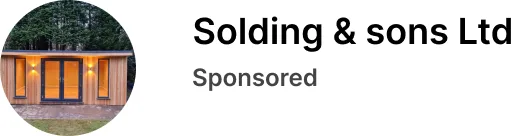
Your garden has potential you’re not using.
Imagine stepping out your back door into a stunning, light-filled space that’s completely yours.
A space for morning coffee and creative work. A quiet sanctuary away from household chaos. A professional home office that actually feels professional.
Our premium garden rooms are custom-designed for your property and built to last 25+ years. No planning permission. Installed in 2 weeks.
See exactly what your garden room will look like and cost – design it yourself in our 3D configurator with live pricing.
★★★★★ “Absolutely blown away! Professional, efficient, and the quality is incredible.” – Greg M., Chesterfield
Plus, get FREE electrical connection & heater (worth up to £2,500) when you book your design consultation.
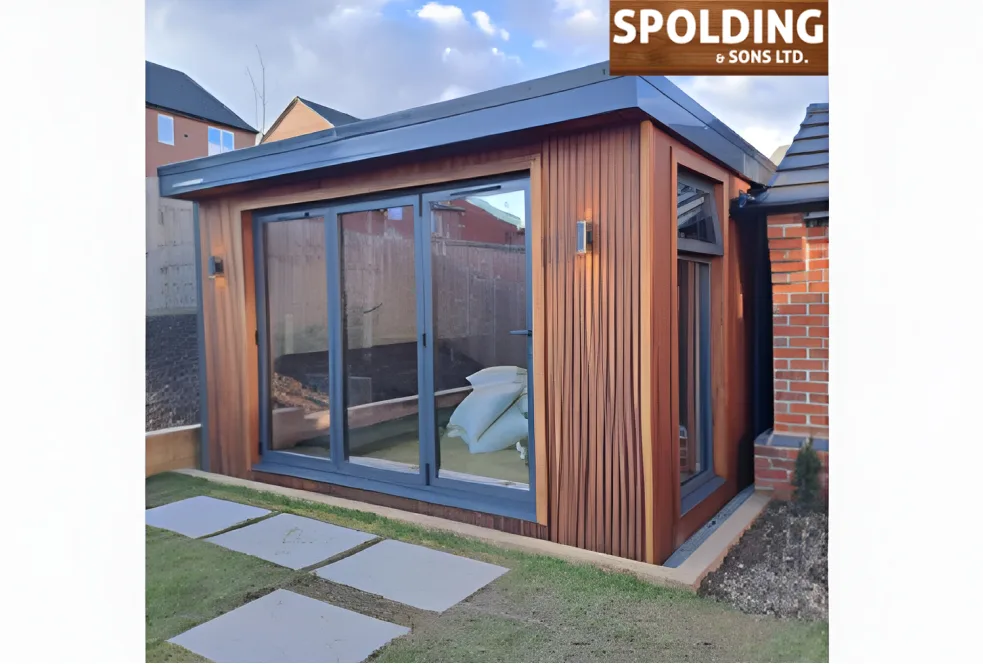
Working from the kitchen table is killing your productivity (and your back).
1,200+ UK homeowners have already solved this problem with a premium garden office – fully insulated, soundproof, and just steps from your back door.
✔ No planning permission needed
✔ Installed in just 2 weeks
✔ Adds £15,000+ to your property value
✔ 10-year structural guarantee
✔ Financing available
Design your perfect garden office in 60 seconds with our 3D configurator and get instant pricing.
FREE design consultation with our garden room experts, electrical connection & heater worth £2,500 for new customers (subject to T&C).
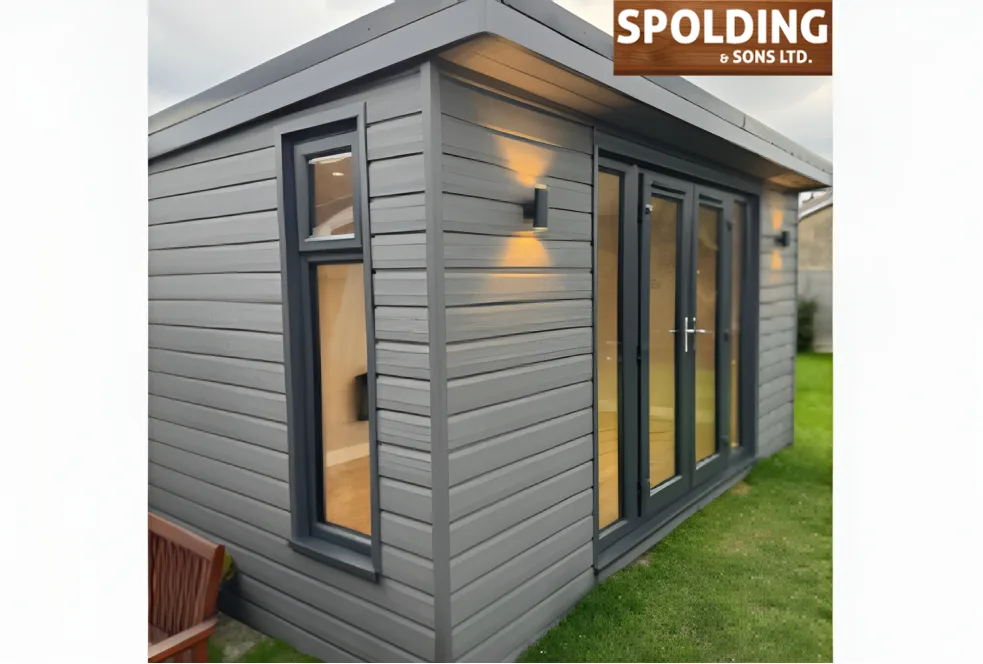
These ads work because they follow a simple structure that anyone can copy.
Let’s break it down so you can build your own.
Here are a few more examples for inspiration:
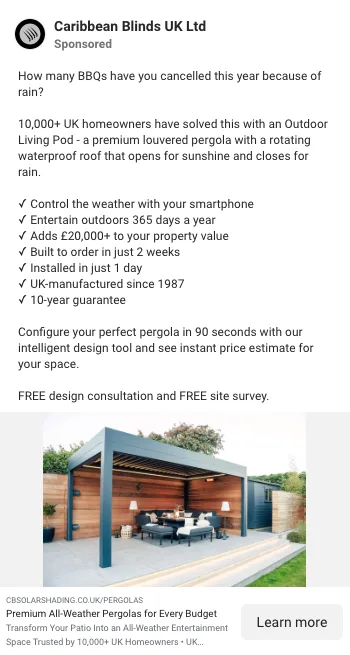
- Caribbean Blinds, a pergola manufacturer from the UK
- Garden Spirit, pergola seller from Czech Republic

Ad breakdown: What makes a Meta ad work
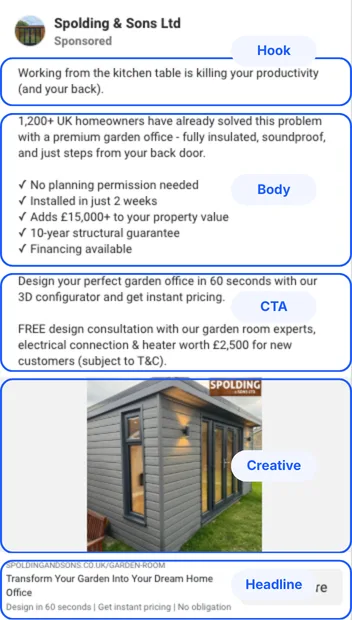
Every successful Meta ad has five parts. Here’s what each one does.
This is the first sentence people see when they’re scrolling.
Mathew’s ad says: “Working from the kitchen table is killing your productivity (and your back).”
This works because it talks about a problem people actually have. Remote workers feel this every day. When they read it, they stop scrolling because they think “that’s me.”
Your hook should talk directly to one specific problem your customer has right now. Don’t try to be clever. Just be direct.
This is where you tell them about your solution.
Mathew’s ad says: “1,200+ UK homeowners have already solved this problem with a premium garden office – fully insulated, soundproof, and just steps from your back door.”
Then it lists benefits:
- No planning permission needed
- Installed in just 2 weeks
- Adds £15,000+ to your property value
- 10-year structural guarantee
- Financing available
Notice what this does. It shows that other people already bought this product. It handles their objections before they even ask. It shows them the value. And it makes it easy to afford.
You don’t need to write a long story. Just acknowledge their problem, show them your solution, and list the main benefits.
This tells them what to do next.
Mathew’s ad says: “Design your perfect garden office in 60 seconds with our 3D configurator and get instant pricing.”
It also adds: “FREE design consultation with our garden room experts, electrical connection & heater worth £2,500 for new customers.”
Notice how specific this is. It doesn’t say “click here” or “learn more.” It tells them exactly what happens when they click: they design their own product and get a price instantly.
Then it adds a bonus to make it even more attractive.
Your call-to-action should promise something they get immediately. Not “contact us for more information.” But “design your product and see the price in 60 seconds.”
This is the photo or video in your ad.
And because of the change called Andromeda, creative become the most important part!
The best performing ads use real, non-professional photos from past customers. Not perfect magazine photos. Not computer-generated images. Real photos that real people took.
Why? Because people are tired of seeing perfect luxury gardens with perfect products. That’s not their reality. When they see a real photo from a real customer, they can imagine it in their own space.
The easiest way to get these photos is simple: ask your customers. When you finish a project, ask them to send you a photo. They’re proud of their new garden room or pergola. They’ll happily share it.
You can also try videos. Film a quick walkthrough of a finished project. Sometimes videos perform better than photos. Test both and see what works.
This appears at the bottom of the ad.
Mathew’s headline says: “Transform Your Garden Into Your Dream Home Office”
It tells them the benefit. The outcome they want. Not the product features. The transformation.
Your headline should match what your ad talks about. If your ad is about working from home, your headline should be about transforming their garden into a home office.
How to write your Meta ad
Now you know the structure. Here’s how to create your own ad step by step.
Step 1: Write your hook
Start by thinking about the biggest problem your customers have right now.
For garden rooms, it might be: “Working from the kitchen table is killing your productivity.”
For pergolas, it might be: “Your garden is too hot to use in summer.”
For awnings, it might be: “Your terrace is unusable six months of the year.”
Write down 5-10 different problems. Then pick the one that feels most urgent right now.
That’s your hook.
Step 2: Write your body copy
Keep this short. Three to five sentences maximum.
First sentence: Show that other people already solved this problem. “1,200+ homeowners already did this.”
Next two sentences: Explain what your product is and the main benefit.
Then list 3-5 key benefits as bullet points.
That’s it. Don’t write a whole story. People scroll fast. Get to the point quickly.
Step 3: Choose your photo
Go through your past projects. Find 3-4 photos that show your product in a real garden.
Pick photos where:
- The lighting is good
- You can see the whole product clearly
- It looks realistic, not too perfect
Avoid:
- Stock photos from the internet (people ignore these)
- Computer-generated 3D images (look fake)
- Product photos on white backgrounds (boring)
Step 4: Write your call-to-action
Tell them exactly what happens when they click.
Good examples:
- “Design your garden room in 60 seconds”
- “See your pergola in 3D and get instant pricing”
- “Get a quote in under 60 seconds”
Bad examples:
- “Learn more”
- “Click here”
- “Contact us”
Promise them something immediate. Something they get right now, not later.
Step 5: Write your headline
Match what your ad talks about.
If your ad is about working from home, your headline could be: “Transform Your Garden Into Your Dream Home Office”
If your ad is about summer shade, your headline could be: “Enjoy Your Terrace All Summer Long”
Keep it simple. Keep it focused on the benefit they want.
Campaign setup: How to run your Meta ads
This part sounds complicated, but it’s actually very simple.
You need two campaigns. That’s it.
Campaign 1: New people
This campaign shows your ads to people who have never heard of your company before.
When you set it up in Meta, here’s what to choose:
- Objective: Optimize for website conversions
- Audience: Choose “Broad targeting” (let Meta’s AI find the right people)
- Placement: Choose “Automatic” (this shows ads on Facebook and Instagram)
- Budget: Start with £30-50 per day
Don’t try to target specific interests like “home improvement” or “gardening.” The new Meta AI is smarter than that. It will learn who your buyers are and find more people like them.
Campaign 2: Bringing people back
This campaign shows ads to people who already visited your website but didn’t complete the steps.
For example:
- Someone visited your landing page but didn’t start the configurator
- Someone started the configurator but didn’t request a quote
- Someone got a quote but didn’t book a call
These people already showed interest. You just need to remind them and bring them back.
When you set this up:
- Objective: Choose “Conversions”
- Audience: Choose “Website visitors (past 30 days)”
- Budget: Start with £10-20 per day
That’s it. Two campaigns. Simple.
Why tracking is the most important thing
Here’s what most businesses don’t understand about Meta ads.
Meta’s AI learns who your buyers are by watching what people do on your website. When someone visits your landing page, starts the configurator, requests a quote, or books a call, Meta records this.
The more people who complete these actions, the smarter Meta gets at finding similar people.
But if you don’t set up tracking, Meta has no idea who’s converting. It’s flying blind. Your ads will never improve.
Why most businesses get this wrong
Most business owners think their ads are the problem.
In reality, the problem is that Meta cannot see what happens after someone clicks the ad.
When Meta cannot see results, it cannot optimize. And when it cannot optimize, your leads become expensive and low quality.
When tracking works:
Meta sees everything: ad click → website visit → configurator use → quote request → booking → sale.
Meta learns who buys and shows your ads to more people like them.
When tracking doesn’t work:
Meta guesses. And guessing costs money.
After Apple’s iOS14 update, most iPhone users started blocking tracking. Meta now often sees only the ad click, not what happens next.
So it shows your ads to worse audiences. Costs go up. Lead quality drops.
The two types of ad tracking
1. Meta Pixel (Browser tracking)
The Pixel works in the visitor’s browser. It’s blocked by Safari, ad blockers, and privacy settings.
In practice, it only tracks 40-60% of real conversions.
2. Conversion API (Server tracking)
Conversion API sends data directly from your server to Meta. It bypasses the browser completely.
It’s not blocked. It tracks 90-95% of real actions.
You need both working together. Pixel for what it can track. CAPI for everything else.
The difference this makes
With broken tracking: €2,000 in ads = 80 leads
With proper tracking: €2,000 in ads = 250+ leads
That’s 8-10 more sales per month without increasing ad spend.
How we set this up
We use Meta Pixel and Conversion API together:
1. Someone clicks your ad → Meta records “page view”
2. They enter contact info → Meta records “lead”
3. They start the configurator → Meta records “engaged user”
4. They request a quote → Meta records “purchase” (with value)
5. They book a call → Meta records “high-intent conversion”
All of this data goes back to Meta’s AI. The AI learns who buys and finds more people like them.
Result: Your ads get better every week. Cost per lead goes down. Quality goes up.
How to check if your tracking works
1. Open your Meta Events Manager
2. Submit a test lead on your website
3. You should see these TWO events:
-
- One browser event (Pixel)
- One server event (CAPI)
If you see only one or none, your tracking is broken.
Check your Event Quality Score. It should be 7 or higher.
If it’s below 7, Meta doesn’t trust your data. Your ads will cost more and perform worse.
How to fix tracking
Option 1: Hire a developer to set up Conversion API (€1,000-3,000, takes 2-4 weeks)
Option 2: Use a platform with CAPI built in (like SaleSqueze – it just works automatically)
Option 3: Hire a specialist agency who works with Pixel + CAPI tracking
Testing: How to find what works
Don’t create one ad and hope it works. That’s like buying a lottery ticket.
Instead, create 10-20 different versions of your ad. Change the hook. Change the photo. Change the call-to-action.
Let them all run for 3-5 days.
Then look at the numbers. Which ads got:
- The lowest cost per click
- The highest click-through rate
- The best conversion rate on your landing page
The worst performing ads? Turn them off.
The best performing ads? Increase the budget.
Then create new variations of the best ads and test again.
This is how you build a system that consistently brings you leads every single day.
The results
Spolding & Sons:
✅ Average click-through rate: 2.9%
✅ Landing page visits: 5,816
✅ Cost per visit: $0.46
✅ 475 leads in 60 days
When you get Meta ads right, they work fast.
The mistakes to avoid
Here are the most common mistakes that waste money on Meta ads
Mistake 1: Sending people to your homepage
When someone clicks your ad, they should land on a page that matches what the ad promised.
If your ad says “Design your garden room in 60 seconds,” and they land on your homepage with a navigation menu and ten different links, they’ll get confused and leave.
Solution: Send them to a landing page with one clear action.
Mistake 2: Using perfect professional photos
Stock photos and computer-generated images don’t work anymore. People scroll right past them.
Solution: Use real photos from real customers.
Mistake 3: Running one ad and giving up
One ad is not enough. You need to test many variations to find what works.
Solution: Test 10-20 different combinations. Find the winners. Scale those.
Mistake 4: Forgetting about mobile
Most people see your ads on their phones. If your landing page doesn’t work well on mobile, you’re losing most of your money.
Solution: Test everything on your phone first before you launch.
Mistake 5: Not tracking anything
If you can’t measure what’s working, you can’t improve it.
Solution: Set up Meta Pixel and track every single action people take.
Fix these mistakes and your ads will work.
Next step
Once someone clicks your ad, where do they go? Landing page.
That’s where you turn their attention into a lead. Check out how to build a landing page that converts
Want us to build the 6-step visual sales system for you?
We build everything. You just close deals.
We guarantee €50K in sales in 90 days. Or we work for free until we achieve this goal.
We only work with 5 businesses per month.