
OUTDOOR BUSINESS OWNERS
Stop wasting 300+ hours a year on leads that will never buy from you
aka. The Tire Kicker Detox
Stop wasting 300+ hours a year on leads that will never buy from you
A guide written by Leon Panjtar, CEO @ SaleSqueze
Want my help growing your outdoor living business?
Most outdoor businesses have the “tire-kicker” problem.
If you’re reading this, you’ve probably felt the pain of quoting someone for three hours, sending over a beautiful proposal, and then… crickets. Or worse, they ghost you after acting super interested.

“Yeah, this looks great! Let me talk to my wife and get back to you.”
Spoiler: They never get back to you.
Meanwhile, you’ve burned half your Tuesday measuring their yard, explaining options, building a custom quote in Excel, and following up twice. Then they post on Facebook six months later asking for “contractor recommendations” like you never existed.

This guide is going to show you exactly how to fix this. Not with better sales scripts or faster quoting. By building a filter that separates the ready-now buyers from the nine-month dreamers before you waste three hours on them.
If you do this right, you’ll eliminate 60-70% of the tire-kicker time waste, triple your conversion rate, and actually have people reach out to you already qualified. No pitch required.
Sound impossible? It’s not. I’ve watched 150+ outdoor living companies do exactly this. Their conversion rates went from 2-5% to 17%. Revenue doubled. And they stopped spending their Sundays driving around quoting people who “need to think about it.”
Let me show you how.
The invisible tax you’re paying right now
A contractor on ContractorTalk tracked something most of us are too busy to measure. In 2023, he sent out 170 bids. The process ate 340 hours of unpaid time. Two hours per bid—drive to the site, measure, discuss options, build the quote, send it, follow up.
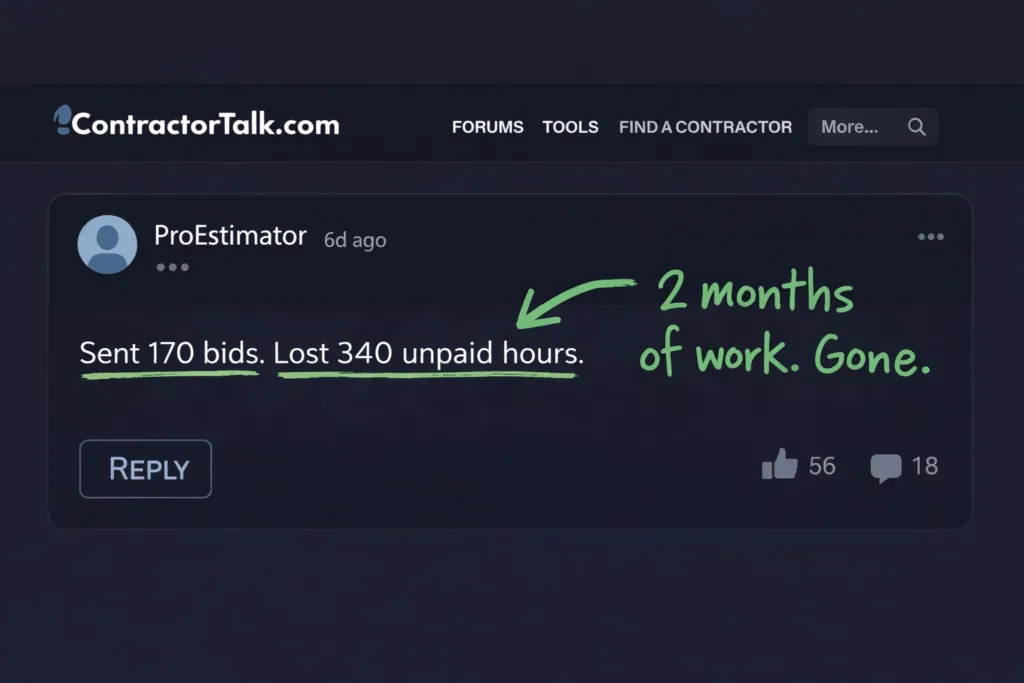
Another contractor did the math: “At 340 unpaid hours, you’ve set 17% of your entire year on fire.”
Let me show you what this looks like for your business in real numbers.
You probably get four quote requests per week. Maybe two from your website, one from a referral, one from a lead service. Each one takes about 2.5 hours start to finish. That’s 500 hours of quoting per year. Your close rate? If you’re doing well, maybe 25-30%. Industry data puts it at 1 in 4 or 1 in 5.
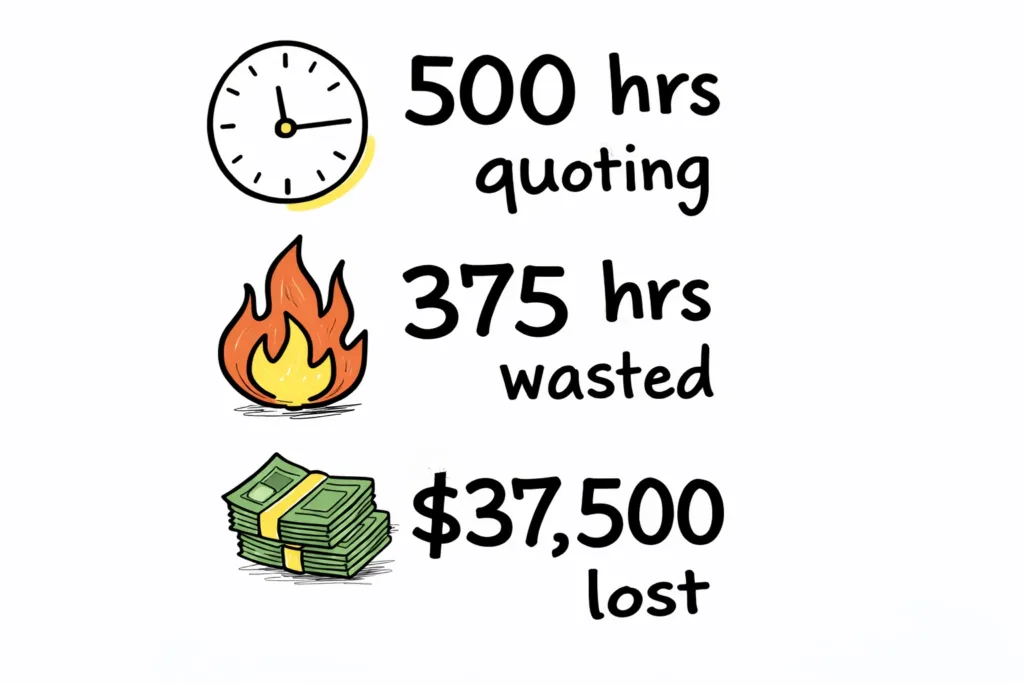
Do the math:
500 hours × 75% failure rate = 375 hours per year spent quoting leads that never buy.
At $100/hour opportunity cost (and honestly, it should be more given what else you could be doing), that’s $37,500 per year. If you’re busier—five or six quotes per week at three hours each—you’re over $50,000 in wasted time annually.
I talk to 50-100 outdoor living businesses every month. This pattern comes up in almost every conversation.
Matthew from Spolding & Sons described it perfectly: “We’d get hundreds of Facebook leads. A lot were fake numbers, auto-filled. You ring people and they’re like ‘I didn’t give my details, I’m not interested.’ You’re wasting time to end up with nothing.”
Stuart from Caribbean Blinds saw the same thing: “When you put more money in, you generated more leads, but they were at the top of the funnel. Extra leads resulted in extra work, not more sales.”
Here’s what makes this expensive.
The cost per lead in home services averages $91 before you spend a minute on the estimate. For construction contractors specifically, it’s $166. You’re paying to get someone to call you, investing 2-3 hours to quote them, then 70-75% of the time they disappear.
A survey of 540+ construction businesses found 75% of contractors spend less than half their time on actual construction work. One full day per week gets lost to inefficiency. The biggest drain? The sales process.
You already know this. You’ve lived it. What you probably haven’t done is add up the total cost.
Here’s what most contractors do next:
They try to quote faster. Get better templates. Streamline the process. Hire someone cheaper to handle estimates. The assumption is if you can just improve your quote-per-hour rate, you’ll solve the problem.
Wrong move.
150+ outdoor living companies took a different approach. They didn’t quote faster. They eliminated 70% of the quoting burden entirely. Their conversion rates went from 2-5% to 17%.
Matthew saw it in his low season: “November to January are our hardest months. We’d normally close maybe one high ticket item. Since implementing this, we closed three in October, two in November, three in December. We’ve doubled or tripled.”
They’re not quoting more. They’re just not wasting time on leads that were never going to buy.
Before I show you how they did it, you need to understand why the “quote faster” strategy is actually making your problem worse.
Why tire-kickers aren’t the enemy (they’re just underinformed)
Here’s the thing everyone gets wrong: You don’t have a lead problem. You have a qualification problem disguised as a lead problem.
When sales are slow, the natural response is to turn on the lead faucet. Buy more leads from Houzz. Run Facebook ads. Get more people calling. More at-bats means more home runs, right?
Wrong!
Stuart described what actually happens: “When you put more money in, you could generate more leads, but they were at the top of the funnel. Extra leads resulted in extra work, not more sales.”
The issue isn’t that lead services don’t work. The issue is you already struggle to serve the qualified leads you have. Adding more unqualified ones just buries you deeper.
But here’s what most contractors miss: the “tire-kicker” isn’t malicious. They’re underinformed.
I recently heard about this couple who saved $800 for a full gut and remodel, with a $400 tax refund coming. They genuinely thought $1,200 was reasonable for the project they wanted. They had champagne taste and a beer budget, but nobody had told them.
Your process never tells them either. They call, you drive out, measure, quote, send it. Then they see the number and disappear. You think they were never serious. They think you’re overcharging. Both of you wasted time because the information gap never closed until it was too late.
Here’s what’s happening before they contact you:
They’re anchoring to fantasy numbers.
They’re scrolling Pinterest and see a stunning pergola with motorized louvers and integrated lighting. The post doesn’t mention it cost $45,000. They save it, show their spouse, decide they want one, and start searching for quotes anchored to… nothing. Just a feeling. They see the $40,000 pergola and think $12,000 sounds right.
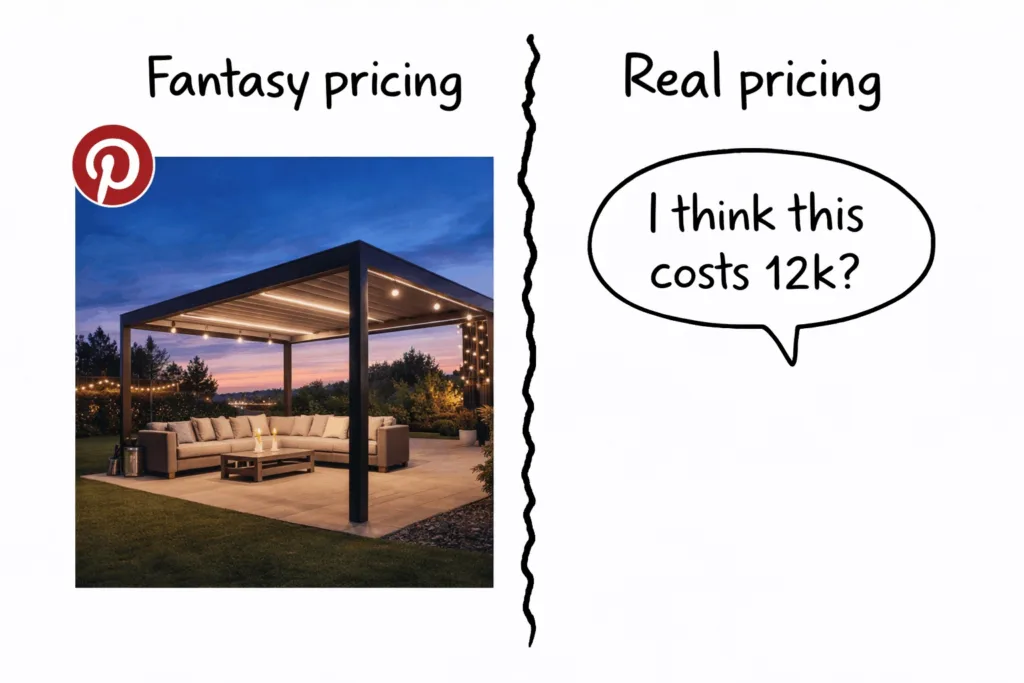
Or they remember their neighbor built a deck in 2016 for $8,000. Between 2020 and 2023, renovation spending surged 60%. When your quote comes back at $18,000, they don’t think “prices went up.” They think you’re ripping them off.
They’re drowning in too many quotes.
Homeowners now request 4-6 quotes instead of 2-3. That drops your win rate from 33-50% to 16-25% mathematically. But something else changes. The homeowner collecting six quotes isn’t making a better decision. They’re drowning in information. You’re one of six nearly identical PDFs sitting in their inbox.
You’ve seen this. The lead who seemed hot, asked great questions, said your proposal was exactly what they wanted, then vanished. They didn’t choose someone else. They chose to stop choosing.
They’re still in the research phase.
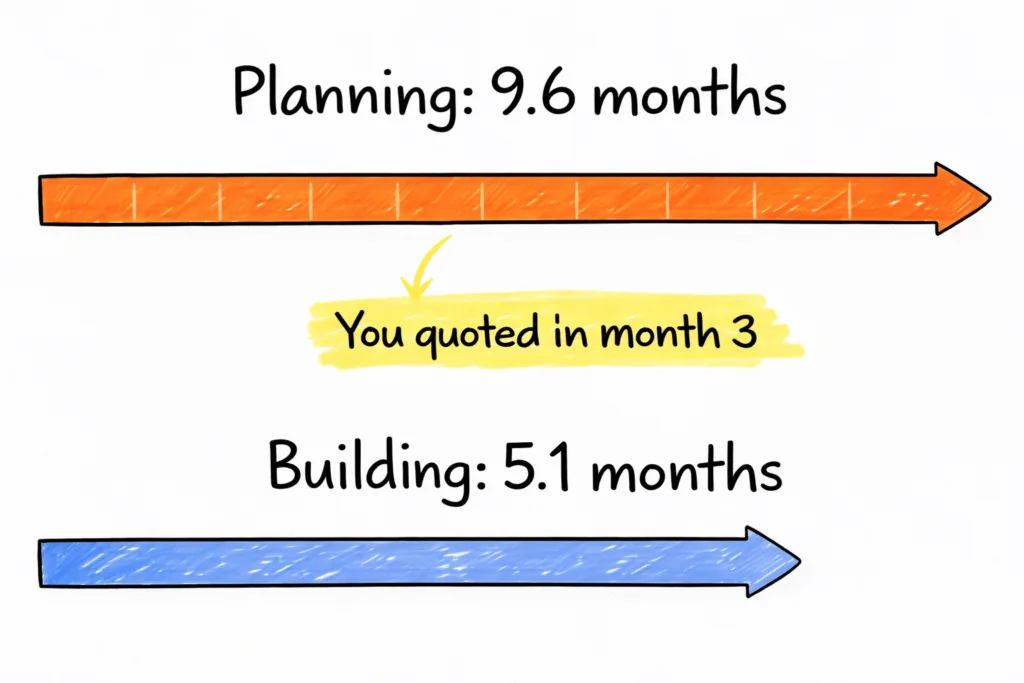
Here’s the part that kills me. Houzz data showed planning takes twice as long as building. Kitchen renovations averaged 9.6 months of planning and 5.1 months of construction.
That homeowner requesting a pergola quote in April is in month three of a nine-month timeline. They think they’re ready. They’re not. You’re spending three hours on someone who won’t sign a contract for six more months. By the time they’re actually ready, you’ve both forgotten each other. The contractor who quotes them in November gets the job. You did the free education in April.
And here’s the kicker: Among people who actually do build, 78% go over budget. If 78% of people who build go over budget, the sticker shock for the ones who don’t proceed is catastrophic. When the quote comes back at $35,000 and they expected $15,000, the project just dies.
The reframe
Look, the tire-kicker isn’t malicious. They’re an underinformed buyer in month three of a nine-month journey, carrying outdated price anchors, drowning in too many quotes, about to get hit with sticker shock that their expectations were 50-60% below reality.
Your process treats them exactly the same as the ready-now buyer with a $40,000 budget who’s signing contracts this Friday. You can’t tell the difference until you’ve invested three hours.
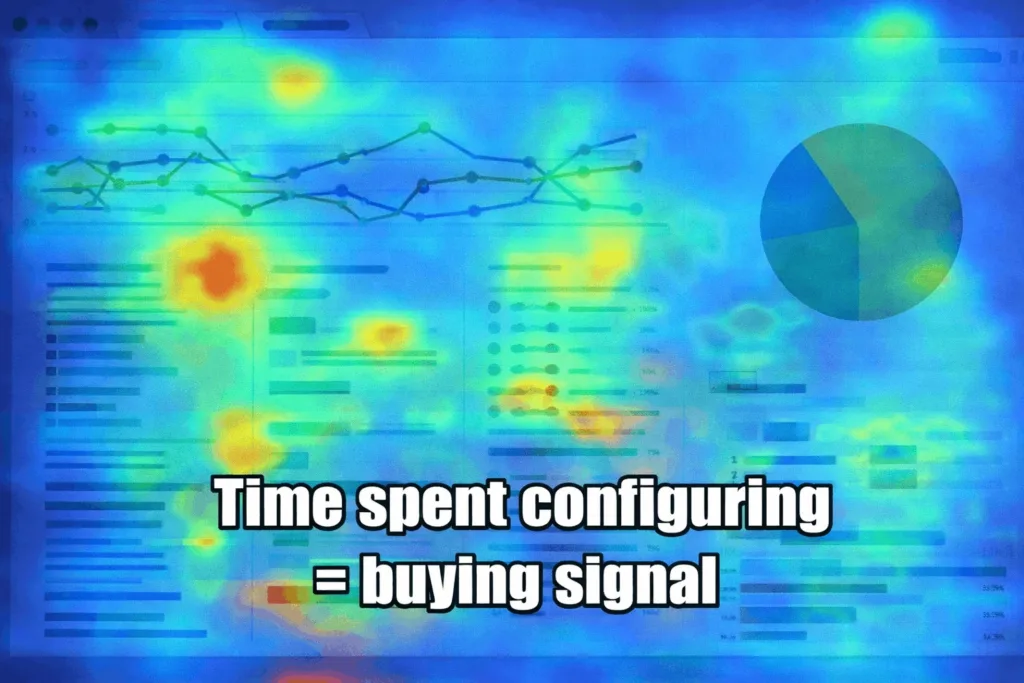
But here’s what I’ve learned working with 150+ outdoor living companies: engagement reveals intent.
Matthew described it: “Some people will build their entire room. They’ll choose different cladding for every side. The fact that somebody spends time to look at all the orientations shows they’re really interested. That’s a warmer lead.”
Stuart saw the same thing: “Customers buy into the whole process. When the lead comes through, it’s already jumped to sales stage. We go from marketing qualified straight to sales qualified because they have the pricing.”
The contractor who educates them first wins. But educating every lead manually is exactly what’s killing you right now.
What if they saw real pricing before they called you? What if tire-kickers filtered themselves out and only qualified buyers reached your phone?
The filter you need (and it’s simpler than you think)
Alright, here’s the good news: You can eliminate 60-70% of tire-kicker time waste without changing your product or spending a dollar. You just need to filter better.
Think of qualification as a funnel that runs from your website to the first phone call. Each layer filters out unqualified leads before they waste your time.
The manual filters (you can implement today)
Look, I’m not going to overcomplicate this. Here’s what you can do starting tomorrow:
Put starting prices on your website.
“Pergolas starting at $12,500” or “Garden rooms from $25,000.”
The homeowner with a $6,000 budget never calls. They self-select out.
The fear is showing pricing scares people away. It does. That’s the point. You want to scare away the people who can’t afford your work before you drive to their house.
Add budget questions to your contact form. Simple checkboxes: $10K-15K, $15K-25K, $25K-40K, $40K+. This gives you triage data before you even pick up the phone.
Before scheduling any site visit, ask four questions:
- What do you want?
- When do you want it?
- Do you have a budget?
- Who’s deciding?
If they say “no idea” to budget and you know their project costs $40K, you just saved three hours.
Require blueprints, dimensions, or photos before you quote. Serious buyers will spend 20 minutes gathering this stuff. Tire-kickers ghost. You find out before driving to their house instead of after.
These manual filters work. They’ll filter out 50-60% of tire-kickers. But here’s the problem: they all require human effort during business hours.
The automated filter (this is where it gets interesting)
This is where everything changes.
Instead of showing a starting price, you let them see an accurate, customized price before they contact you. Not a range. A real number based on their specific project.
Here’s what that looks like:
“I want a 16×20 pergola with motorized louvers, integrated LED lighting, powder-coated aluminum frame in charcoal gray.”
The system shows: “$34,750 – $38,200”
If they have a $15,000 budget, they close the browser. You never hear from them. If they have a $40,000 budget, they submit their info and you know they’re qualified before you even call back.
This is exactly what car configurators do. You build your BMW online, see the exact price, and only visit the dealer when you’re ready to buy. Nobody walks onto a BMW lot with $18,000 for a new X5. The configurator filtered them out months ago.
The outdoor living contractors who implemented this saw lead volume drop 30-40%, but conversion rates tripled. They went from quoting 50 leads at 2-5% close rate to quoting 30 leads at 15-17%.
When 150+ companies implemented automated pricing, average conversion went from 2-5% to 17%. Tire-kickers self-selected out before calling. Serious buyers arrived pre-qualified with their budget already validated.
Bottom line:
The manual filters happen during business hours and require you to be available. The automated filter runs at 2am on Sunday when the homeowner is browsing on their couch. It qualifies leads while you sleep.
Manual filters are tactics you can implement tomorrow. The automated filter requires infrastructure. That’s the gap between a good manual process and a system that runs without you.
Why automation wins (and manual processes lose)
Here’s the reality nobody wants to hear: transparency and speed are inseparable. And both require infrastructure you can’t build manually.
Let me show you what I mean.
The transparency problem
In 2008, Marcus Sheridan’s pool company was 48 hours from bankruptcy. Five clients pulled their deposits during the financial crisis. Instead of hiding, he did something that seemed insane at the time.
He published an article titled “How Much Does a Fiberglass Pool Cost?”
That single article generated over $3.5 million in revenue. River Pools grew from a pickup truck operation to a national brand with 26 locations.
The article didn’t scare away buyers. It qualified them. People with $15,000 budgets for $60,000 pools self-selected out before calling. People with realistic budgets called already educated and ready to buy.
This wasn’t a one-time fluke. In 2024, AE Pools added a pricing estimator to their website. The previous year they generated 400 leads. After adding the estimator: 1,200 leads. The company went from $3 million to a projected $10 million in one year.

McKinsey found 83% of B2B customers value transparency above brand reputation. Deloitte found 61% of buyers abandon purchases due to unclear pricing.
The fear that showing pricing scares people away is backwards. Hiding pricing scares them away.
Every major car manufacturer offers a “Build and Price” tool. BMW, Mercedes, Tesla. You customize, see the price, only visit the dealer when you’re ready. The outdoor living equivalent is already happening with companies like Heartland Pergolas and KE Outdoor Design.
But here’s why most contractors can’t do this: River Pools could publish pricing because they systemized their offering. Car manufacturers can offer configurators because they standardized options and pricing.
Manual contractors can’t. Every quote is custom. Every site is different. Every design requires judgment.
You’re still the quoting system. As long as you’re the quoting system, you can’t scale transparency.
The speed problem
While you’re building a quote in Excel, your competitor’s system already sent one.
MIT tracked millions of sales interactions and found something brutal: the odds of qualifying a lead drop 21x when you wait 30 minutes instead of responding within 5 minutes. Research shows 78% of sales go to the first company that responds. Not the cheapest. Not the best. The first.

Here’s the reality of your industry: The average B2B lead response time is 42 hours. Nearly two full business days. 57% of companies take a week or more to respond. The typical contractor quote turnaround is 1-2 weeks.
You’re operating in a world where the science says you need to respond in minutes, but the industry standard is days or weeks. This gap is killing you.
Stuart put it directly: “It’s not always the best, it’s the one who’s quickest.”
Your “tire-kicker” might not be a tire-kicker at all. They might be someone who called you on Monday, got a quote from your competitor on Tuesday, and signed a contract on Wednesday. By the time you called them back Thursday, they’d already moved on. You think they ghosted. They think you weren’t serious.
The solar industry figured this out years ago. Sunny Energy implemented an online quotation tool that provided 3,000 quotes in one year, resulting in 343 high-quality leads—an 11.4% qualification rate. The tool did the work that would have required 3,000 individual sales calls.
Another solar company went from 0 to 30 high-quality leads per day after implementing an instant calculator. Standard contact forms convert at 2-5%. Their instant tool converted at 30%.
Even Google is now actively pushing contractors toward instant estimates. Their Local Services Ads prioritize businesses that can respond quickly, and homeowners increasingly filter for contractors who can provide immediate pricing information. The algorithm knows which experience customers prefer—and it’s not “wait a week for a quote.”
The constraint that makes this brutal
Look, you can’t respond in 5 minutes to every lead when you’re on a job site, in a sales call, driving between appointments, or asleep. You’re one person. You have a finite number of hours in the day. Manual speed has a ceiling.
You can optimize your process. Hire someone to handle inquiry calls. Build better templates. But you’re still bound by human capacity. You can’t answer the phone at 2am when the homeowner is browsing on their couch. You can’t generate a custom quote in 90 seconds while you’re on a ladder installing a pergola.
Automated speed doesn’t have a ceiling. The system doesn’t sleep. It doesn’t take lunch breaks. It doesn’t get busy on other jobs. It responds in seconds whether it’s Tuesday at 2pm or Sunday at 11pm.
The homeowner gets their quote while the idea is still fresh. They see the number, validate their budget, and submit their contact info already qualified.
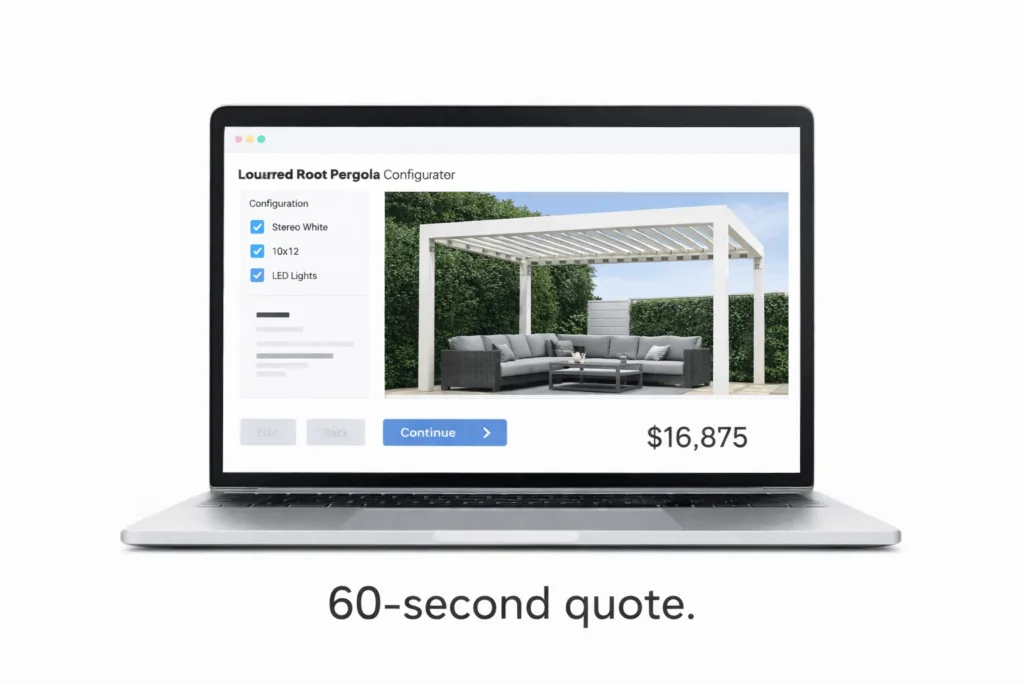
The companies winning on speed aren’t just faster humans. They’ve replaced the human entirely for the quoting step. The homeowner gets a quote in 60 seconds. The contractor gets a qualified lead with budget already validated. The sale happens before anyone picks up the phone.
The companies that fixed this (and what they did differently)
12 months ago, a pergola company was quoting 80 leads per month and closing 6 deals. That’s a 7.5% close rate.
They spent 240 hours per month on quoting. Revenue was flat. The owner was exhausted.
Today, they quote 45 leads per month and close 16 deals. That’s a 35% close rate. They spend 90 hours per month on quoting. Revenue doubled. The owner has time to actually focus on operations instead of chasing leads.
What changed? Not their product. Not their pricing. Not their sales team.
They stopped being the quoting system.
Here’s exactly what they did differently.
They moved pricing upstream.
Before, pricing was the last thing homeowners saw. Fill out a form, wait for a call, schedule a site visit, wait for a quote, then see the number for the first time. By the time the price appeared, both parties had invested hours.
After, pricing became the first thing homeowners saw.
A configurator on their website let people build their pergola and see an instant price range in 90 seconds.
Someone wanting a 12×16 basic pergola saw “$18,500-$21,200” within 90 seconds.
Someone wanting a 20×24 pergola with motorized louvers and integrated lighting saw “$42,000-$48,500.”
The homeowner with a $15,000 budget closed the browser. The homeowner with a $50,000 budget submitted the form with their contact info.
The filtering happened before anyone picked up the phone.
They made qualification automatic.
Before, qualification required human judgment. The owner had to call the lead, ask budget questions, assess seriousness, decide whether to schedule a site visit. Every lead looked the same until you invested time discovering whether they were qualified.
After, qualification became automatic. The configurator captured specific project details: size, features, materials, location. The lead that submitted a $42,000 pergola configuration flagged as high-priority. The lead that spent 2 minutes on the configurator but didn’t submit flagged as early-stage research.
The system scored leads before the sales team ever saw them. High-intent buyers got called within an hour. Early-stage researchers went into a nurture sequence.
They made speed automatic.
Before, response time depended on availability. If a lead came in during a job site visit, response time was 4-6 hours. If it came in at 8pm on Sunday, response time was Monday morning at best.
After, response time became instant. The homeowner got their price range in 60 seconds, 24/7. The system sent an automated email within 60 seconds with their configured project, the price breakdown, and next steps. The sales team got a notification with the lead details and priority score.
By the time the sales team called (usually within an hour for hot leads), the homeowner had already validated their budget, seen what they could afford, and adjusted their expectations. The conversation wasn’t about sticker shock. It was about logistics and timing.
Matthew described the engagement: “Some people will build their entire room. They’ll choose different cladding for every side. The fact that somebody spends time to look at all the orientations shows they’re really interested. That’s a warmer lead.”
Stuart saw the same thing: “Customers buy into the whole process. When the lead comes through, it’s already jumped to sales stage. We go from marketing qualified straight to sales qualified because they have the pricing.”
The math that made this work
Here’s the economic reality. The system filtered out 35 leads per month that were never going to buy. That saved 105 hours of wasted quoting time per month. Over a year, that’s 1,260 hours recovered.
At $100/hour opportunity cost, that’s $126,000 in value created just by not wasting time. Revenue doubled not by getting more leads, but by qualifying better and closing more.
Matthew’s low season results: “November to January are our hardest months. We’d normally close maybe one high ticket item. Since implementing this, we closed three in October, two in November, three in December. We’ve doubled or tripled in the low season.”
Read Mathew’s full growth journey with SaleSqueze here.
Stuart’s funnel building: “Our typical customer journey is 12 weeks. We built a really healthy funnel of engaged customers. The key thing is building the funnel ready rather than waiting for sunshine then starting the process.”
This is the pattern across 150+ outdoor living companies. Conversion rates went from 2-5% to 15-17%. Lead volume typically dropped 30-40%, but deal volume doubled or tripled.
Next steps & optional resources
Useful resources:
- Our full 6-Step Visual Sales System™ Guide, which covers how to build a predictable growth system around your 3D configurator: https://salesqueze.com/wp-content/uploads/2026/01/The-6-Step-Visual-Sales-System.pdf
- SaleSqueze Platform Overview video: https://salesqueze.com/platform-overview/
- Customer implementations & results stories: https://salesqueze.com/case-studies/
- 3D Configurator Inspiration library: https://salesqueze.com/customer-showcases/
SaleSqueze – The system that makes all this possible (watch the full video)
Look, the companies in this guide didn’t build their configurators from scratch. They used SaleSqueze — a done-for-you 3D configurator system built specifically for outdoor living businesses.
Average setup: 1 week.
Quotes generated: 60 seconds.
Conversion rate: 2-3x the industry standard (2-5%).
The cost is less than one lost deal per month. For most businesses, your first closed deal pays for the entire year of the system.
If you want to see what a 60-second quote looks like for your product, visit salesqueze.com to schedule a demo.
The question isn’t whether this approach works. The case studies prove it does. The question is whether you’re going to keep being the quoting system, or whether you’re ready to replace yourself with something that runs 24/7 and never gets tired.
I hope you find this valuable.
Got a question? Need a quick walkthrough? Or just want to share how this is working for you?
Feel free to reach out to me (Leon):
https://www.linkedin.com/in/leonpanjtar/
That’s it.
P.S.: No spreadsheets were harmed in the making of this guide. Well… actually… many were. 😄
Sincerely,
Leon Panjtar
Founder and CEO, SaleSqueze
Ready to grow your company with SaleSqueze like 151 other outdoor businesses?
Get your own private walkthrough of the system that’s helping us (and owners like you) generate more than 200 pre-qualified leads per month, resulting in $50k+ in additional sales every month.
Find a time in the calendar below to get your walkthrough 👇