

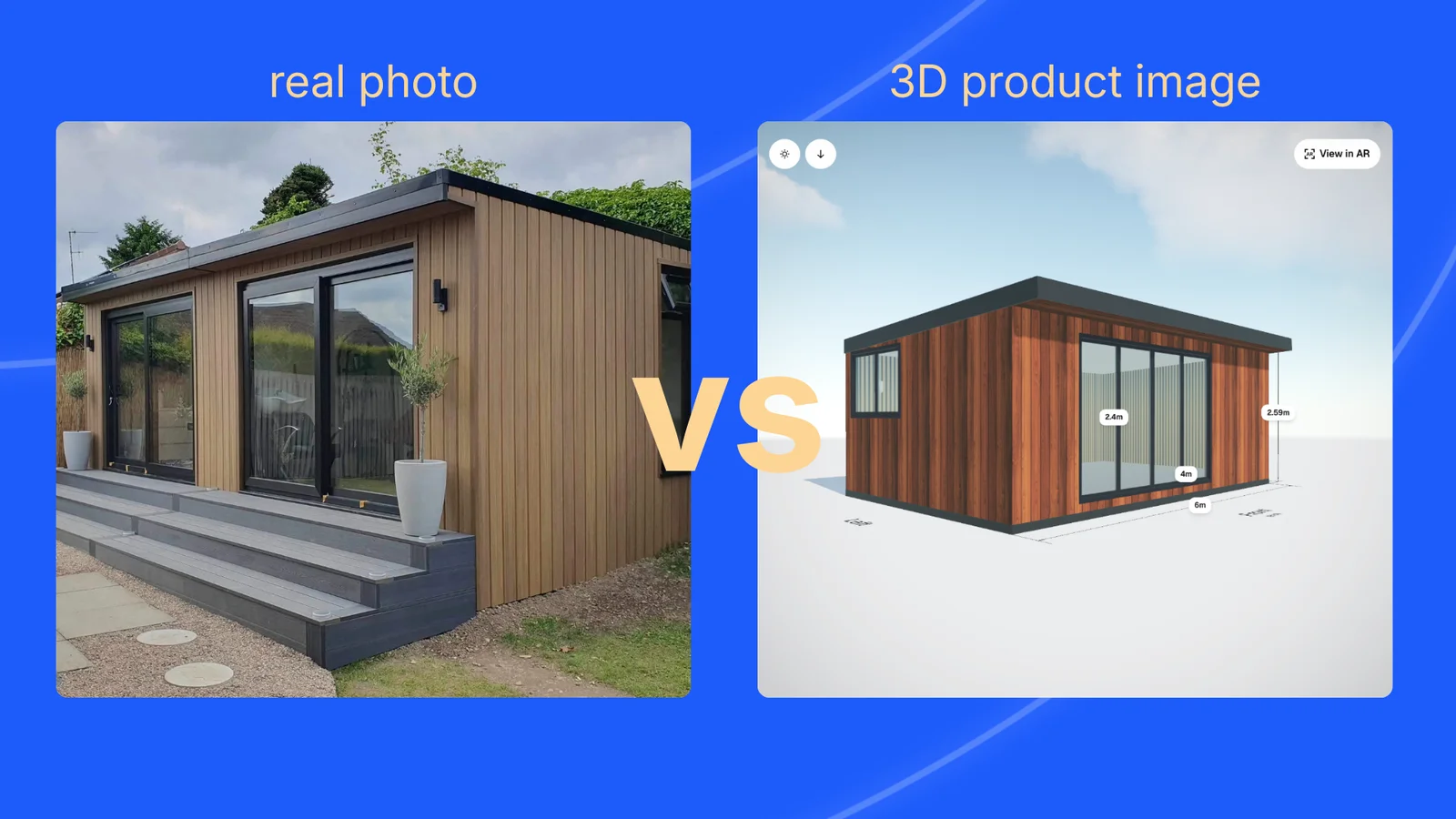
A buyer picks a roof style. A color. A size that fits their exact garden. Then the seller shows them a photo. Of somebody else’s pergola, in somebody else’s garden, built to somebody else’s choices. The buyer is left doing the hardest part of the job themselves: imagining how their own decisions would actually look.
Why a photo alone falls short#
A past project photo does one job well. It proves a business can actually build the thing, not just draw it. That still matters. But a photo is frozen at somebody else’s choices. Show a buyer a photo of a walnut-stained pergola and ask them to picture it in white, two meters wider, with a different roof, and most buyers cannot do it. They are not lazy. Nobody can hold that many changes in their head and trust the result.
Why a 3D product image sells better#
A 3D product image skips the mental math. The buyer picks the roof, the color, the size, and watches the model update to match, in real time. What they see on screen is not a stand-in for their project. It is their project, built to their exact spec, before a single order is placed. That is the entire advantage in one sentence: a photo shows a project, a 3D image shows their project.
At Caribbean Blinds, that difference shows up directly in the numbers. 40% of inquiries now start straight from the 3D configurator, not from a photo gallery. 508 leads in 90 days.
- 40% of inquiries start in the 3D configurator Caribbean Blinds, pergolas, UK. 508 leads in 90 days.
- 40% more sales in 3 months Armat, carports, Slovenia. 1,873 inquiries, no new hires.
Render: one step further#
A 3D product image still has one gap. However exact the design, it sits inside a generic scene, a stock patio, a default backdrop, not the buyer’s actual garden. Render closes that gap. It takes the exact model a buyer just configured, their roof, their color, their size, and places it inside a photo of their own real environment.
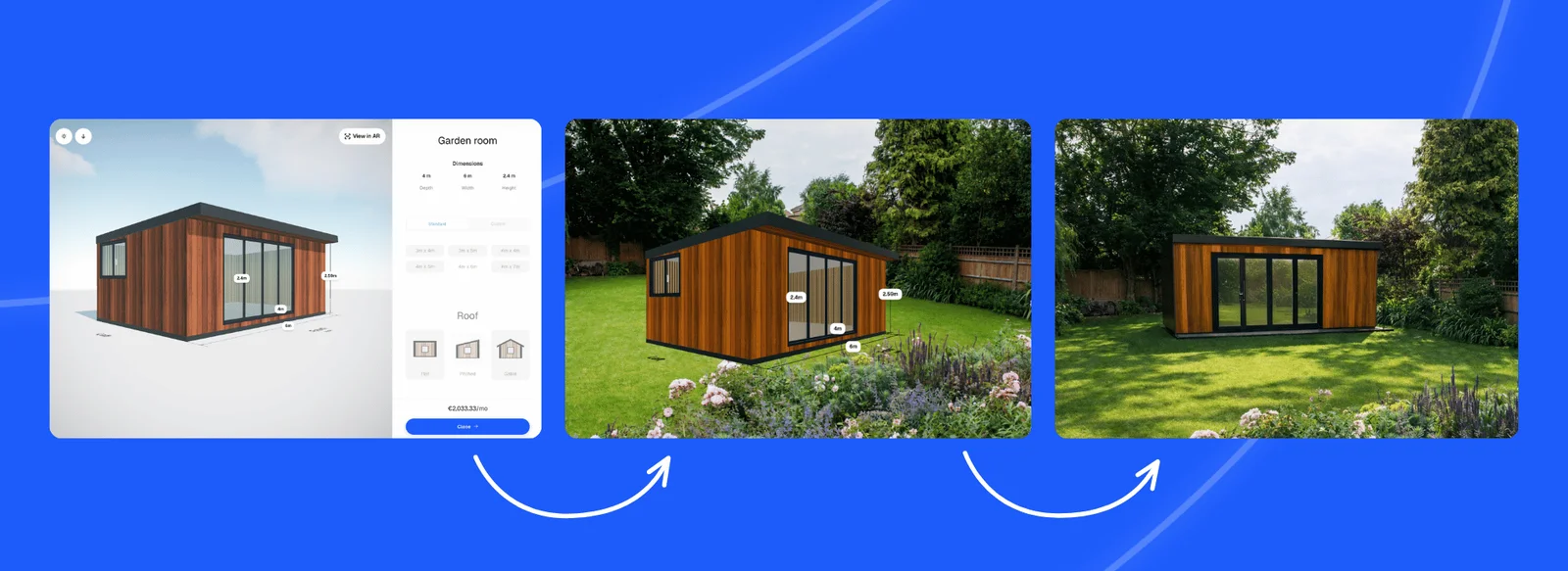
Here is what that used to cost. A UK pergola dealer paid around $300 for a single render like this, done by hand. Only his best leads got one, the projects big enough to justify the price. Everyone else got a generic scene instead.
Render now ships as part of the configurator itself, automatically, for every serious buyer, not just the best one. The buyer no longer imagines their pergola in their garden. They see it. The same jump shows up in the carport numbers from Armat, where the visual step is what buyers meet first.
Here is a short walkthrough our CEO prepared of how to go from a 3D product image to a render in 60 seconds:
What a buyer actually sees now#
A photo proves the business can build. A 3D product image proves the buyer’s own design works. Render proves both at once, the exact design, sitting in the exact place it will actually stand. That is the real upgrade path, not photo against 3D, but photo, then 3D, then the buyer’s own garden.
If you want to see the 3D configurator and render running on your own product line, book a demo.
People also ask.
Why does a 3D product image sell better than a regular photo?
A photo shows one fixed project. A 3D product image updates to match the exact size, material and color a buyer picks, so what they see is their own design, not someone else's.
Do 3D configurator images actually convert better than photos?
At Caribbean Blinds, 40% of inquiries now start from the 3D configurator itself, not from a photo gallery, alongside 508 leads and 195 automatic quotes in 90 days.
What does render add on top of a 3D product image?
Render places the buyer's exact configured design inside a photo of their own real garden, instead of a generic 3D scene, so they see their actual product in their actual space.
Does render cost extra, on top of the configurator?
Not anymore. A single render used to cost around $300 when a business paid to have it done by hand. It now ships as part of the configurator, for every serious buyer.
Do I still need photos of past projects if I have a 3D configurator?
Yes, early in the funnel. A photo proves the business can build. The configurator and render then show the buyer their own project, which is what actually gets the inquiry.