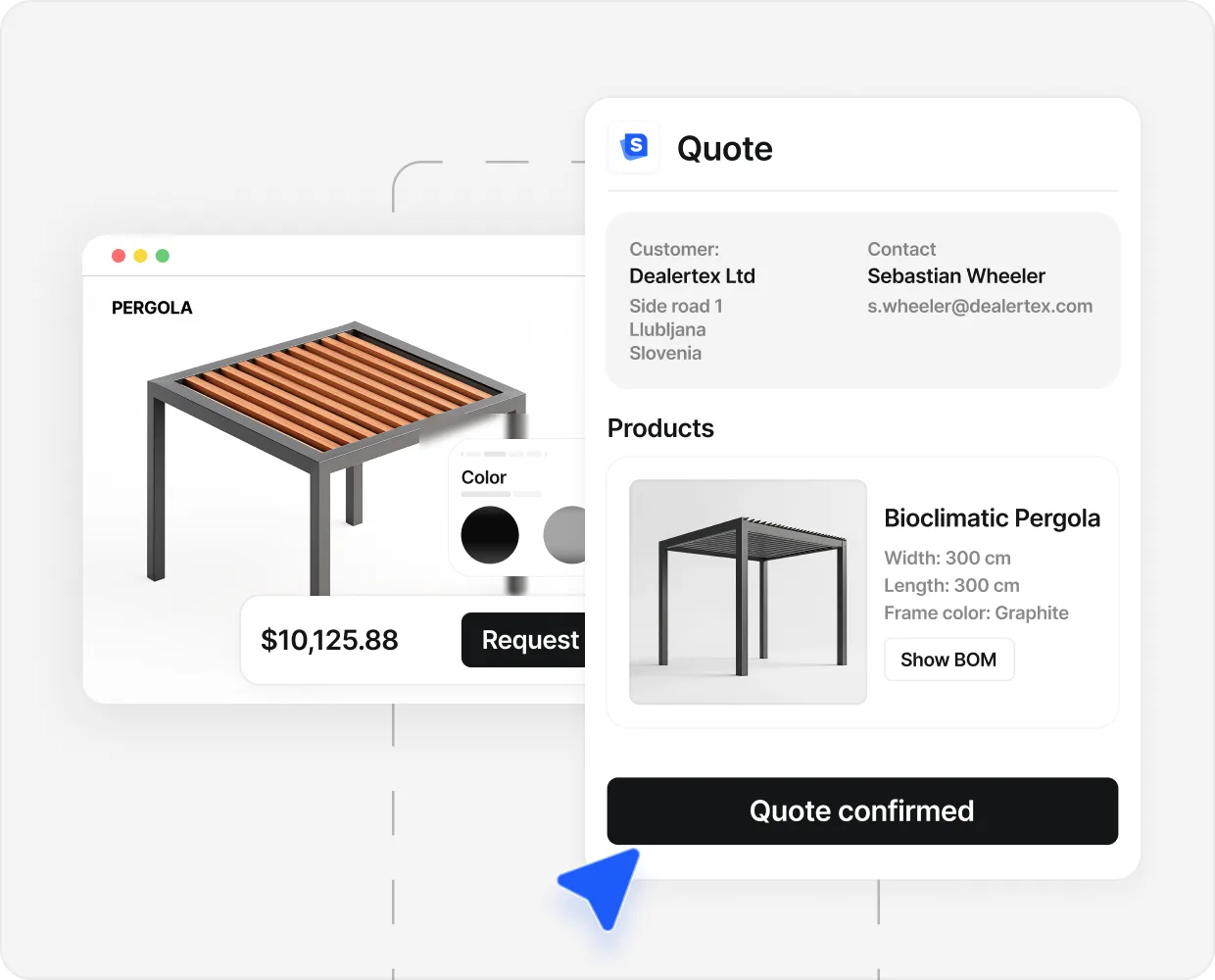


A 3D product configurator lets a buyer build your product on your own website. They pick the size, materials, and options, see it in 3D, and get a priced quote in seconds. The buyer does the spec work. You close the deal.
It replaces the part of the week most manufacturers do not talk about. The call where you ask what the buyer wants. The second call where they change it. The site visit. The kitchen-table evening turning notes into a quote. The email three days later. By the time you meet most buyers in person, the deal is already a different deal.
By the time you actually meet them in person, everything changes.
A configurator collapses that loop. The buyer picks, sees it on screen, gets the price. The seller opens Monday’s inbox to a configured PDF, not a contact form.
Its closest cousin in B2B is CPQ, configure-price-quote software. CPQ has historically been internal tooling for a sales rep. A 3D product configurator does the same job in front of the buyer, on the public site.
How it works#
Three blocks, none of them magic.
The 3D model. Your product, parametric. Change a dimension and it rebuilds; change a finish and the texture swaps. Runs in the browser via WebGL, no plugin. A configurator that stutters reads as cheap no matter what it cost.
The configuration logic. Rules the buyer never sees: which roof goes with which post, which colour is allowed on which finish, which option needs reinforcement. Without it, buyers pick a kit that does not fit and someone has to fix it on site.
The price and the PDF. A pricing engine that produces a real number, and a PDF that lands in the buyer’s inbox and the seller’s CRM at once. The PDF is the moat: two days later, when a slower competitor sends a handwritten quote, your buyer already has a designed document.
The work now is in the rules, the pricing layer, the PDF template, and the CRM handoff, not the renderer. That is where good configurators win and bad ones get refunded in month two.

What it does to revenue#
- 475 Leads in 12 weeks A UK garden-room manufacturer; roughly 3x prior sales.
- +40% Revenue lift A Slovenian carport manufacturer over 3 months, 1,873 inquiries across four months, no new hires.
- 14× Inquiry volume A premium fence company moved from ~50 inquiries/year to ~700.
- €10M Pipeline, month 1 A German pergola team, off 40 configured quotes.
Named numbers behind these patterns live in the case studies.
Industry close rates sit at 5 to 8 percent. Teams running a configured funnel double that: 10 percent on a slow month, 17 to 20 on a good one. The configurator does not invent new buyers, it catches the ones already on the site who would otherwise leave with a quote in someone else’s inbox. Named numbers live in the case studies.
Where it pays off#
A 3D product configurator earns its keep when the product is configurable, the sale sits above 5,000 euros, and the buyer needs to see it before committing. Most of those products live outdoors.
- Pergolas. 5 to 8 variables, ~95 percent of buyers pick a standard combination. The highest-fit category we see. Full walkthrough in the pergola configurator guide.
- Verandas. Glass-roof, fabric-roof, year-round rooms. Highest AOV, strongest “I have to see it first” buyer.
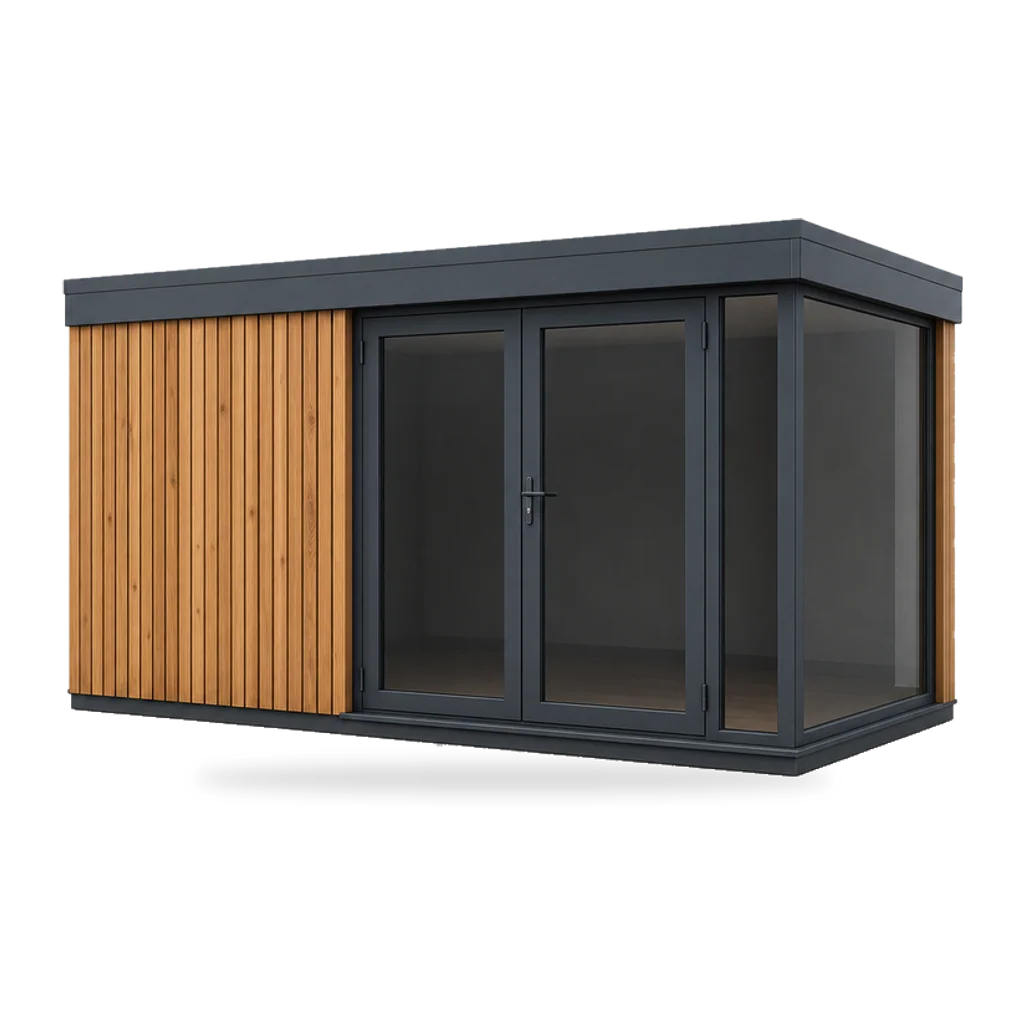
- Garden rooms. Insulated outdoor offices and pods. The auto-PDF locks the price before a competitor’s quote arrives.
- Carports. Small configuration space. Buyers decide quickly once they see the visual.
- Awnings and screens. Sub-10,000-euro AOV. Buyers self-serve readily.
- Container and modular rooms. Highest tire-kicker rate. A price filter self-disqualifies dreamers in 30 seconds.
It also works for premium fences, glass enclosures, retractable screens, and B2B categories where a manufacturer rolls one configurator across a dealer network. It does not work for fully bespoke architectural projects, decking sold by the square metre, anything under 5,000 euros a sale, or full-home prefab.
When you should not use one#
The strongest objection from premium sellers is that a public price commoditises the product.
By configurating something with a price, you’re just selling on price and price alone. So it’s a race to the bottom. It’s the lowest price that wins. We’re not like that.
That is a fair read of a configurator that shows a number to anyone who lands on the page. The fix is not skipping the configurator, it is picking one built for a premium funnel: qualifying questions before pricing, hidden public price, a sales rep in the loop, and the PDF as the start of a conversation rather than the end of one.
What to look for when choosing one#
- 01
Speed to launch
Premade configurators built for your category go live in 1 to 10 days. A 3-to-6-month quote for a pergola configurator means you are paying for them to learn pergolas on your dime.
- 02
Built for your category, not 'anything 3D'
A generic 3D vendor renders everything and asks you to teach it your product. That work is the project.
- 03
Pricing engine and PDF, not just a model
A 3D viewer is not a configurator. It earns its keep when it produces a real, branded PDF priced from your real rules.
- 04
Premium-positioning toggles
The ability to hide public prices and gate behind a qualifying form is non-negotiable for premium sellers.
- 05
Mobile performance and CRM integration
More than half of outdoor living traffic is on a phone: test the demo on real data. It should also fire events to Meta, Google, GA4, and your CRM the moment a buyer submits.
- 06
The vendor's own customer base
Ask for three sellers in your category with phone numbers. Listen for 'leads got better,' not just 'the configurator looks great.'
A longer breakdown of the buying decision (build versus buy, five paths, cost) lives in the 3D configurator software buyer’s guide.
The configurator is a shovel. The buyer designs. The price lands. The conversation starts on Monday with a real spec on the table, not a callback request.
People also ask.
What is a 3D product configurator?
A system that lets a buyer build your product on your website. They pick the size, materials, and options, see it in 3D, and receive a priced quote in seconds. The buyer does the spec work. You close the deal.
How much does it cost and how fast can it launch?
Custom freelancer builds run roughly 30,000 to 60,000 dollars plus monthly maintenance, and take 6 weeks to 6 months to launch. A premade system built for your product category is usually configured per seller and can go live in 1 to 10 days. Ask any vendor for an itemised quote against your own rules and dealer count, not a list price.
Do I need one?
Probably, if your product is configurable across 5 to 10 variables, your average order value sits above 5,000 euros, you already have website traffic, and you are losing deals to faster-quoting competitors. Probably not if your product is fully bespoke, your AOV is under 5,000 euros, or you have no inbound traffic to convert.
What is the difference between a 3D product configurator and CPQ?
A traditional CPQ tool prices and quotes for an internal sales rep behind a login. A 3D product configurator does the same job, but on the public website, run by the buyer themselves, with no rep opening a spreadsheet.
Will it replace my sales team?
No. A configurator does the spec work and starts the conversation. The close still happens between a buyer and a salesperson, especially above 15,000 euros. What changes is what the salesperson walks into: a configured PDF and a qualified inquiry, instead of a contact form and a guess.