

AI pergola design helps draw the line. It does not close the buyer.
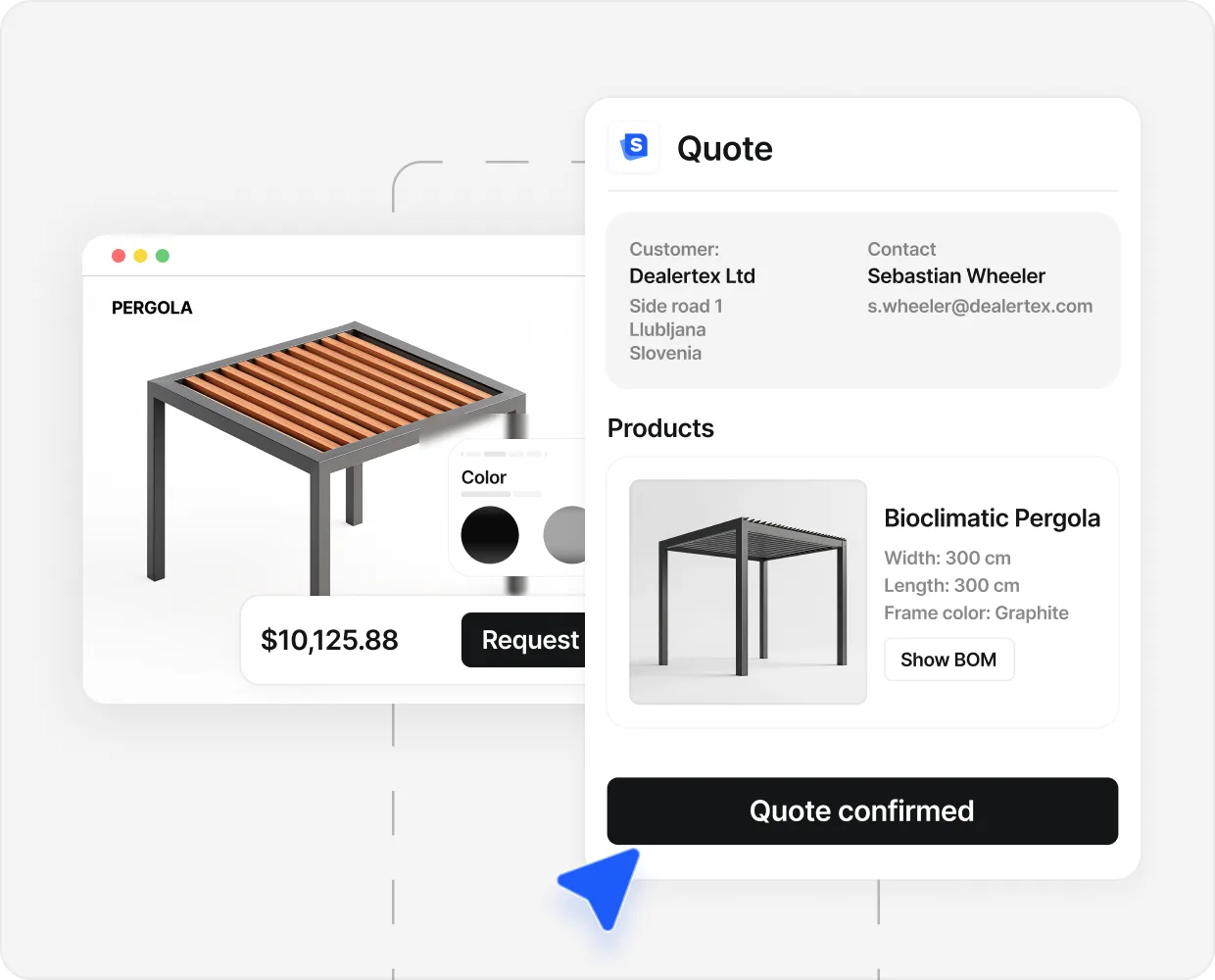
A pergola buyer sat in a Hampshire kitchen last week. She had been scrolling on her phone since breakfast. By the time her partner came down she had typed AI pergola design into Google and tapped through to six different tools. Two were image generators that produced pretty renders with no price. One was a marketplace AI that picked a “matching” pergola from a catalogue. One was a generic 3D configurator with no real product behind it. One asked her to book a call before she had even seen a pergola. The sixth showed her a 3D louvered build over a clean garden backdrop, let her pick the size and the post finish and the slat colour, and emailed a priced PDF before her coffee went cold. That is the one she forwarded to her partner.
The gap between AI pergola design as a search query and AI pergola design as something a buyer actually uses to commit is wider than most vendors admit.
We get asked about AI on every demo now. The buyer never asks. The buyer asks if the pergola will fit. That is still the only question that matters.
The honest version of this story is that AI is doing real work in pergola design today. Just not in the places the press releases focus on. It earns its keep in four specific corners of the buying flow, sits out the parts that decide the sale, and is quietly being built into the next set of upgrades that buyers will notice without ever realising they noticed. The parts of pergola design that AI is changing are mostly the parts the buyer does not think about. The parts that close the sale are still the parts the buyer cares about most. Show me the pergola I am buying, in my garden, in three seconds, on my phone, with the right price.
What AI does well in pergola design today#
Four places. Each one is real work, already shipping, already moving numbers. Read them as upgrades to specific jobs, not as a replacement for the configurator.
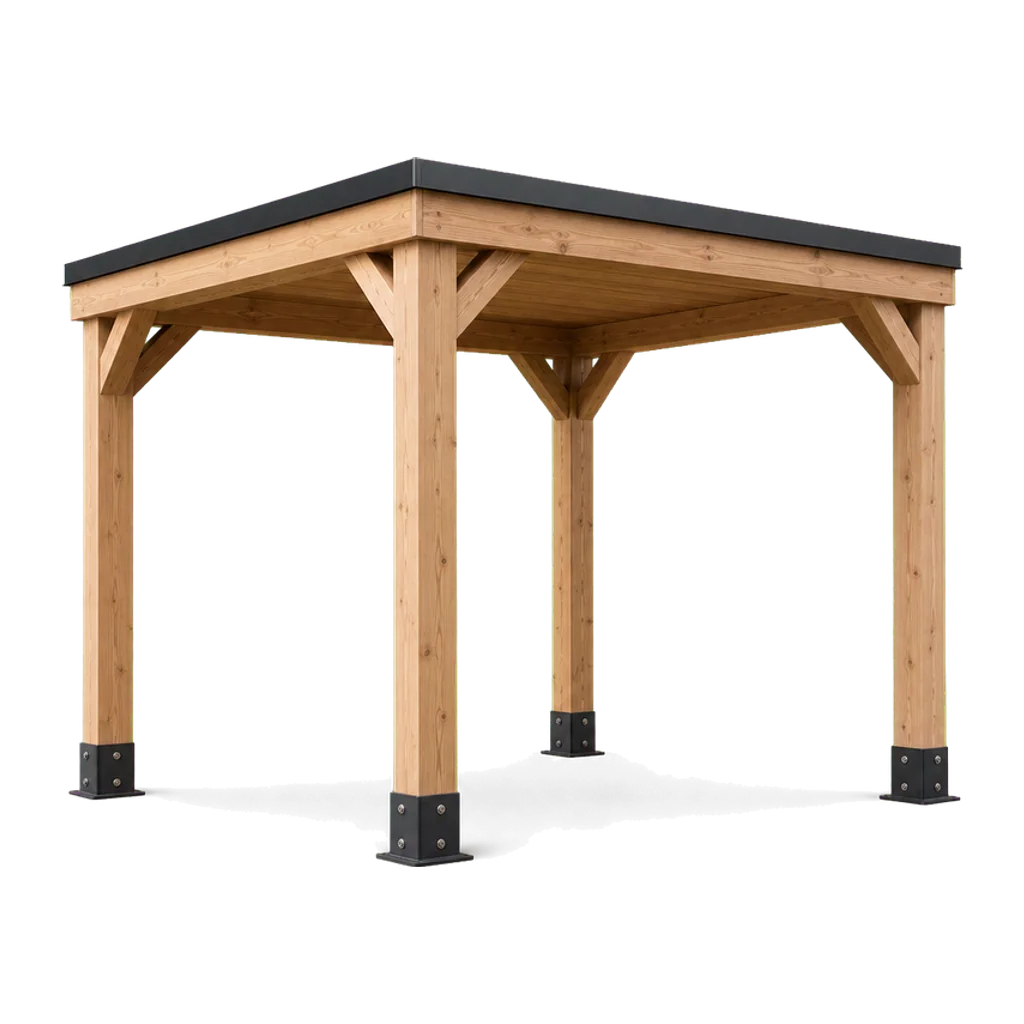
Inspiration image generation. A buyer at the top of the funnel does not yet know what kind of pergola they want. Aluminium or wood. Louvered or fixed. Anthracite or oak. Attached to the house or freestanding. A generative model like OpenAI’s gpt-image-1 can produce a dozen believable renders against a clean garden backdrop in the time it takes the dealer to write the brief. That is genuinely useful. Builders are using it to fill the inspiration grid on the homepage, to spin up ad creative variants for Meta and Google, to mock up scene options before commissioning a real photoshoot. The buyer scrolls a wall of pergola moods, picks the closest one, and starts the actual configurator from there. The render is the cover. The configurator is the book.
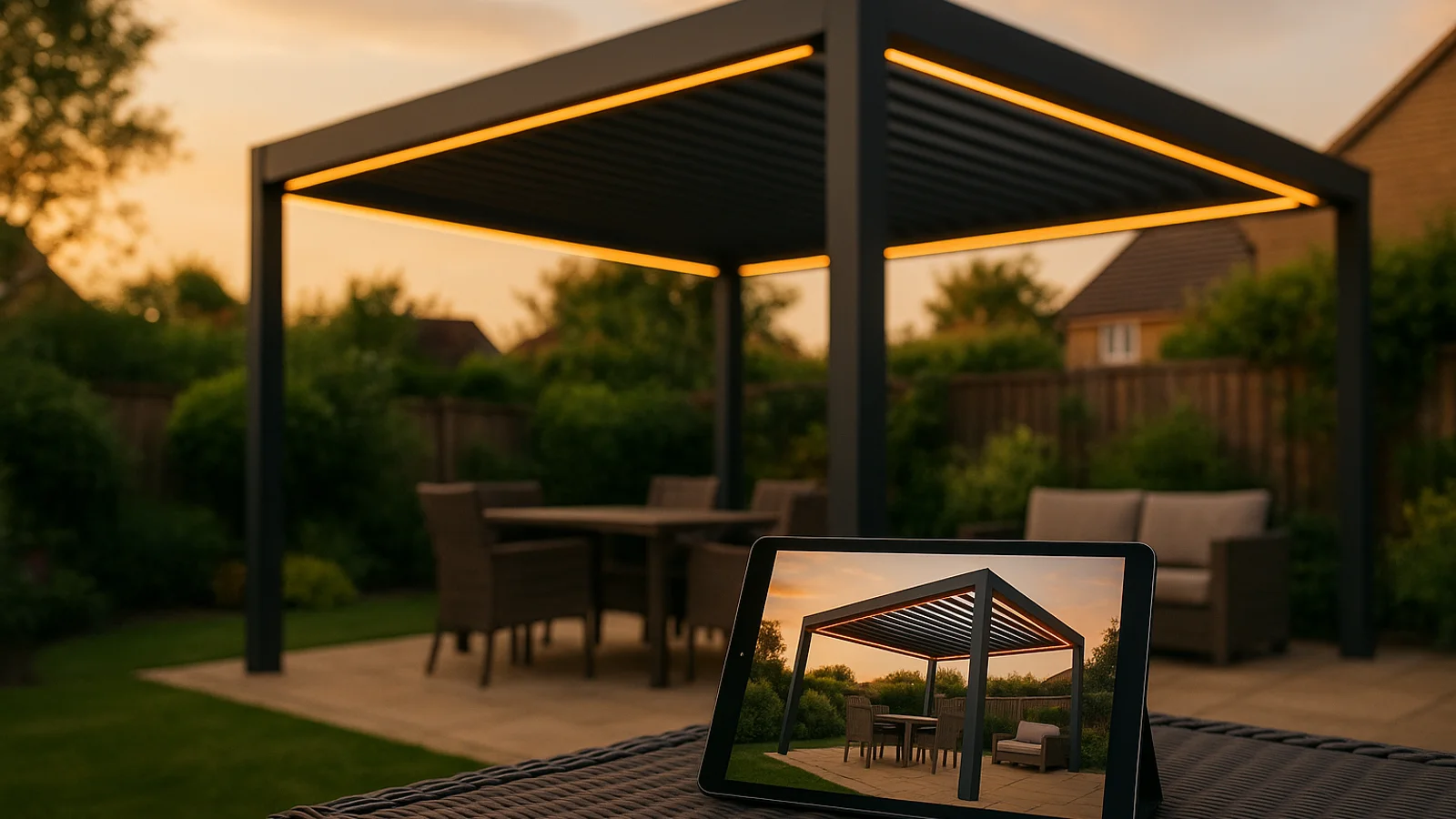
Garden-photo composition. This is the one that closes the gap between “I can picture it” and “I can show my partner”. A buyer uploads a photo of their patio from the back door. An AI pipeline removes the empty space above the dining table, places the configured 3D pergola model into the scene at roughly the right scale and perspective, matches the lighting, and renders. The buyer sees their own garden with the pergola in it before they ever talk to a dealer. The render is not a manufacturing drawing. It is a buying decision. The version that ships well today is a hybrid. The 3D model comes from the parametric configurator, the placement uses an AI pipeline trained on garden photos, and the final image is composed in seconds. Buyers forward those renders to partners more often than they forward any other artefact in the funnel.
Lead intent classification. A pergola configurator emits a stream of signals. Time on the design, number of meaningful changes (resizing the structure, swapping the roof, adding accessories), depth of the spec, whether the buyer returned to the saved design, whether they shared it. None of those signals is decisive on its own. Together, a small model trained on past buyer behaviour can rank a Monday inbox by likelihood of closing. The dealer rings the top five before lunch instead of working a list of twenty in order of arrival. The same model can flag the buyer who configured a pergola twice their typical AOV and pass it to the lead seller instead of the rep. The intent score is not a verdict. It is a call order.
Multilingual dealer copy across a network. A pergola manufacturer running a configurator across 30 dealers in the UK, Germany, Netherlands, France, Italy, and the Nordics used to translate every piece of copy by hand. The configurator UI. The product descriptions. The PDF lines. The follow-up email cadence. Modern translation models do that work in minutes per language at a quality dealers in those markets actually approve. The work that used to take six weeks of agency time per locale rollout now takes a week of internal review. That is not a configurator feature in itself. It is the reason the configurator can sell a pergola in seven languages by next month instead of next year.
These four things have a common shape. AI is the assistant in each one. The seller, the dealer, the buyer, and the manufactured pergola are still the actors. The model is in the middle, faster than a person at a narrow task, useless at the wide one.
What AI does not do yet#
Five places where the marketing copy is ahead of the technology, and where buyers still need the old answer.
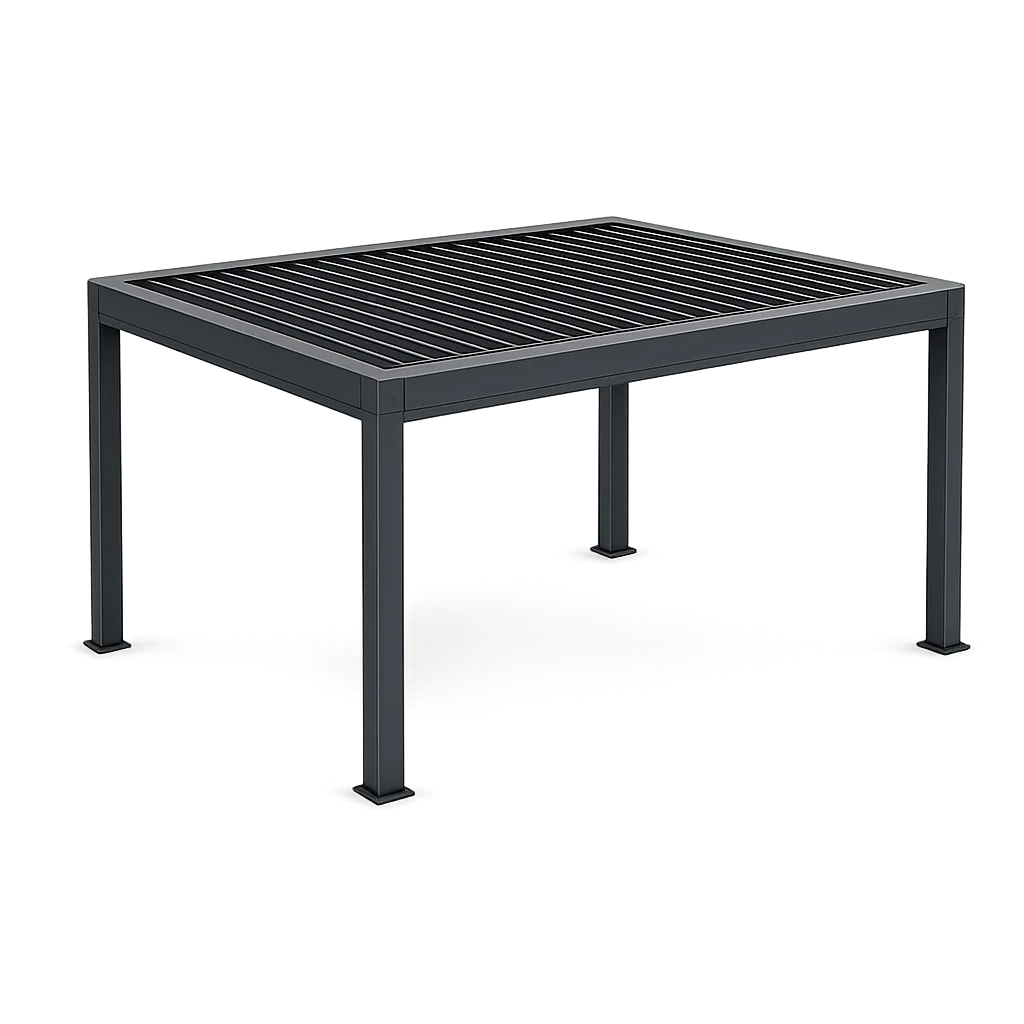
Replace the parametric 3D model. A generative model can produce a beautiful image of a pergola. It cannot rebuild the geometry when the buyer drags the width from 3.2 metres to 4.7 metres and the post count needs to update from four to six. A parametric model knows the beam span, the slat pitch, the post system, the bracket type. A diffusion model knows what a pergola tends to look like in photographs. Those are different jobs. The configurator that ships in 2026 uses the parametric model for the buying interaction and the generative model for the inspiration and the scene work. Neither one is going to do the other one’s job soon.
Replace real product SKUs. A pergola is built from real parts. Real posts. Real beams. Real louvres. Real screens. Real fixings. Each one is a SKU in the factory and a line in the BOM. AI can suggest combinations. It cannot invent them. When the buyer configures a louvered pergola with integrated screens and warm LED strip lighting, every component on screen has to map to a part the factory can actually ship. A render that contains a roof profile your supplier does not make is a deal you cannot fulfil. The configurable BOM is still hand-modelled, version controlled, and reviewed by humans.
Replace real pricing rules. Margin bands per region. Installation modifiers per postcode. Dealer-specific cost overrides. Currency conversion. Tax handling. Promotional bundles with cut-off dates. The pricing engine inside a serious configurator is a rule library that the finance and the sales teams have to agree on, change, and audit. AI does not write those rules. The day a model is allowed to set the price autonomously is the day the manufacturer has lost control of margin. That day is not on any honest roadmap.
Replace mobile WebGL performance. A pergola has to load on a phone in three seconds on a 4G connection. That budget has not changed. The constraints are the GPU on the buyer’s device, the bandwidth on the connection, the size of the mesh and the texture set, and the WebGL pipeline in the browser. AI is helping at the edges (smarter texture compression, predictive preloading) but the load budget is still won by classic engineering work. Mesh decimation. Material sharing. Progressive loading. Caching. None of that is glamorous. All of it matters more than any AI feature for closing a mobile pergola sale.
Replace the human seller’s call. Above roughly 5,000 euros of average order value, the close still happens between a buyer and a real person. AI scores intent, drafts follow-up notes, summarises the configured spec, and prepares the call agenda. It does not handle the objection on price. It does not walk the install crew through the access. It does not look the buyer in the eye and say we will be on site Tuesday morning at eight. The configurator and its AI assistants shorten the seller’s workload by a factor that earns its keep. They do not remove the seller from the deal.
The pattern across these five is the same. AI handles the narrow, fast, repeatable tasks. The wide, slow, trust-bearing tasks stay with people and rules. Vendors who pitch AI as the replacement for the configurator, the BOM, the pricing engine, or the seller are pitching a 2030 keynote, not a 2026 product.
What buyers care about (versus what gets built)#
Walk a pergola buyer through their actual decision and the gap between AI hype and buyer reality opens up fast. The buyer does not ask which model rendered the inspiration scene. They ask whether the pergola will fit between the side return and the boundary fence. The buyer does not ask whether the intent score was computed by a transformer. They ask whether the dealer rings back the same day. The buyer does not ask whether the translation was machine or human. They ask whether the PDF reads like a real document.
- 508 Inquiries in 90 days Caribbean Blinds (UK pergolas). 40 percent of inquiries arrive pre-configured through the 3D configurator.
- 8% Landing page conversion Spolding and Sons (UK garden rooms). 5,800 visitors, 475 configured leads in 8 weeks.
- 30 Pergola sales in 90 days Nordin (Lithuania, louvered pergolas). 574 configured leads from a standing start.
- 10× Close rate vs industry Industry pergola close rates sit at 5 to 8 percent. Builders running a configured funnel typically run 10 to 20 percent.
Named numbers and full stories live in the case studies.
The 8 percent landing page conversion at Spolding and Sons is the cleanest proof of the buyer-side thesis. A garden room is a higher-ticket cousin of a pergola, sold by the same kind of dealer, to the same kind of buyer, through the same kind of configurator. 5,800 visitors. 475 designed and submitted. That is one in twelve, on a category where the industry conversion floor is closer to one in fifty. None of that ratio came from AI gloss. It came from the buyer seeing the room, pricing the room, and getting a designed PDF. The configurator built the scene, the rules priced the room, the PDF closed the loop. AI helped with the inspiration grid and the ad creative around it. The conversion came from the basic four jobs.
The mistake the AI conversation is making at the moment is treating those four jobs as boring infrastructure and treating the AI experiments as the headline. The buyer reads them in the opposite order. The infrastructure is the product. The AI is the polish. Builders who lose sight of that order build configurators that look impressive on a demo screen and convert nothing on a phone.
The 3 second test#
There is one test that survives every conversation about AI in pergola design. Open the configurator on a phone. Tap through to the pergola page. Start a stopwatch. The buyer is looking at a believable rendered pergola in their browser inside three seconds. AI or no AI, that is the test that decides the sale.
Three seconds is a hard floor. Above three seconds, mobile bounce rates climb fast. Above five, more than half of phone visitors are already back on the home screen. Above eight, you have built a tool nobody uses. The number does not move because the GPU got smarter. It moves because the engineering team did the unglamorous work of mesh budgets, texture atlases, progressive loading, and caching.
What helps inside the three second budget today, in order of impact:
- Smaller meshes per default model. A pergola only needs as much geometry on first paint as the buyer can see from the default angle. Hidden faces, internal brackets, and detail that only matters on close-ups are deferred.
- Shared textures across configurations. The same anthracite material lives once in memory and is reused on the posts, the beams, and the rafters. AI texture compression helps. Asset reuse helps more.
- Predictive preloading on top-of-funnel pages. The configurator can start loading mesh data while the buyer is still reading the product hero. By the time they click design yours, the first paint is already cached.
- Server-rendered first frame. For the slowest phones on the slowest connections, the first paint is a flat image of the default pergola served from the CDN. The 3D model upgrades in the background as the buyer moves on screen. Pure 3D-from-cold is a worse experience than this hybrid.
These are not AI features. They are engineering decisions that decide whether the buyer ever gets to see the AI features. The 3 second test is the gate. Everything else fails behind it.
Where AI will change pergola design in 2027#
A forecast, not a promise. Three places where the technology is real today, the buyer experience is not quite there, and a credible team could ship the upgrade inside eighteen months.
Photoreal instant variants. The 2026 configurator renders a parametric model and applies a material. The 2027 version offers a second layer underneath. A photoreal, AI-composited preview generated on the fly that the buyer can swap in and out. Walk the model around to set the angle, drop into photo mode, see a near-magazine render of the pergola in their own garden at their own time of day. It is not the spec drawing. It is the share-this-with-my-partner artefact. The technology exists in stills today. The 2027 version makes it live, fast, and integrated.
Voice-driven configuration as a power-user shortcut. Not as a default for the homeowner buyer. Voice will land first inside the dealer office, where a sales rep can talk through a configuration during a phone call faster than they can click. Set the width to 4.2, drop the height to 2.4, change the slats to anthracite, add the integrated lighting. The model updates as the words come out. By 2028 the same pattern starts to appear in retail-app territory for tech-forward homeowners. By 2030, possibly default. The early use case is the dealer floor, not the kitchen table.
On-the-fly pricing micro-models. Today, pricing rules are coded by the finance team and audited. Tomorrow, a small model trained on the manufacturer’s own pricing history learns the edge cases that the rule library never quite caught. This dealer in this region with this product at this time of year usually closes a configured PDF at 6.8 percent above this margin band. The model surfaces the suggestion to the sales rep, who accepts, edits, or rejects. The buyer sees the same PDF. The rep sees the smarter base. Pricing stays human-supervised. It just gets better-informed.
Three forecasts, each grounded in technology that is real in 2026 and product surfaces that are not. None of them is autonomous design. None of them removes the configurator, the BOM, or the seller. All three are upgrades that the buyer will experience as the pergola configurator just got better without ever noticing the AI underneath. That is the right shape of AI in this category. Invisible where it works, named where it is still being marketed.
If you want the long view on what a real pergola configurator actually does today, the pergola configurator guide covers the four blocks and the eight checks. The 2D versus 3D product configurator post covers when 3D earns its keep against a flat-image alternative. For the wider view across pergola, veranda, garden room, and outdoor kitchen, the configurator gallery shows live builds running today.
The buyer designs. The price lands. The PDF arrives. AI sits inside that loop, making each step a little smarter, a little faster, a little more relevant. The loop itself does not change. That is what the ai pergola design search is really about. Not a new way to buy a pergola. The same way to buy a pergola, with quieter, better infrastructure underneath.
People also ask.
What does 'AI pergola design' actually mean today?
AI pergola design is the use of generative and predictive models inside the pergola buying flow. In practice that means four jobs. AI-generated inspiration images at the top of the funnel. AI compositing of a pergola model onto the buyer's own garden photo. AI scoring of which inquiries are real and which are price-shopping. And AI translation of pergola copy and PDFs into the languages the dealer network sells in. The 3D model, the pricing, and the contract are not AI. They are still parametric code, rule libraries, and signed PDFs.
Can AI design a custom pergola from a photo of my garden?
It can sketch one. It cannot quote one. A generative model can produce a believable image of a pergola in a garden in seconds, and that is useful as inspiration. It cannot output a manufacturable spec because it does not know the post system, the roof pitch tolerance, the local wind load rating, the supplier SKUs, or the install team's calendar. A real pergola configurator uses a parametric 3D model wired to your actual product line, your actual rules, and your actual prices.
Will AI replace pergola configurators?
No, and the vendors saying it will are selling demoware. A configurator does four jobs the buyer cares about. Render the pergola in 3D, apply your real configuration rules, price the build to a real number in the buyer's currency, send a designed PDF. AI helps inside each of those jobs (faster textures, better intent scoring, multilingual PDFs) but it does not replace any of them. The parts AI replaces are the ones the buyer never sees.
What about voice-driven configuration?
Voice input is a 2027 forecast, not a 2026 product. The technology exists for a buyer to say 'show me a 4 by 5 metre louvered pergola in anthracite over my patio' and see the model rebuild. What is missing is the polish, the latency, and the trust. Buyers do not yet talk to a webpage about a 15,000 euro purchase. Voice will arrive in pergola configuration as an accessibility layer first, then as a power-user shortcut, then maybe as a default. Not this year.
Does AI help with mobile 3D performance?
Indirectly, yes. The hard limit on a phone is still WebGL, GPU memory, and the network. AI helps by generating smaller, faster-loading textures, by compressing mesh data more efficiently, and by predicting which materials to preload based on the buyer's earlier choices. The 3 second budget on a phone has not changed. The tools to hit it are quietly getting smarter.
How is AI used for lead qualification in pergola sales?
A model trained on past configurator sessions can score a new inquiry by behaviour. Time spent on the design, number of meaningful changes, depth of the spec, the buyer's earlier journey through the dealer network. That score arrives in the CRM next to the configured PDF. The seller knows on Monday morning whether to ring the buyer who spent twelve minutes designing or to let the one who bounced after twenty seconds sit. The model is the helper. The seller still makes the call.
Should I wait for better AI before launching a pergola configurator?
No. The buyer is already searching for pergolas this season. A configurator with a real 3D model, a real pricing engine, and a real PDF outperforms a contact form by a wide margin, regardless of what the AI underneath looks like in 2027. AI is the upgrade path, not the entry ticket. The teams who launched their configurator in 2024 are the ones who will plug the next wave of AI features in first because they already have buyer data to feed it.