
Blog visual selling

Digital showroom vs physical showroom: the same 8 jobs, 2 stages

A physical showroom does 8 jobs at once. A digital showroom does the same 8, on a phone, by the buyer, at 9pm on a Tuesday. A side-by-side walk through what changes, what stays, and which one starts the better first conversation.

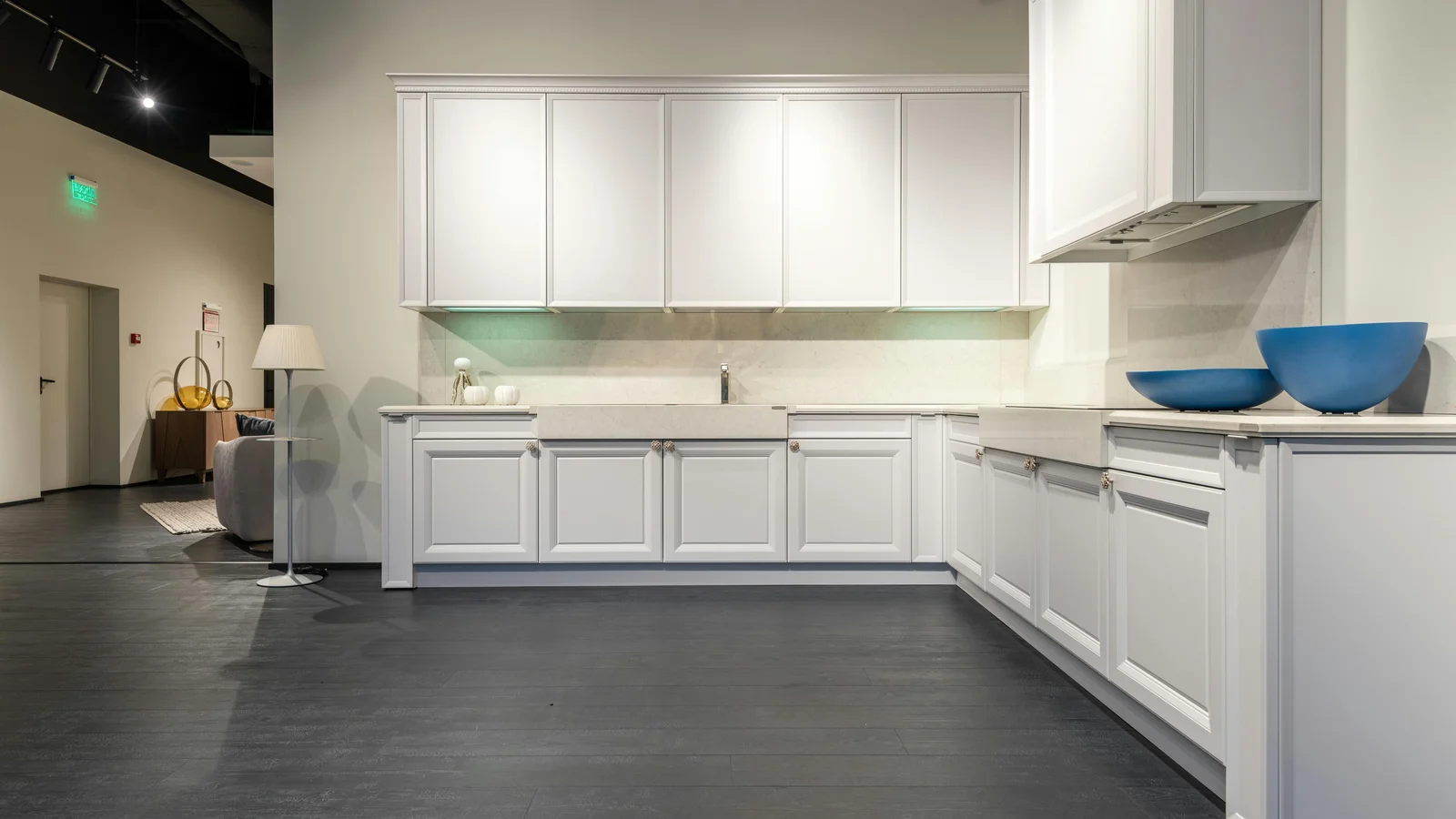
Empty white modern furniture showroom interior with clean lines, daylight from the windows, and a row of cabinets arranged for walk-through.

It is 11am on a Saturday. A couple stands in the middle of a showroom in a business park near Slough, surrounded by samples and brochures. They have driven 40 minutes, parked, asked the receptionist about the louvered pergola in the window, and are now waiting for a sales rep to finish a call. The space smells of clean aluminium and brewed coffee. There is a configured pergola on the floor, half a brochure stack on a side table, and a closer in a navy fleece walking over from the back office with a tape measure in his hand.

It is 9pm on a Tuesday. The same couple sits at their kitchen table 80 miles away. The wife has the iPad. The husband has a phone. They have been on the same website for forty minutes. They have built three different pergolas, swapped a louvered roof for a fabric one and back, watched the price move from £12,400 to £14,800, downloaded a PDF, talked about it, gone back, and pressed submit. They have never spoken to a salesperson. They have never driven anywhere. By the time they go to bed, the same dealer has a priced configured PDF in the inbox.

Two showrooms. Same buyer. Same product. Same eight jobs, done at different hours, in different geometry, by different hands.

The eight jobs of a showroom#

A showroom is not a room. It is a stack of jobs, dressed up as a room.

When an outdoor living dealer opens a 600-square-metre space in a retail park, they are not buying a building. They are buying a way to do eight things at once, in front of the buyer, in person. The same way a department store is not a building either, but a way to do display, fitting, advice, billing, and returns under one roof. The list looks like this.

  1. The window display. The thing in the window that pulls a passerby off the pavement.
  2. The product shelf. The actual product range, set out so the buyer can see what is on offer.
  3. The expert at the table. The salesperson who answers questions, narrows the field, explains the trade-offs.
  4. The fitting room. The place where the buyer tries the product against their own situation, not the abstract one in the brochure.
  5. The price tag. A number, attached to a configured product, written down where the buyer can see it.
  6. The contract folder. The piece of paper the buyer signs when they commit, plus the receipt and the warranty card.
  7. The follow-up. The phone call three days later, the email about the install date, the after-sales answer to “the wind ripped the screen, what now.”
  8. The infrastructure. The roof over the room. The parking outside. The opening hours. The receptionist. The coffee machine. The geographic reach. Everything that makes the other seven jobs possible.

The room exists to do the eight jobs. The wood in the floor and the brand on the door are how a physical showroom does them. They are not the jobs themselves.

That distinction is the whole post. The eight jobs do not change when the showroom moves online. The hands change. The materials change. The hours change. The eight jobs stay.

Side by side: a buyer walks each one#

A buyer walking into the physical showroom on Saturday and the same buyer opening the digital showroom on Tuesday encounter the same eight jobs in different order, with different friction.

Job 1, the window display. In the physical showroom, the window is the most expensive square metre of the lease. The configured pergola sits in the window, lit from above, with the louvered roof half-open and a deck under it. In the digital showroom, the window is the homepage hero, the Meta ad, the Google search result, the photograph on the social feed. Same job. Same purpose. The physical window pulls a passerby off the pavement. The digital window pulls a scroller off the feed. The math is different (one passerby per minute on a busy Saturday, one scroller per second across a paid campaign), but the verb is the same.

Job 2, the product shelf. In the physical showroom, the shelf is the floor: three pergolas, a fabric one, a louvered one, an integrated-lighting one. In the digital showroom, the shelf is the configurator gallery, where the buyer sees every product line at once and can switch between them with a tap. The physical shelf shows three. The digital shelf shows thirty.

Job 3, the expert at the table. In the physical showroom, the expert is the closer with the tape measure. He knows the product, he reads the buyer’s face, he handles the “but my garden has a slope” question in real time. In the digital showroom, the expert at the table is the rule library inside the configurator. It already knows which post height is allowed for which beam span, which finish is in stock this month, which accessory cannot ship with which roof type. The physical expert is one person, on shift. The digital expert is the same rules, replicated across every buyer at once, never out of office.

Job 4, the fitting room. This is the job most physical showrooms cannot actually do. The buyer does not have their own garden in the showroom. They cannot try the pergola in their actual back yard, against their actual house, with their actual sun angle. In the digital showroom, the fitting room is the 3D configurator: the buyer rotates the pergola, sees it from above, drops it onto a screenshot of their own back garden, picks the post finish that matches their cladding. The physical showroom shows an example. The digital showroom shows the buyer’s example.

Job 5, the price tag. In the physical showroom, the price tag is whatever the closer writes on a quote, which usually arrives by email three days later, after the kitchen-table session and the calculation on a spreadsheet. In the digital showroom, the price tag is computed live, in the buyer’s currency, from the seller’s real cost rules. Same configured spec, instant. The physical price tag takes 24 to 72 hours. The digital price tag takes 0.4 seconds.

Job 6, the contract folder. In the physical showroom, the contract is a printed sheaf, signed at the desk. In the digital showroom, the contract starts as a designed PDF (brochure-grade, with the configured spec, the price, the install timeline, the warranty terms), and finishes with an electronic signature later in the funnel. The physical folder requires presence. The digital folder requires nothing.

Job 7, the follow-up. In the physical showroom, follow-up is a salesperson with a CRM tab open, calling the buyer three days after the visit, working a tracking spreadsheet. In the digital showroom, the follow-up runs on the events stream from the configurator: who looked at which spec, who downloaded the PDF, who came back twice, who got stuck on the screen colour for nine minutes. The physical follow-up is one rep with a memory of the meeting. The digital follow-up is a log of every click the buyer made, plus the rep with the memory of the meeting.

Job 8, the infrastructure. In the physical showroom, infrastructure is the roof, the rent, the receptionist, the parking, the coffee, the lights, the cleaner, the security alarm, the insurance. In the digital showroom, infrastructure is the hosting, the CDN, the WebGL runtime, the configurator subscription, the integration with the ad accounts and the CRM. The physical infrastructure costs roughly 80,000 to 250,000 pounds a year for a midsize space in a UK retail park. The digital infrastructure costs a small fraction of that and reaches every postcode, every language, every hour at once.

Digital showroom vs physical showroom, side by side

168 hours a week

Digital

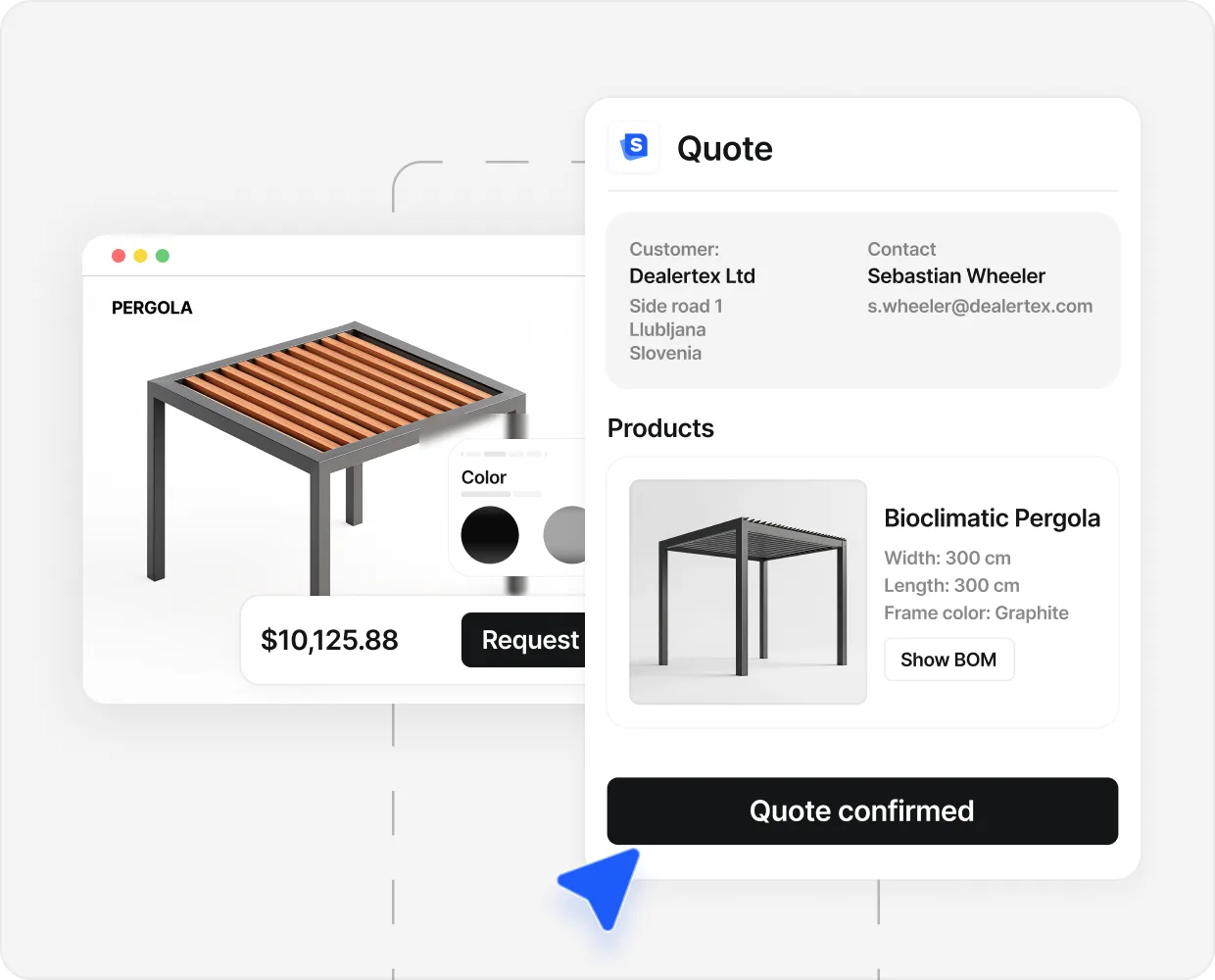
The website is the room. The configurator is the rep. The PDF is the contract folder. Every shelf, every market, every language, all the time, run by the buyer themselves.

  • Real price in 0.4 seconds
  • Designed PDF before the buyer closes the tab
  • Logs every click for the follow-up call
  • Rolls across a 30-dealer network in one push
9 hours a day, 1 geography

Physical

The closer's chemistry across a table is still the part of the funnel that ends a 25,000 euro deal. Hand on the material, in-person social proof, and the closing conversation that no 3D model replicates.

  • Hand on the aluminium, smell of the oak
  • Couples overhearing other couples commit
  • Closer reads the unspoken objection
  • Closes 30–50 percent of qualified appointments

The two stages are not substitutes. They are halves of the same funnel: digital qualifies, physical closes.

By Monday morning, 40 percent of our inquiries already came in as configured 3D quotes. The first conversation was different from day one.

Stuart Dantzic, Caribbean Blinds (UK)

Stuart Dantzic at Caribbean Blinds is one of the named outdoor living dealers who measured what happened when the digital showroom took on the first five jobs across an entire pergola line. The team see roughly 508 inquiries in 90 days from the configurator, with around 40 percent of all inquiries arriving already configured.

A couple sitting on a sofa together using a tablet in warm evening light, browsing through a configurator on a quiet weeknight.

What only the physical showroom can still do#

If the side-by-side reads like a straight win for digital, the post is not honest yet.

There are four jobs the physical showroom does that no configurator on a phone can replicate. They are not minor jobs. On premium products, on first-time buyers, on the final 5 percent of the purchase decision, they are sometimes the entire deal.

Hand on the material. A 4mm aluminium extrusion in a render does not feel like a 4mm aluminium extrusion in the palm. The grain of the powder coat, the weight of the post when you push it sideways, the click of the louver as the rep rotates it open, the smell of the oak before it is sealed. Buyers spending 15,000 to 35,000 euros on an outdoor structure they will look at every day for fifteen years do not commit only from a screen. The physical sample is the proof that the build is real.

The smell, the temperature, the noise. A showroom is multi-sensory. The buyer can hear how the rain sounds on a louvered roof. They can stand under the shade and feel the temperature drop. They can smell the cedar before it weathers. None of these jobs travel down a fibre cable.

In-person social proof. A showroom in a busy retail park, with three other couples looking at pergolas at the same time, performs a social-proof job that no website testimonial replaces. The buyer sees other people committing to the same product, in the same space, at the same time. They overhear conversations. They watch the closer write up another quote at the other table. That kind of pressure does work no digital channel can produce.

The closer’s chemistry across a table. The best outdoor living salespeople close at 30 to 50 percent of qualified appointments. The job they do across a table (reading the body language, sensing the unspoken objection, watching one spouse’s eyebrow move when the other says “actually I prefer the slate finish”) is genuinely irreplaceable on a phone call. The configurator can route the right qualified buyer to the right closer. It cannot do the close itself, not at this ticket.

These four jobs are why the physical showroom is not going away. They are also why the digital showroom should not pretend to replace it. The two together do more work than either does alone.

What only the digital showroom can do#

The four jobs running the other direction are equally real, and harder to absorb if the dealer’s frame is “we have always done it in the showroom.”

24/7, every market, every language, infinite shelves. The physical showroom opens nine hours a day, six days a week, in one geography, in one language. The digital showroom is on all 168 hours of the week, in every country at once, in every language the team translates into, with no shelf-space ceiling. A UK pergola dealer can be quoted by a French homeowner at 3am Paris time without ever hiring a French rep.

Intent tracking. The physical showroom can measure how many people walked in. It cannot measure how many considered the louvered roof, swapped to the fabric, swapped back, lingered on the colour wheel for four minutes, and downloaded a PDF before they left. The digital showroom logs all of it. The follow-up call is not “what were you thinking?” but “I see you spent twelve minutes on a 4 by 5 metre louvered build last Thursday, let me walk through the install timeline.” That is a different conversation.

Instant PDF. The physical showroom hands the buyer a brochure. The brochure is generic. The digital showroom hands the buyer a designed PDF of their own configured build, in their inbox, before they have left the website. The brochure is a list of possibilities. The PDF is the buyer’s choice, priced and dated. Two days later, when a slower competitor quotes by hand, the PDF is already on the buyer’s desktop with the dealer’s logo on it.

Dealer-network scale. A manufacturer with 30 dealers across Germany cannot build 30 physical showrooms. The digital showroom rolls across all 30 dealer sites at once, in each dealer’s branding, with central reporting back to the manufacturer. The same configurator. The same rule library. The same priced PDF. 30 closing teams. That kind of reach is not available on the physical side without a property portfolio.

The numbers behind the digital-only jobs are public, and they are the most consistent pattern in the case studies the outdoor living industry has shipped over the past five years.

  1. 508 Leads in 90 days Caribbean Blinds, UK pergolas. 40 percent of inquiries arriving via the digital showroom.
  2. £168K 12-week sales Mathew at Spolding and Sons, UK garden rooms. 475 leads, 3x previous sales rate.
  3. 30 Pergola sales, 90 days Nordin, Lithuania, from a standing start with no prior online presence.
  4. €133M Quotes generated Mizarstvo Hrovat, Slovenia, garden rooms and modular houses. 10,835 engineering hours saved.

Named numbers and full stories in the case studies.

The pattern is consistent across the named numbers and the longer ones. The digital showroom does not invent new buyers. It catches the ones already looking, who would otherwise leave with the quote going to the dealer who answered first. The full Spolding story is in Spolding and Sons, 475 leads and £168K of new business in twelve weeks from a digital showroom layered onto an existing UK garden-room business.

Which one builds the better first conversation#

When a dealer asks which showroom builds the better first conversation, the answer is almost never “either-or.” It is “digital qualifies, physical closes.”

The digital showroom opens the conversation. The buyer browses, builds, prices, downloads, submits. By the time the dealer sees the inbox on Monday morning, the buyer has already shown three things the physical showroom never sees that early: which product family they picked, which specification they settled on, and how much time they spent on which decision. The first sales call is not “what size were you thinking?” It is “I see you configured a 4 by 5 metre louvered build last Thursday, with the anthracite finish. The install timeline for that build is six weeks from order. Want to walk through what your install would look like in person?”

That conversation hands the buyer over to the physical showroom at the right moment. The closer in the navy fleece walks into the appointment with the priced configured spec already in his head. He spends his time on the four jobs only the physical showroom can do (the material, the social proof, the closer’s chemistry, the close itself) instead of re-doing the spec work the buyer already did on their phone.

When the digital and the physical run in series, in that order, the close rate rises. Industry pergola close rates sit at 5 to 8 percent. Outdoor living dealers running a digital-then-physical funnel commonly land at 10 to 20 percent, sometimes higher in low season when intent is concentrated. Same closers. Same showroom. Different first conversation.

The four anti-fit conditions are the same as for any conversion layer. None of them say “the physical showroom is enough.” Most of the dealers who hit one of them are running a smaller operation where the math is wrong, not where the physical showroom is winning. Once the AOV is above 5,000 euros and the website is producing 1,000-plus monthly visitors on the product category, the digital showroom returns more than the cost of running it, almost always inside the first quarter.

The deeper category piece on what a digital showroom actually is walks through the platform mechanics behind the eight jobs above (the configurator, the rule library, the pricing engine, the PDF, the events stream). If the dealer wants the buyer’s-perspective view, the gallery at SaleSqueze configurators shows live digital showrooms across pergolas, verandas, awnings, garden rooms, carports, and modular homes that you can browse yourself.

The category cousin in the wider sales literature is the showroom concept, which until very recently was treated as a physical-only phenomenon. The job list is older than the room.

Two showrooms. Same buyer. Same product. Same eight jobs, done at different hours, in different geometry, by different hands. The dealer who learns to run both stages, in the right order, sees the Monday inbox arrive priced and configured, while the navy-fleece closer keeps doing the four jobs only a room with samples in it can still do.

People also ask.

How do digital showrooms differ from traditional showrooms?

They do the same eight jobs (window display, product shelf, expert at the table, fitting room, price tag, contract folder, follow-up, infrastructure) but on a phone, run by the buyer, at the buyer's own hour. The digital showroom never closes, never travels, and never runs out of parking. The physical showroom still owns the in-person social proof and the closer's chemistry. They are complementary stages, not substitutes.

What is a digital showroom?

A digital showroom is a section of a manufacturer's or dealer's website that lets a buyer build, see, price, and request a configured product without contacting a salesperson first. It typically combines a 3D model, a configuration rule library, a pricing engine, and a designed PDF that lands in the buyer's inbox. The buyer does the spec work the seller used to do by hand.

Can a digital showroom replace a physical one?

No, and any vendor who pitches it that way is overselling. The digital showroom replaces the early-funnel work (browsing, comparing, drafting a spec, getting a price). The physical showroom still owns the close above a certain ticket. The two together cover more ground than either does alone. Digital qualifies, physical closes.

What are the best practices for digital showroom design?

Six rules cover most of the gap. Load fast on a phone, since over half the traffic arrives that way. Show one product family per showroom (not the whole catalogue at once). Let the buyer configure without registering. Show a real price on a real spec, not a starting-from placeholder. Send a designed PDF, not a screenshot. Wire the events panel to the CRM and the ad accounts so the seller sees what each visitor actually did inside the configurator.

What are the best practices for digital showroom customer engagement?

Treat the configured submission as the start of the conversation, not the end of it. Open the follow-up call with the spec the buyer built, the price they saw, and the time they spent on which decision. Use the events log to separate the 12-minute deep configurators from the 30-second bouncers and call the deep ones first. Send the priced PDF inside 60 seconds. Hand off the live spec, not a re-keyed version, to whoever picks up the phone.

How much traffic does a digital showroom need to be worth running?

Roughly 1,000 monthly visitors on the product category for the configurator to earn its keep at the entry tier. Below that, the conversion rate is fine, but the absolute volume of configured leads is too low to move the close-rate needle. At 5,000 to 20,000 monthly visitors on the category, the configurator becomes the largest lead-source on the website, and the case-study numbers (508 leads in 90 days, 30 sales in 90 days, €133M in quotes) sit at the top end of that band.

What kinds of products work best in a digital showroom?

Products with a finite, well-understood configuration space (5 to 50 variables) and an average sale of 5,000 euros or more. Pergolas, verandas, garden rooms, carports, awnings, fences, kitchens, modular houses, custom blinds. The rule of thumb: if 80 to 95 percent of buyers end up picking from a known set of standard combinations, a digital showroom returns more than a custom CAD process across a category.

Start selling visually.

See SaleSqueze on your own product line.

Book a Demo
  • Live in 7 days
  • The build is free
  • Ready-made templates