

Blog lead qualification

Digital showrooms for contractors: how the inquiry stops being a guess

Outdoor living contractors lose most of their week to inquiries that go nowhere. A digital showroom lets the buyer configure, see the price, and pre-qualify themselves before the first call. The conversation starts where it used to end.

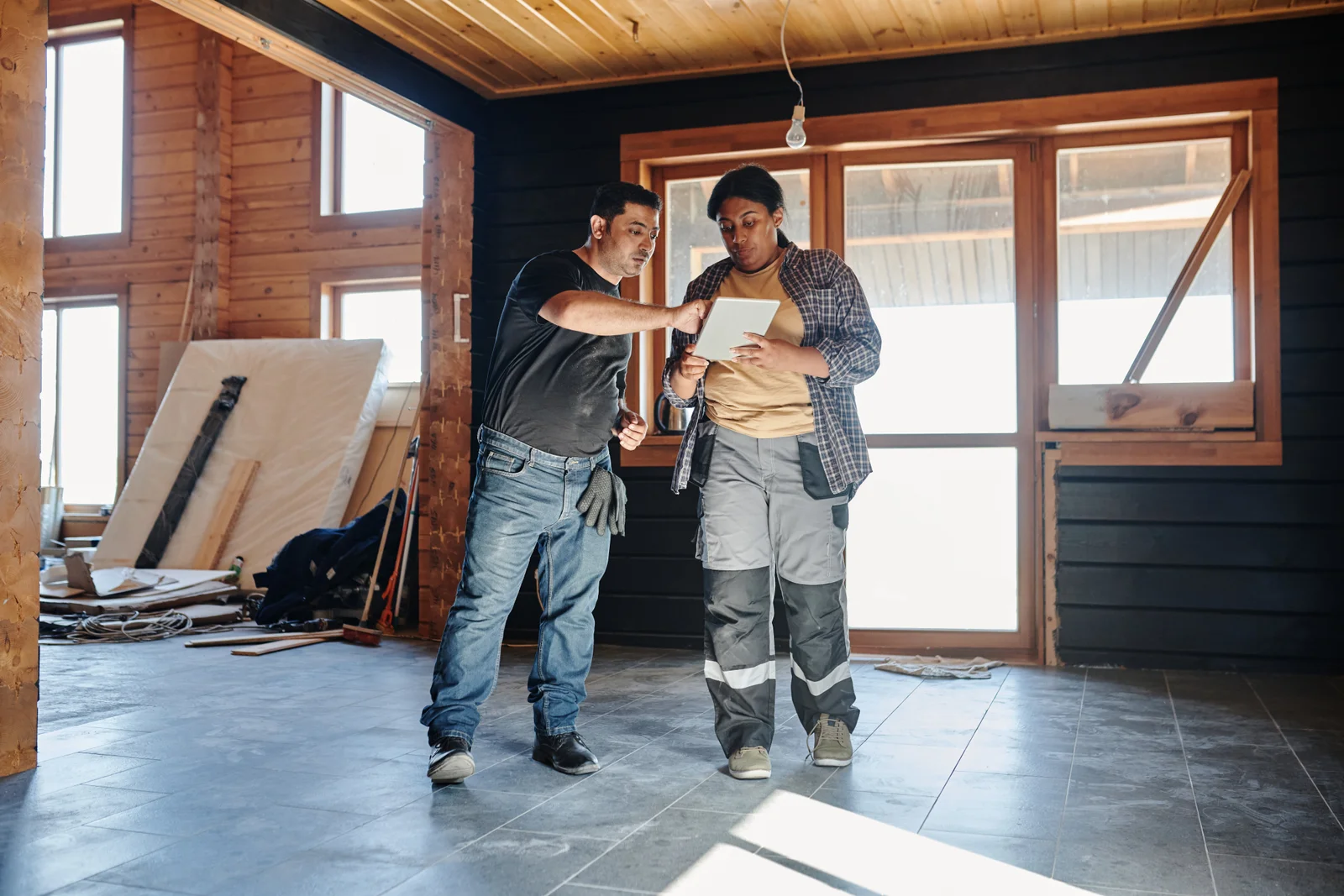
An outdoor living contractor in a hard hat reviewing a configuration on a tablet on a residential job site.

It is 7:42 on a Monday morning. The contractor opens the inbox in a parked van outside a job in Bristol. Five inquiries came in over the weekend. Two of them say “interested in a pergola, please send pricing.” One says “we are looking at outdoor structures for a new build.” One came in at 1:14 on Sunday morning from a name that has emailed three times in six months and never booked. One has a phone number and a postcode and one line of context. Four of them are tire-kickers. One is the real one. The contractor cannot tell which is which without spending the morning calling.

That morning is the problem this post is about.

We added 40 percent revenue in three months with the same team. The reason was simple. The leads got better before they hit us.

Andrej Repse, Armat (Slovenia, carports)

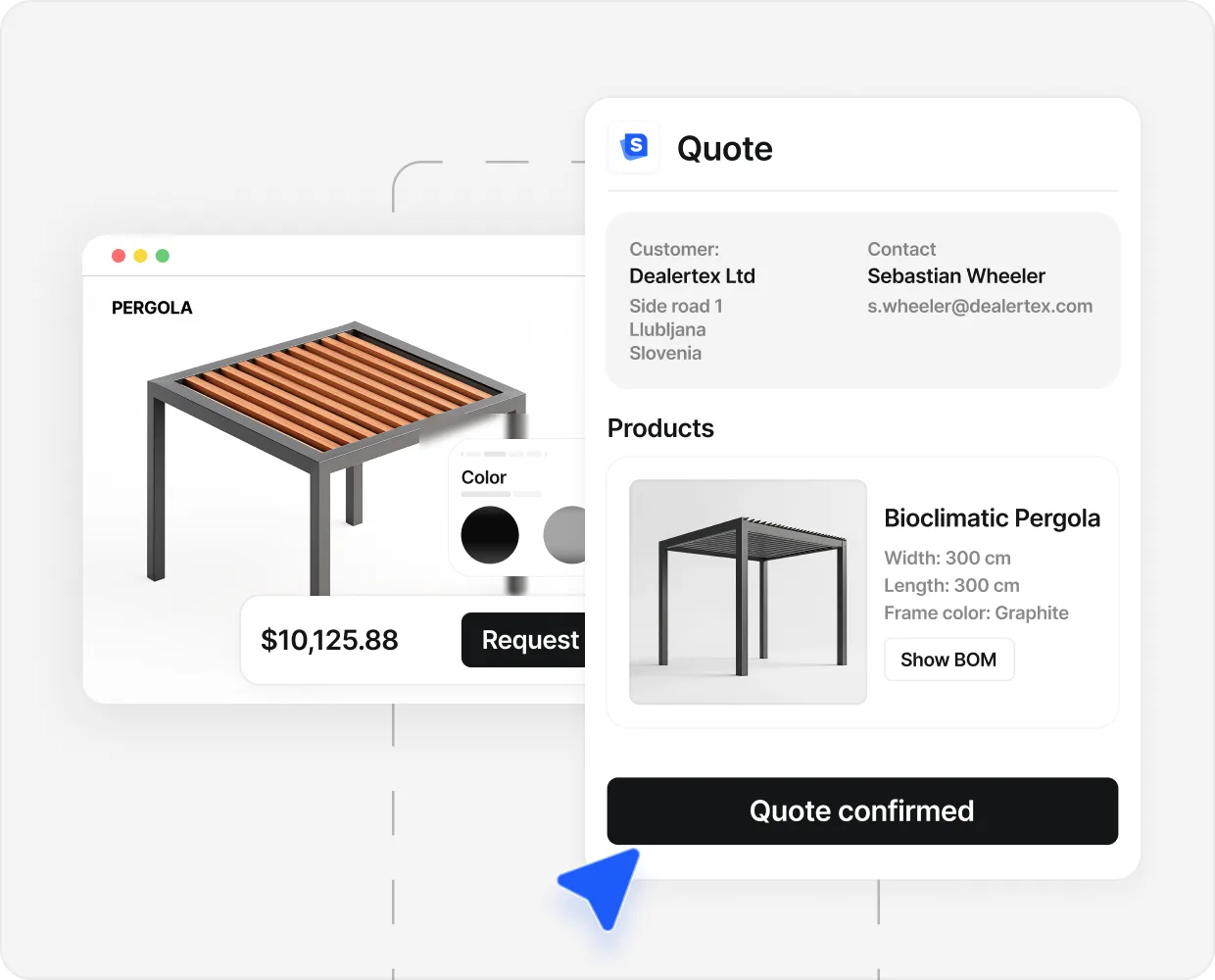
A digital showroom is the inbox fix. The buyer configures, prices, and answers intent questions on the contractor’s website before submitting anything. The submission carries the build spec, the price band, the configuration time, and a quiet behavioural signal of how serious the buyer is. The first call starts with a PDF on the screen and a buyer who has already done the spec work. The Monday morning above stops happening.

The category cousin in B2B software is CPQ, short for configure-price-quote, historically internal software used by a sales rep behind a login. The contractor’s digital showroom is the same job, but on the public website, run by the buyer themselves. The buyer does the work the salesperson used to do on a Sunday with a printer.

What contractors lose to bad qualification#

The math is unkind once you write it down. Industry close rate in outdoor living sits at 5 to 8 percent. That figure includes every inquiry the contractor’s contact form ever caught. Out of one hundred inquiries, ninety-three close as nothing. Of those ninety-three, most consumed real time before they died.

The honest survey of where a contractor’s week goes:

  • Three to five hours a day talking to buyers who already decided to go cheaper, but called for a quote anyway. Industry benchmark: roughly 80 percent of inquiries are tire-kickers, price-shoppers, or wrong-fit.
  • 20 to 40 hours a week on creating quotes that never turn into a sale. (One US pergola contractor on a recent call described it as “twice on a Sunday.”)
  • 200 hours a month on quoting at the median, for a contractor doing twenty-five quotes a month at eight hours each. At thirty euros an hour of opportunity cost, that is six thousand euros a month in time burned on dead quotes.
  • Five to fifteen deals a month lost to speed, because a competitor with a faster system quoted in twenty-four hours while the contractor was still drafting. At a five to fifteen thousand euro average sale, that is seventy-five to two-hundred-twenty-five thousand euros of lost revenue a year.

The contractor’s instinct is to hire someone to fix it. Hire a sales assistant. Hire a marketing agency. Hire a second estimator. Each of those costs money and adds throughput on the same broken funnel. The funnel itself stays broken. The contact form still qualifies nobody, and the new hire spends their week calling the same tire-kickers, but faster.

The fix is not faster handling of bad leads. The fix is that the bad leads never become a phone call.

How a digital showroom qualifies before the call#

The mechanism is simple. Move the spec work, the price discovery, and the intent capture upstream, to the buyer, on the contractor’s website, before submit. The submission is what arrives in the inbox.

Three things have to be true for the mechanism to work.

The buyer has to configure, not just click. A digital showroom is not a contact form with a pretty header. The buyer rotates the 3D model, picks the size, picks the roof type, picks the posts and the finish and the screens, sees the model rebuild on every change. A buyer who walks away from a configurator after thirty seconds was never going to call anyway. A buyer who spends twelve minutes swapping the roof type four times is telling the contractor something a contact form cannot say out loud.

The buyer has to see a real number. Not “starts from.” Not “request a quote.” A specific price for the specific build the buyer just configured, computed from the contractor’s real cost rules and regional installation modifiers. The buyer who clicks submit after seeing the number has already decided the price is in the band. The buyer who closes the tab has self-filtered, which saves the contractor the call.

The buyer has to answer the questions that change how the call goes. Project timeline. Location. Decision stage. Budget confirmation. Whether they own the property. Five questions, asked between configuration and submit, in the contractor’s tone of voice, not a Typeform shell. The answers route the inquiry, qualify the buyer, and seed the first conversation.

The contractor opens the inbox to a configured PDF, the answers to five questions, the configuration session length, and a CRM entry that has all of it already attached. That is not a lead. That is the start of a meeting.

Two outdoor living trades people in a residential property reviewing a configuration on a digital tablet together.

What you give the buyer to filter themselves#

Self-filtering is the whole game. The contractor gives the buyer five levers, and the buyer uses them to qualify themselves in or out without a phone call ever happening. Each lever exists to answer one question that a contact form leaves unanswered.

  1. 01

    Price visibility (visible band, hidden number, or staged reveal)

    The most powerful filter is the price the buyer sees while they configure. A visible band ('this build comes in between 12,000 and 18,000 euros depending on finishes') turns off the buyers who were never going to spend that. A hidden number with a staged reveal (the buyer designs the build, then a final price-reveal screen requires them to answer two questions) converts the buyers who are committed and chases off the rest. The contractor sets the toggle by category and by AOV.

  2. 02

    Configuration depth (how serious is this build)

    The configurator captures every change. Swapped roof type four times in twelve minutes? That buyer is comparing two options and ready to decide. Picked the cheapest size and submitted in 40 seconds? Different story. The contractor's CRM sees the configuration depth as a number (clicks per session, time on tool, accessory selections) and the sales team prioritises accordingly. A buyer who configured deep gets called first.

  3. 03

    Location and install zone

    Postcode, region, or 'select your nearest dealer' built into the qualification flow. A pergola contractor in Surrey does not want a Glasgow inquiry. A US contractor licensed in three states does not want a fourth-state lead. The location field routes the inquiry to the right dealer if there is a network, and filters out-of-zone buyers before they hit submit, with a friendly 'we do not currently install in your area' message instead of a wasted call.

  4. 04

    Project timeline ('when are you looking to install')

    Three options. Within three months. Three to twelve months. Researching for next year. The first one is a buyer who wants a quote this week. The second is a buyer the contractor calls back in eight weeks. The third is a buyer who gets the configured PDF, gets added to a nurture sequence, and does not consume a sales call today. A contact form treats all three the same.

  5. 05

    Decision stage ('what is your role in this decision')

    Property owner. Architect specifying for a client. Trade buyer pricing for a job. Tenant who would like one but does not own the property. Each one needs a different conversation and a different cadence. The contractor's first email back to an architect reads nothing like the first email back to a homeowner. The decision-stage field is what makes that possible.

The five levers do not all have to be on. Most premium contractors run with price hidden, location on, timeline on, decision stage on, and configuration depth tracking running quietly in the background. Most volume contractors run with price visible, location on, timeline on, decision stage off. The right setup depends on AOV, brand positioning, and the contractor’s existing close-rate baseline.

What every setup has in common is that the buyer is doing the qualifying. The contractor is not.

What changes on Monday morning#

The before-and-after picture lands faster than any abstract argument. Two Mondays, same contractor, six months apart.

Monday morning, before. The inbox holds twenty contact-form lines from the weekend. Half are price-shoppers, two are real, the contractor does not know which two. The morning goes to calling, leaving voicemails, asking what people want, writing down sizes on the back of an envelope. By Wednesday, three quotes are out. By Friday, the buyer reads the third quote and goes silent. By the following Monday, two of the buyers have signed with the contractor down the road who quoted in twenty-four hours. The contractor’s week produced two real conversations and one likely sale.

Monday morning, after. The inbox holds twelve configured PDFs from the weekend. Each one shows the build the buyer designed, the size, the posts, the roof type, the finish, the price, and the five qualification answers. The CRM already has the spec. The contractor sees which buyer spent fourteen minutes in the showroom, swapped the roof three times, picked oak posts, and submitted at 11pm on Saturday. The contractor calls that buyer first. The next call is the buyer who configured a smaller build, answered “within three months”, and lives twenty minutes from the install crew. By 11am Monday the contractor has had four real conversations and the morning is not over.

Andrej at Armat, a Slovenian carport contractor, ran the second Monday for three months. The result was 1,873 leads through the digital showroom, plus 40 percent more revenue, with no new hires. The hires the contractor was about to make to handle volume did not happen, because the volume that landed was qualified enough that the existing team could close it. The cost of a digital showroom over those three months ran less than the salary of one of the hires the contractor did not make.

  1. +40% Revenue in 3 months Armat (carports, Slovenia). Same team, no new hires. 1,873 leads through the digital showroom.
  2. £5 Cost per lead, after Spolding and Sons (garden rooms, UK) went from £238 per lead to £5 per lead after the digital showroom launched.
  3. 475 Leads in 12 weeks Spolding and Sons (garden rooms, UK). 3x previous sales, same team, same install crew.
  4. 10× Close rate vs industry Industry outdoor living close rate sits at 5 to 8 percent. Contractors running configured funnels commonly run 10 to 20 percent.

Named numbers and full stories live in the case studies.

The pattern is consistent across the contractors running a digital showroom seriously. The configurator does not invent demand. It catches the demand that was already on the website and bouncing off a contact form. It also reshapes the demand that does land into something the sales team can act on quickly.

What it is not#

The digital showroom is a specific thing. It is not three other things people sometimes mistake it for.

It is not a CRM. A CRM holds the contact records, the deal stages, the activity log, and the reporting. The digital showroom feeds the CRM, but does not replace it. The contractor still needs HubSpot, Pipedrive, Zoho, or whichever pipeline tool the team works in. The integration is the point. The configured spec lands in the CRM with the buyer’s record, so the salesperson opens the deal already knowing what was built and what was answered.

It is not a lead-generation ad campaign. A Meta or Google ad sends traffic to the contractor’s site. The digital showroom converts the traffic that lands. A contractor running ads to a contact form converts maybe 1 to 2 percent of clicks. The same contractor running ads to a digital showroom commonly runs 6 to 10 percent. The ads do not change. The conversion surface does. The right question to ask is not “what is the ad budget” but “where does the click go.”

It is not a chatbot or a live-chat widget. A chatbot is a question-answerer for buyers who have a question. A digital showroom is a configuration surface for buyers who are ready to design. The chatbot at best replies with “let me put you in touch with someone” and forwards the inquiry. The digital showroom replies with a priced PDF. The two tools can coexist, but they are not substitutes.

What it actually is, is the showroom. Same job a physical showroom does, in the same buyer-facing way, just available on the contractor’s website at 1am on a Sunday in November when the buyer is up with a laptop on the kitchen table. The buyer walks in. The buyer designs the build. The buyer sees the price. The buyer asks the salesperson (who is not standing there) for a quote. The PDF arrives in the morning. Same shape of interaction as the showroom on the high street, only the visit happens before the contractor knows the buyer exists.

What a contractor should test on a demo#

A demo of a digital showroom from a vendor looks similar for the first five minutes. The differences arrive in minute six. Six things to put on the desk before signing anything.

  • Speed to launch. A premade digital showroom built around the contractor’s category should go live in 1 to 10 days. The models, post systems, roof types, and rule library already exist. If a vendor quotes 3 to 6 months for a pergola or carport or garden room, the contractor is paying for someone else to learn the category. That is a different product called a custom build.
  • A real price on the demo. Ask the vendor to price a specific build on the spot. If the vendor says “we will configure pricing later,” the answer is no. The pricing engine is the showroom. Without it, the contractor is buying a 3D viewer.
  • The PDF the buyer receives. It should look like the contractor’s brochure, carry the contractor’s logo, list the spec line by line, show the price, and read as a serious document. A screenshot in an email is not a digital showroom PDF.
  • Premium-positioning toggles. Can public prices be hidden? Can intent questions gate the price reveal? Can the priced PDF ship privately to the salesperson before the buyer sees it? For premium contractors, these toggles are the difference between a showroom and a comparison-shopping site.
  • Mobile performance on real data. More than half of outdoor living traffic is on a phone. Open the demo on a phone, on 4G or 5G, not the vendor’s showroom Wi-Fi. If the model takes eight seconds to resolve, the buyer is back in the feed before the pergola loads.
  • CRM and ad-platform events. The digital showroom should fire events to Meta, Google Ads, GA4, and the contractor’s CRM the moment the buyer designs, prices, and submits. Without those events the contractor cannot tie ad spend to configured engagement, which is half the reason the funnel works.

A longer technical breakdown of the configuration and pricing side of the same loop lives in the pergola configurator guide and the 3D configurator software buyer’s guide. For the category-level definition of what a digital showroom is, see the what is a digital showroom companion post.

What changes for the contractor, not the buyer#

The buyer does not notice the funnel change. The buyer notices that the contractor’s website let them design a pergola at 10pm on a Tuesday, that they got a price, that the PDF arrived in their inbox, that the salesperson called and started the conversation with “I see you went with the 4 by 5 metre louvred build with oak posts last Tuesday, let me walk you through the install timeline.”

The contractor notices everything change. The Sunday at the kitchen table stops happening. The 200 hours a month on quotes that go nowhere stops happening. The Monday morning of twenty contact-form lines and four real buyers stops happening. The thing that replaces all of it is a steady stack of configured PDFs that the contractor’s existing team can act on without burning the week.

The shift is not a productivity tweak. It is what happens when the qualification work moves from the contractor to the buyer. Once it moves, it does not move back. Contractors who run a digital showroom for six months stop being able to imagine running the old funnel. The old funnel was an unpaid second job that the contractor was doing on top of the contracting work. The digital showroom retires it.

If your team is evaluating the move, the live configurator gallery shows what working digital showrooms look like across pergolas, carports, garden rooms, fences, awnings, and verandas. The case studies name the contractors and the numbers behind the change.

People also ask.

How do digital showrooms work for contractors?

A digital showroom is a configurable 3D space on the contractor's own website. The buyer picks size, materials, roof type, finishes, accessories, and screens. The model rebuilds on each change, the price recalculates from the contractor's real cost rules, and a designed PDF lands in both the buyer's inbox and the contractor's CRM with the full spec attached.

What are the benefits of digital showrooms for contractors specifically?

Three big ones. First, the inquiry arrives qualified. The buyer who configured a 4 by 5 metre louvred build, picked oak posts, and submitted is not the same shape of lead as a contact-form line. Second, the contractor stops spending Sundays at the kitchen table redrafting quotes for buyers who will never sign. Third, the first call starts with a configured PDF on the screen, not with the salesperson asking what size the buyer was thinking.

Will the buyer still want to talk to a real salesperson?

Yes, especially above 15,000 euros. The digital showroom does not replace the close. It replaces the spec call, the second call, the drive out to measure, and the quote-by-email round. The conversation that does happen starts later in the funnel and runs shorter, because the buyer already designed the product and saw the number.

What about premium contractors who do not want to publish prices?

A real digital showroom toggles the public price off. The buyer still configures, the spec still lands in the CRM, the priced PDF still ships, but the number is gated behind intent questions and a sales-rep review. Premium positioning and a digital showroom are compatible. The race to the bottom is a setting, not a category property.

How is a digital showroom different from a contact form?

A contact form qualifies nothing. Twenty inquiries arrive on a Monday and the contractor cannot tell which four are serious. A digital showroom asks the buyer to do the work that proves intent: configure a build, sit with it for ten minutes, swap the roof twice, submit. The submission carries data the contact form cannot: exact spec, time on tool, configuration depth, price band, project timeline. The contractor calls the ones whose behaviour says they mean it.

How long does a contractor-friendly digital showroom take to launch?

A premade digital showroom built around a known category (pergolas, garden rooms, carports, awnings, sheds, fences) goes live in 1 to 10 days. The vendor already has the models, the rule library, and the pricing structure. A generic 3D vendor with no category template typically quotes 3 to 6 months. The difference is whether the vendor already understands what a louvred roof is or has to learn on the contractor's project.

How does a digital showroom boost sales for general contractors?

Two mechanisms. First, more inquiries reach the contractor because the buyer who would have bounced from a contact form completes a configuration instead. Second, the inquiries that do arrive close at a higher rate, because the buyer has already invested time, seen the price, and self-filtered if they cannot afford the build. Outdoor living industry close rate sits around 5 to 8 percent. Contractors running configured funnels commonly run 10 to 20 percent.

What does a contractor-friendly digital showroom actually contain?

Five blocks. A 3D model of the contractor's product, parametric so it rebuilds on every change. A rule library that knows the constraints of the category (which roof works with which post height). A pricing engine that computes a real number from the contractor's cost rules. A designed PDF that looks like the contractor's brochure. A CRM and ad-platform handoff so the spec, the buyer, and the events flow into the contractor's existing systems.

Start selling visually.

See SaleSqueze on your own product line.

Book a Demo
  • Live in 7 days
  • The build is free
  • Ready-made templates