High margin outdoor living: stop discounting jobs you should have walked from


Outdoor living revenue is growing. Margins are not.
A premium pergola dealer in the UK told me last spring that the 4 by 5 metre louvred build they were selling for £18,000 in 2022 now lands at £14,500. Same product, same install team, same site visit. £3,500 in margin gone. The dealer assumed it was the market: aluminium imports, an extra competitor in the postcode, a tighter homeowner budget. All true. None of it the real reason.
The real reason was simpler. The dealer was quoting everyone who filled out the contact form. About half were price shoppers already quoted by three other vendors. Not wanting to lose the work, the dealer kept meeting the lowest number in the room. By the third or fourth deal of the month, £14,500 had become the new internal floor. The margin compressed because the dealer never walked away from the wrong buyer.
That is the trap. It is not pricing. It is qualification.
The 35 to 40 percent teams do one thing differently#
Across roughly 160 outdoor living teams in 30 markets we work with, the close rate spread is wide. The bottom quartile lands between 3 and 6 percent of inbound web leads. The middle sits at 5 to 8 percent, the published industry average. The upper quartile lands between 10 and 20 percent.
That is a 3x difference on the same product, in the same market, often the same postcode. It is not the sales team. An owner-led two-person installer can hit 17 percent close rate if the funnel feeding them is clean. A 12-person team with a full sales floor can sit at 5 percent if it is not.
The 35 to 40 percent margin teams all do three things at the top of the funnel:
- They make the buyer commit to a configuration before they get a quote, not a “tell us what you want” form.
- They surface the price band early, attached to that exact configuration, before the first sales conversation.
- They let the wrong buyer leave. The dealer who walks away from a £9,000 buyer for a £14,000 product keeps the £14,000 margin on the next deal.
By Monday morning, 40 percent of our inquiries already came in as configured 3D quotes. The first conversation was different from day one.
Stuart’s team at Caribbean Blinds runs 508 leads in 90 days through this loop, with roughly 40 percent arriving already configured. The team is not bigger than the competitor down the road. The funnel is.
Why the contact form is the margin killer#
If the only entry point is a contact form that says “interested in pricing, please call,” every lead gets treated as equal. The price shopper collecting four quotes gets the same call as the homeowner who has been saving for two years and already knows the finish they want.
Your salesperson spends 90 minutes on each. The price shopper takes the number and disappears. The serious buyer takes the number too, then asks for a discount because the kit company already gave them a lower one. Either way, your team did the unpaid spec work and walked away with a thinner deal or no deal.
The fix is a funnel that qualifies before the call. We have written about the cost of manual quoting errors before: the real cost is the weight of that quote work landing on deals that never close.
Move the budget conversation to the design moment#
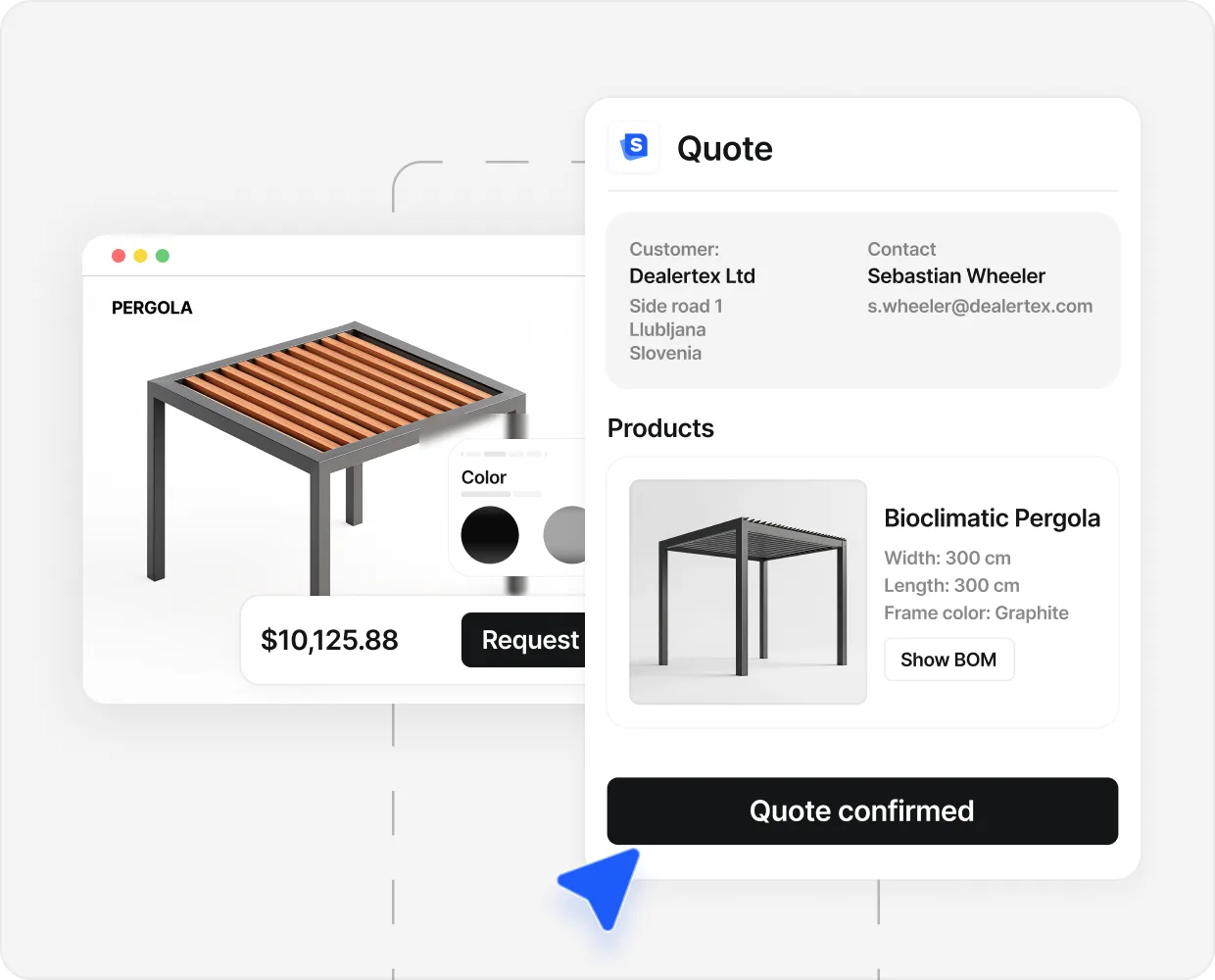
When a buyer designs the product on your website and the price lands on the same screen in the same minute, two things happen at once. The serious buyer sees a number tied to the exact spec and either accepts it or designs something smaller. The price shopper sees a number £4,000 higher than the kit company down the road and leaves. They were never your customer. They were the reason your margin was compressing.
The instinct most owners have is to keep prices off the site so the buyer engages with the brand first. The result is usually the opposite: a buyer who does not know the band assumes the worst and shops around. A buyer who does know it is either in or out, and already has a working budget when they pick up the phone.
For premium dealers who cannot publish a public number (Brustor, Renson, Weinor dealer agreements often forbid it), the design moment still works. The buyer configures, the spec lands in the dealer’s inbox, the priced PDF goes back privately.
The qualification flag your salesperson can use#
When the buyer configures on your site, you see what they did. Which size, which finishes, how many minutes, how many times they came back. A buyer who spent 12 minutes on a build, swapped the roof slats twice, and came back the next morning to add lighting is a different lead from one who bounced in 40 seconds. The 12-minute buyer gets the Monday call. The bounce gets a quiet email sequence, if anything.
Mathew at Spolding and Sons in the UK ran this loop on garden rooms and landed £168,000 in new sales in 12 weeks, off 475 leads, at a cost per lead of around £5. The Spolding and Sons case study walks through the full numbers. The headline is not “more leads.” It is “more leads worth working.”
Speed is a qualifier, not just a feature#
The first quote wins roughly 70 percent of the time, all else equal. If your team quotes on Thursday and the buyer asked on Monday, the comparison conversation is already happening in the buyer’s head by the time your number lands. It is no longer “what does this cost?” It is “is this higher or lower than the other two?”
Land a configured PDF within 90 seconds of submit and the conversation is yours. Domantas at Nordin in Lithuania went from zero online presence to 30 pergola sales in 90 days running exactly this loop. The Nordin case study covers the breakdown. The buyers were not chasing the lowest price. They were chasing the dealer who answered first with a real number.
What this looks like for a residential outdoor living team#
If you sell to homeowners (pergolas, verandas, garden rooms, awnings, carports, glass enclosures), the loop is the playbook: a configurator on the public site, a buyer who designs and prices their own build, a PDF in seconds, and a Monday of 12 qualified configurations instead of 40 contact-form lines. The wider motion for residential outdoor living goes deeper there.
The margin compression you are feeling is not the market. It is your funnel quoting too many of the wrong buyers, then discounting to keep the work moving. Stop discounting jobs you should have walked from. Move the qualification to the design moment, let the wrong buyer leave, and the margin comes back without changing a single price tag.
People also ask.
Why are outdoor living margins compressing if demand is up?
Demand is up, but so is supply. Aluminium imports halved the cost of a kit pergola, and homeowners now compare premium and economy quotes side by side. Sellers who do not change how they qualify end up matching the cheaper number to keep the deal.
What close rate should I aim for in outdoor living?
Industry average sits at 5 to 8 percent for inbound web leads. Teams running a qualified funnel commonly land between 10 and 20 percent. Spa Solutions in Switzerland doubled to a 17 percent close rate in winter.
How do I qualify on price without scaring premium buyers away?
You do not put a number on the homepage. You let the buyer design the product, answer a few intent questions, and only then see the price in a quote document. The premium buyer stays. The price shopper leaves. You spend the same week qualifying half as many leads, with twice the close rate.
What about discounting to win a job in a slow month?
A 10 percent discount in February stays on the books until the customer refers a friend next March who asks for the same number. The right move in a slow month is a tighter qualifier, not a discount.
How fast do you need to quote to stay competitive?
The first quote wins roughly 70 percent of the time, all else equal. If your competitor sends a configured PDF in 90 seconds and your team takes three days, you lose the deal before you know it existed.