
A configurable bill of materials, or cBOM, is a parameterised parts list. It holds every component a product line can use, and a rule library decides which are included for a given spec. The buyer picks a 4x5m louvred pergola in anthracite with lighting, the cBOM resolves to the exact posts, beams, motor, and screws, and the priced PDF lands before the buyer closes the tab.
The reason it matters is not technical. Without a cBOM, the parts list for a customised product is built by a person, from memory, on a Sunday evening, usually the founder or the most senior engineer. With a cBOM wired to a configurator, the parts list generates the moment the buyer commits. The translation step disappears.
The bottleneck was never the shop floor. It was the day and a half between the salesperson writing the spec and the engineer turning it into a parts list. We deleted that step.
A configurator is what the buyer sees. A cBOM is what holds it up. Speed-to-quote is downstream of the data structure underneath, not the 3D viewer on top.
What a configurable BOM is#
A regular bill of materials is a fixed list: components, quantities, part numbers. For a product with one variant, that is enough. Procurement, the shop floor, and cost of goods all run from it. It does not change.
The moment the product gets customisable, the fixed BOM breaks. A pergola with eight sizes, four post systems, three roof types, two motor options, and twelve finishes has 2,304 possible variations. Nobody writes 2,304 fixed BOMs, so the parts list becomes implicit, reconstructed from memory every time a quote goes out.
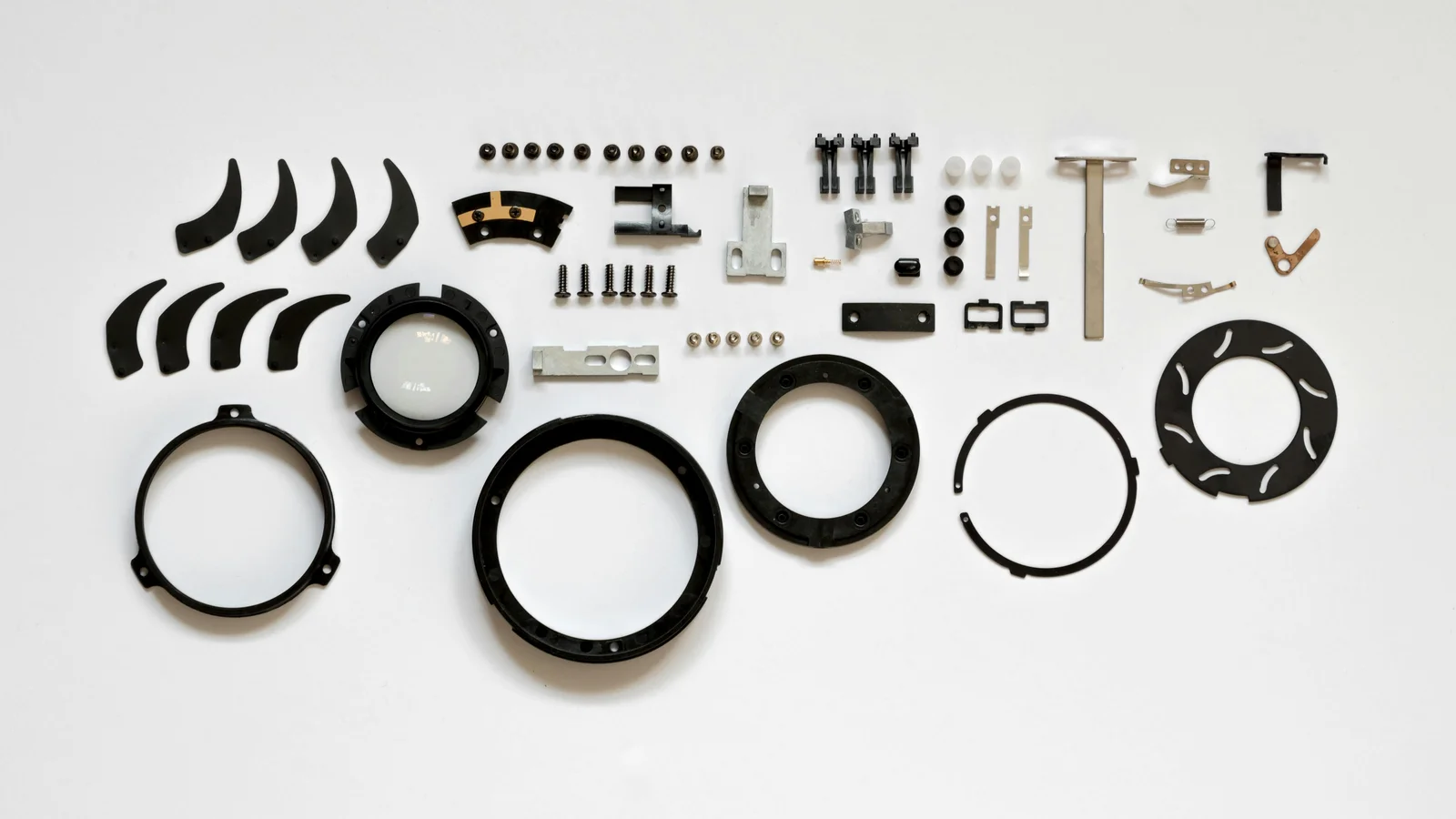
A configurable BOM replaces that mental model. It contains every part the product line could use, organised so a rule library can resolve which parts belong to a specific build. Industry sometimes calls it a 150% BOM, because the unconfigured cBOM contains more parts than any one variation will ever ship. The 150% is rough shorthand, not a literal number.
Synonyms to clear out of the way: cBOM, 150% BOM, modular BOM, variant BOM, dynamic BOM all describe the same structure. The one to be careful with is manufacturing BOM, a different cut of the data: the BOM as the shop floor consumes it, after the cBOM has resolved.
What changes when the cBOM and the configurator share one source of truth#
Before: the inbox has twelve weekend inquiries. A salesperson calls back, writes sizes and finishes on a notepad, and emails an engineer, who picks components from memory, checks compatibility rules, and types a spreadsheet. The salesperson formats the price and sends a quote by Thursday. Three of the twelve have already signed with a faster competitor. The manual quoting errors that accumulate are not a discipline problem, they are the cost of holding a 2,000-variant rule library in someone’s head.
After: the buyer builds the pergola themselves on the website. The cBOM resolves in real time, the price computes against their region, and a designed PDF lands in their inbox before they close the tab. The spec writes into the CRM and, if wired, the ERP. By Monday the salesperson is calling buyers who have already designed and priced what they want. The day and a half of translation work is gone.
- €133M in quotes generated Hrovat (Slovenia, garden rooms); 415% more inquiries through the configurator over 30 months.
- 166 hours saved across 4 months YourPergola (Hungary, louvred pergolas); 331 quotes auto-generated across the same period.
- 508 leads in 90 days Caribbean Blinds (UK, pergolas); 40 percent of inquiries arrive as configured 3D quotes.
- 1–10 Days to launch Premade visual sales system for a known category, with the cBOM already wired.
Named numbers and the full stories live in the case studies.
The numbers above are public. The full stories sit in the Hrovat, YourPergola, and Caribbean Blinds case studies. The pattern is consistent across all three: the buyer-facing configurator gets the headlines, but the cBOM is what makes the headlines possible. Without the resolved BOM in real time, the configurator is a 3D viewer that hands the pricing problem back to a salesperson on a Sunday evening.
The four jobs a real cBOM has to handle#
Most teams that get burned on a cBOM project scope the parts catalogue and stop. That is roughly a quarter of the project. The other three jobs are where good cBOM projects beat bad ones.
The parts catalogue. Every component and variant, with the right part numbers, supplier links, unit costs, and inventory codes. Pulling it out of the engineer’s head is harder than it sounds, because half the “obvious” rules (“we only use the 80x80 post above 4 metres of span”) are tribal knowledge nobody wrote down.
The rule library. Which roof type is compatible with which post height, which screen colour is allowed on which finish, which size needs reinforcement. This is the soul of the cBOM. A wrong rule produces a spec that cannot be built, which is worse than no spec because the buyer has already signed. Model this with engineering and production in the same room, not the salesperson alone.

The pricing engine. Cost of goods from the resolved BOM, plus margin rules, regional modifiers, installation, discount tiers, VAT. A cBOM with no pricing engine is a parts list with no price tag, which the salesperson still has to translate by hand.
The ERP handoff. The resolved BOM lands in the ERP without anyone copying it: priced lines, inventory codes, regional flags. When the buyer signs, procurement triggers and the shop-floor job is scheduled. A manual handoff means the back office is still doing the translation step by hand. That is half a project.
By Monday morning, 40 percent of our inquiries already came in as configured 3D quotes. The first conversation was different from day one.
The technology to build all four blocks stopped being the hard part a long time ago. The hard part is the rule library inside block two, and the integration in block four. Those are where good cBOM projects beat bad ones, and where vendors either know your category already or quietly hand the work back to you.
Five places static BOMs quietly leak margin#
Static BOMs do not look broken until you count where the margin goes.
- 01
Wrong-part orders
An installer turns up to a job with the wrong post height or the wrong screen colour. The cause is almost always a translation error between the salesperson's spec and the engineer's BOM. A resolved cBOM removes the second translation, so the part that ships is the part the buyer signed for.
- 02
Quote drift
The salesperson quotes a margin the cBOM would never approve, because the cost rules live in someone's head and not in the parts catalogue. The deal closes at a loss. With a wired cBOM, the configurator cannot quote outside the rule library.
- 03
Stale catalogues
A supplier raises a component price, the procurement team updates the catalogue, the sales team keeps quoting last quarter's number for the rest of the year. A centralised cBOM means the price change ripples to every configurator and every region within hours.
- 04
Rework hours
Half the engineering team's week is rebuilding parts lists from quote PDFs, because the quote and the BOM live in different tools. Those hours are pure deadweight. Wired correctly, the configured spec is the BOM. The rebuild step disappears.
- 05
Lost weekend leads
Monday is when most customised-product quote loops start. Friday afternoon inquiries sit in an inbox for 60 hours before anyone reads them. A configurator with a real cBOM behind it is open on Saturday at 11pm. The buyer can be 20 minutes into a designed pergola before the salesperson has had a coffee on Monday morning.
None of these failures look catastrophic alone. On a customised-product line running 200 quotes a month, they compound into the difference between a profitable quarter and a flat one. Mizarstvo Hrovat fixed them by moving garden rooms and modular houses onto a single configurator wired to a single cBOM, and watched €133M of quotes go out across Slovenia and the DACH market in 30 months.
When a configurable BOM is not worth building yet#
Three honest cases where the work does not pay off.
The product is a fresh CAD drawing every time. If every order is a one-off architectural piece with no reusable components, a cBOM is the wrong shape for the problem. The right tool is a quoting workflow with an engineer in the loop, not a configurator with no rule library.
The AOV is under 5,000 euros. Below that line, the project cost struggles to amortise across closed deals. Above it, especially in the 8,000 to 35,000 euro range outdoor living sits in, the cBOM funds itself inside the first quarter. Roughly the same threshold that decides whether made-to-order manufacturing is worth instrumenting at all.
The product line is brand new and changing weekly. Building a rule library against a product still in pre-launch iteration means writing rules that get binned in week two. Wait until the line stabilises.
For everything else, the cBOM is the difference between a 3-day quote and a 90-second one.
The line to take home#
The day and a half between a customer asking for a quote and a salesperson sending one is the difference between a closed deal and a missed one, on every customised product, every week. The cBOM is what closes that gap.
The practical first step is not the cBOM itself. It is the 3D configurator and the pricing engine it has to feed, because those are the surfaces that earn buyer attention. Build the surfaces first, wire the cBOM in week two.
People also ask.
What is a configurable BOM?
A configurable bill of materials, often a cBOM or 150% BOM, is a parameterised parts list. It holds every component a product line can use, and a rule library decides which are included for a given spec. Pick a 4x5m louvred pergola in anthracite with lighting, and the cBOM resolves to the exact posts, beams, motor, and screws for that build. Without one, every customised order needs an engineer to translate the spec by hand.
Why is a configurable BOM called a 150% BOM?
Because unconfigured, it contains more parts than any single product variation will use. The 150% is rough industry shorthand, not a literal number. When the configurator resolves one buyer's spec, the cBOM collapses to a 100% BOM: the exact parts list for that one product.
How does a configurable BOM connect to a configurator?
The configurator is the buyer-facing layer. The cBOM is the data structure underneath. When the buyer changes the roof type, the configurator queries the rule library, the cBOM resolves the affected components, and the pricing engine recomputes the total. One source of truth, three downstream artefacts: PDF, CRM record, cut list.
Does a configurable BOM replace ERP?
No. The cBOM lives upstream of the ERP. The configurator resolves it into a specific BOM for one order, and the ERP picks that up to run procurement and scheduling. A good integration writes the resolved BOM into the ERP automatically when the order is signed.
What happens if the rule library inside the configurable BOM is wrong?
A wrong rule produces a spec that cannot actually be built. The installer turns up to a part that does not exist. The most common failure mode is the rule library being written in a hurry by someone who does not know the shop floor. Model the rules with engineering and production in the same room, not the salesperson alone.