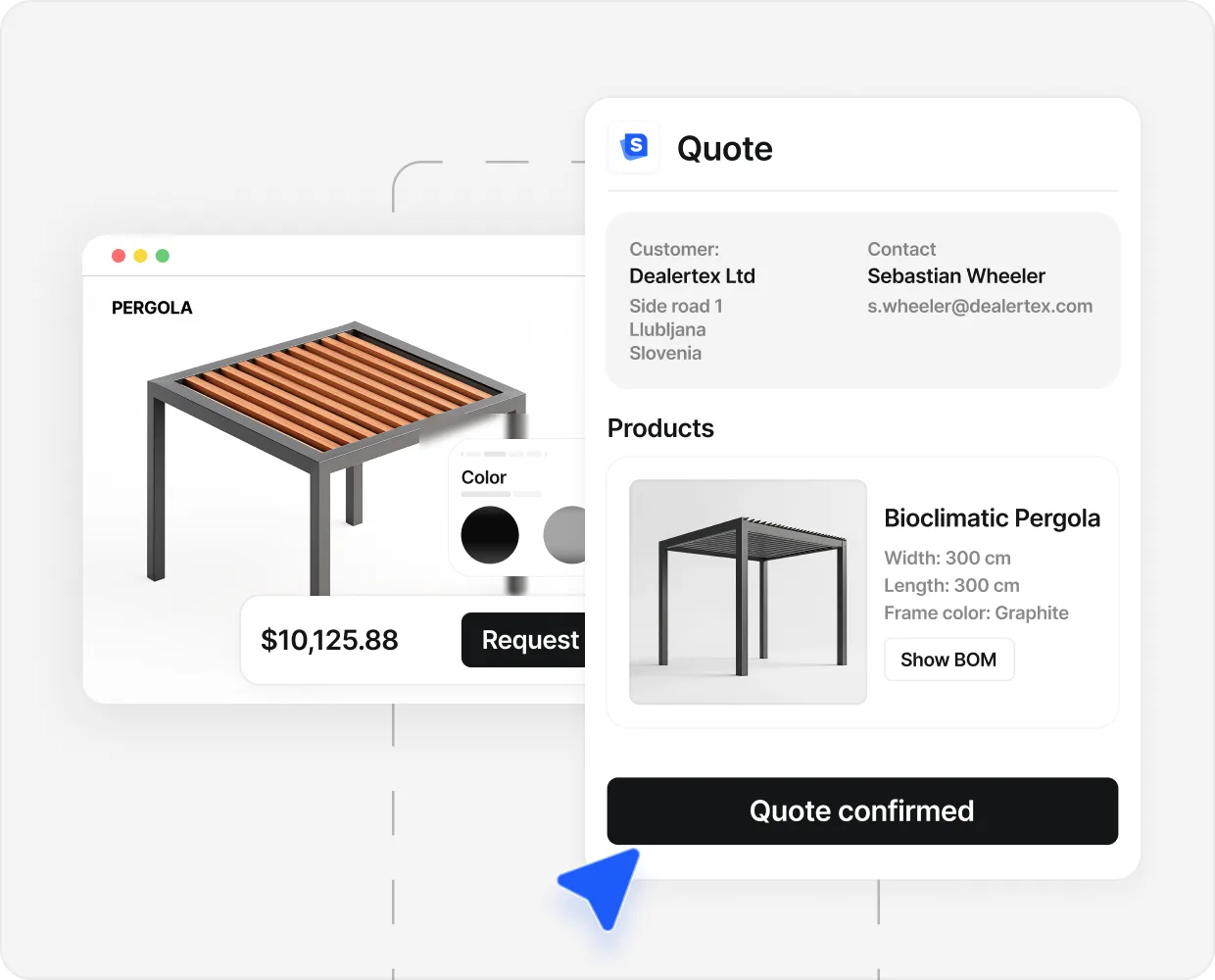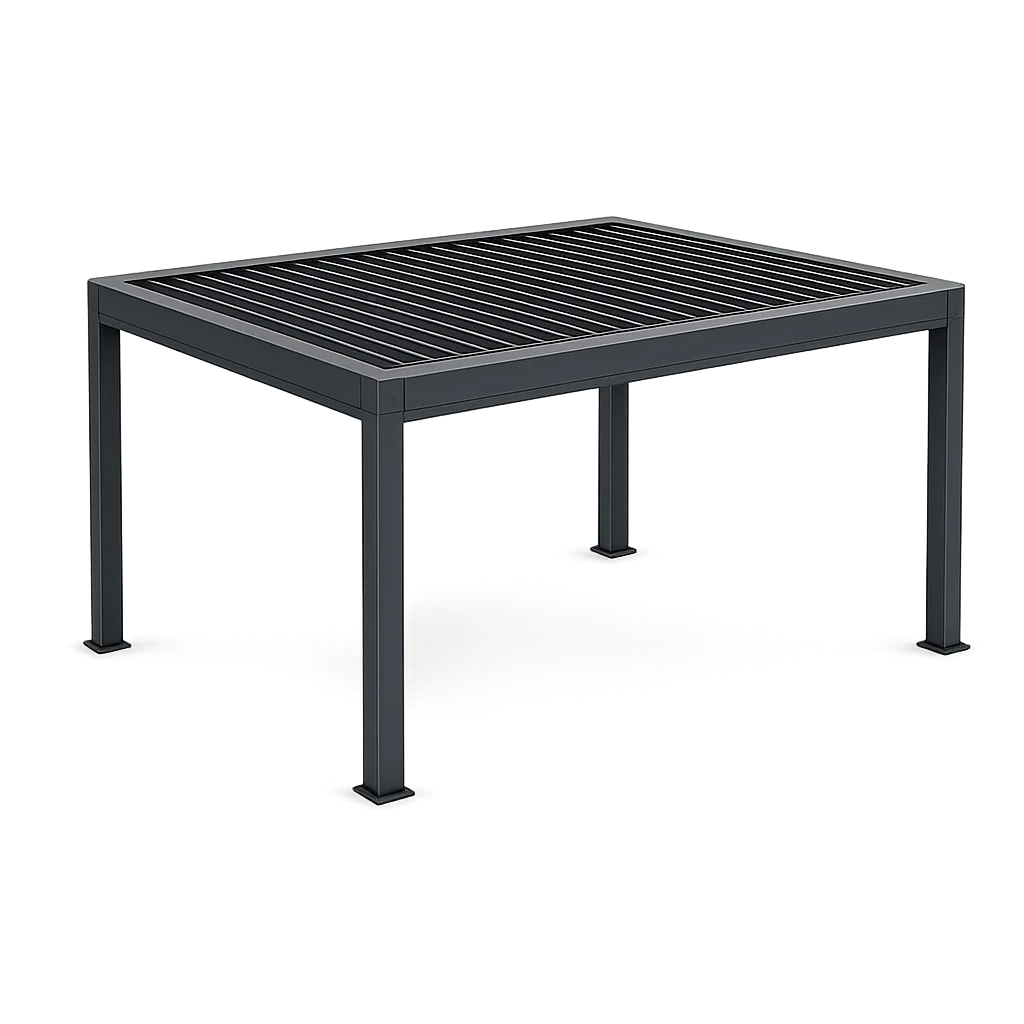


Most pergola dealers do not have a pricing problem in the way the word usually means. They are not charging the wrong amount on average. They are charging a different amount, on the same spec, depending on which member of staff opened the quote on which afternoon. The variance is the problem, not the level.
The variance has a cause, and the cause is structural. A pergola dealer sits between a manufacturer’s pricing table that was never meant to be installed, a discount scheme with three or four moving parts, and a buyer who keeps asking for the size that is not in the catalogue. Each pressure looks like a separate spreadsheet. They are the same spreadsheet, rebuilt by hand every time a buyer asks for a price.
The three structural breaks#
The manufacturer’s table is missing roughly 60 percent of the installed cost. The dealer price list covers the structure, the standard roof, the standard finishes. It rarely carries the regional labour rate, fixings and brackets for the substrate on site, the freight modifier across a border, the electrical first fix for a motorised roof, or VAT and permits. The dealer’s engineer reconstructs all of that by hand, from memory, on every quote.
The multi-tier dealer discount drifts between staff. A base discount, a volume bracket tied to year-to-date orders, a quarterly bonus, a regional surcharge, minus a current campaign. Each rule is correct in isolation. The drift starts when two staff apply them in a different order, or forget the surcharge. The result is the same spec quoted at two different numbers in the same week, and a margin nobody can reconcile at month-end.
The buyer-side options double the translation step. A buyer who spent a weekend on a configurator does not ask for the standard build. A bigger size, motorised screens on three sides instead of two, integrated heating, a custom colour. Each is a modifier the engineer has to look up and apply on top of the discounted gate price. What used to be “read the catalogue” is now “read the catalogue, apply the modifier matrix, check compatibility, recompute.”
By Monday morning, 40 percent of our inquiries already came in as configured 3D quotes. The first conversation was different from day one.
Solving any one of the three by hand makes the other two worse. The engineer who carefully reconstructs the installed cost stops applying the discount logic the same way as the salesperson who happily applies the buyer-side options. Nobody can hold all three matrices in their head on a Wednesday afternoon.
What the fix looks like in practice#
The fix is not a better spreadsheet. It is to stop holding the rule set in a spreadsheet at all. Pricing rules belong in software, in a single library the configurator reads from, the buyer-facing quote reads from, and the production handoff reads from.
That library has four layers, stacked in the order the cost moves.
Layer one, the manufacturer’s base table. Structure, roof type, standard finishes and accessories. Imported from the manufacturer’s price feed where one exists, or maintained as a versioned table.
Layer two, the dealer’s installed cost add-ons. Regional labour, fixings by substrate, freight by destination, electrical first fix, permits, VAT. The 60 percent the manufacturer’s table is missing, held in BOM-aware blocks so a modifier attaches to the parts list, not a separate quote line.
Layer three, the discount and tier engine. Base discount, volume bracket against the live order book, quarterly bonus, regional surcharge, campaigns. Applied in a deterministic order on every quote, with the workings visible on the PDF.
Layer four, the buyer-side option modifiers. Size increments, motor and automation upgrades, screen add-ons, custom colours. Each a rule in the same library, with compatibility constraints encoded so the configurator never lets a buyer combine an option the manufacturer cannot ship.
- 01
One source of truth
Every layer lives in one library. The website configurator, the salesperson's quote, the resolved parts list in production, and the invoice all read from the same number.
- 02
BOM-aware blocks
Pricing rules attach to parts, not free-text lines. A motorised screen is a sub-assembly with its own cost and compatibility rules, not a euro figure typed on a quote.
- 03
Tier logic in code, not memory
Discount, bracket, surcharge, and bonus apply in the same order on every quote, workings visible on the PDF. The engine applies them, not the salesperson.
- 04
Manufacturer price feeds where possible
When the manufacturer can ship a feed, the dealer's base table updates automatically. When it cannot, one versioned table serves every dealership and every staff member.
- 05
Audit trail on every quote
Every PDF carries the rule library version that produced it. Reconciliation that used to take a week at month-end becomes a query.
The four layers are what a real pricing rule library looks like in production at a pergola dealer. The technology stopped being the hard part a long time ago. The hard part is admitting the spreadsheet was the bottleneck.
What changes for the dealer on a Monday morning#
Before, Monday is the salesperson reading Friday’s contact-form inquiries, calling buyers, writing sizes on a notepad, walking the spec to the engineer, who opens the manufacturer’s price list and the discount spreadsheet and the modifier table in three windows, types a number, and emails it back three days later. By Thursday, half the inquiries have signed with the dealer down the road who quoted Monday afternoon. The pattern is covered in the post on manual quoting errors.
After, Monday is the salesperson opening the CRM to a stack of configured quotes buyers built themselves over the weekend, each priced against the live rule library, each with a resolved bill of materials already in the ERP. The engineer is not in the loop on standard configurations, and steps in only on the genuinely unusual builds.
- 508 Leads in 90 days Caribbean Blinds (UK pergolas); 40 percent of inquiries arriving via the 3D configurator with prices applied from the rule library.
- 30 Pergola sales in 90 days Nordin (Lithuania), starting from zero online presence; 574 leads configured and priced before the salesperson made the call.
- 70% Faster quote turnaround Industry-wide pattern across pergola dealers running a rule library wired to a configurator, versus the manual spreadsheet baseline.
- 10× Close rate vs industry Industry pergola close rate sits at 5 to 8 percent. Dealers running a configured, rule-library-priced funnel commonly run 10 to 20 percent.
Named numbers and the full stories live in the case studies.
The named numbers behind the pattern sit in the case studies for Caribbean Blinds and Nordin. Both moved the pricing rules out of the engineer’s spreadsheet and into a library wired to a configurator. The leads got priced before the conversation started.
What the rule library does not solve#
For everyone else, which is most of the outdoor living trade, the rule library is the difference between a Sunday-evening spreadsheet and a Monday-morning inbox of priced quotes. The maths is the same maths the engineer was doing by hand. It now sits somewhere the configurator, the salesperson, the production team, and the accountant can all read it.
The closest practical first step is not the rule library itself. It is the configurator the rule library has to feed. The pergola configurator gallery covers the live builds that already run on this pattern. The post on the configurable BOM covers the parts-list side of the same data structure, because the pricing engine and the BOM live on the same spine.
Pergola dealers do not have a pricing problem in the way the word usually means. They have a plumbing problem. The plumbing is fixable.
People also ask.
Why does the manufacturer's pricing table miss so much of the real cost?
The table is built for the factory's gate price, not the dealer's installed price. It rarely carries the regional labour rate, fixings for the substrate on site, freight by country, the electrical run for motorised builds, or VAT. That missing layer is routinely 50 to 70 percent of what the buyer eventually sees.
What is a multi-tier dealer discount and why does it drift?
Most manufacturers run dealer pricing in tiers: a base discount, a volume bracket, a quarterly bonus, a regional surcharge, minus a promo. Each tier is correct alone. The drift starts when two staff apply them in a different order, or miss one, and the same spec gets quoted at two different numbers.
How do buyer-side custom options change the pricing math?
They double the work. A buyer asks for a bigger size, more motorised screens, integrated heating, a custom colour. Each is a modifier the dealer's engineer has to look up and apply on top of the discounted gate price, on top of the tier logic already applied.
What is a pricing rule library?
The encoded version of every cost rule the dealer would otherwise hold in someone's head: the base table, the tier logic, regional modifiers, option premiums, and the compatibility constraints. The configurator queries it in real time, so the price the buyer sees matches what an engineer would have produced by hand.
How long does it take to encode the rule library?
For a standard pergola line on a premade configurator, the base table and standard modifiers go in within 1 to 10 days. Dealer-specific tiers and unusual options take another week or two, often in parallel with the first quotes going out.