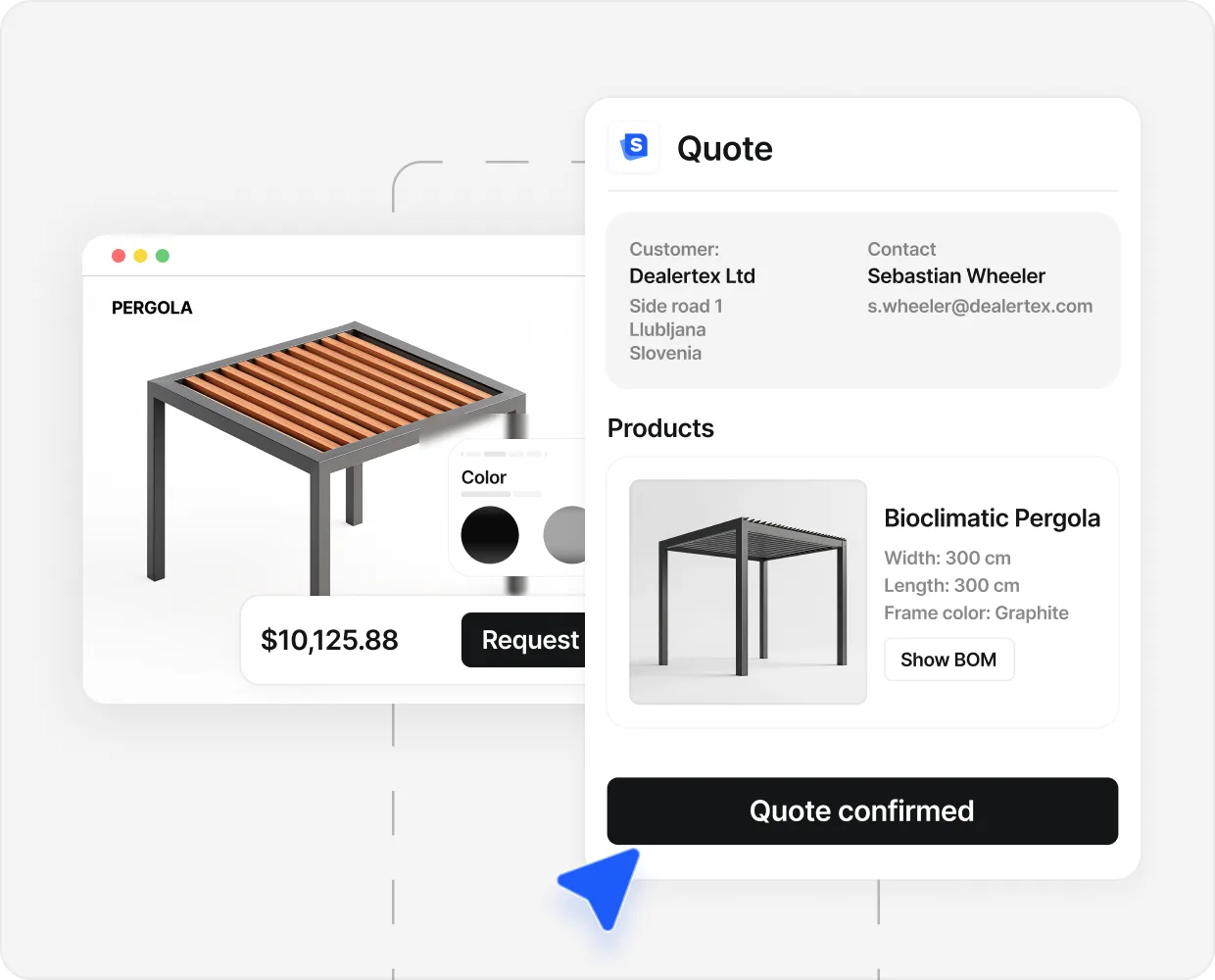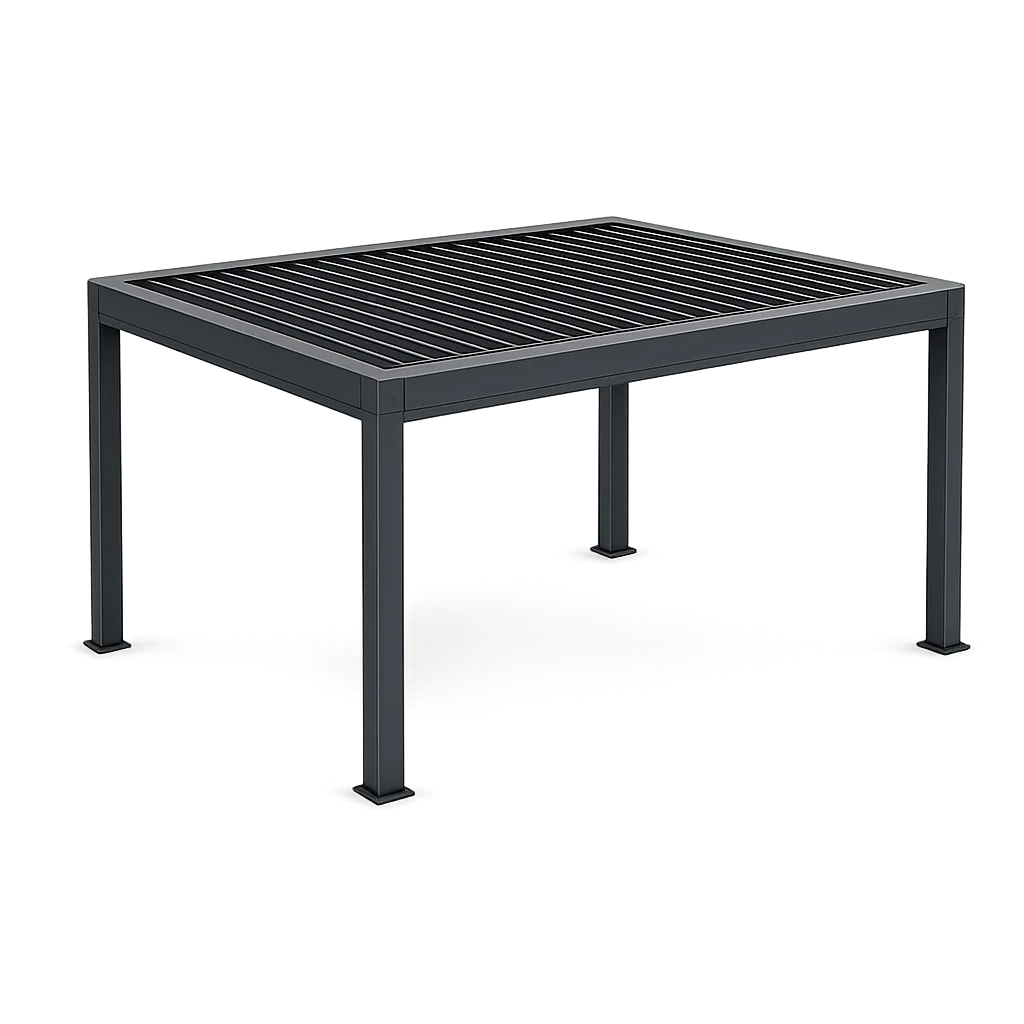


A buyer in Leeds asks for a quote on a 4 by 5 metre louvred pergola in anthracite with motorised screens. By Thursday the document arrives, bottom-line price, a polite “let us know if you have any questions.” The buyer does not know what to ask and stops replying. Three weeks later the deal is marked lost to a competitor whose quote came back in 8 hours, at a higher price.
The difference is rarely the price. It is the shape of the quote. A pergola quote that earns the next conversation is a 7-element document, written in an order the buyer can read. Most teams write it in the order the engineer can write, and the gap is where deals quietly leak.
We used to send a price and a PDF and wonder why half the buyers ghosted. The moment we put the assumptions block above the price, the close rate moved from twelve to twenty-three percent.
The 7 elements every pergola quote needs#
The order is the lever, not the elements. Move the assumptions below the price and the buyer interrogates a number with no frame. Move the next step above the lead time and they commit without knowing when the structure arrives.
- One-line summary. “Louvred pergola, 4 by 5 metres, anthracite, motorised screens, LED kit.” Plain language, no SKU codes.
- The dimensioned spec. Roof span, post system, finish, motor option, mounting surface. Verifiable by the engineer, readable by the buyer. See manual quoting errors for what goes wrong when it is not.
- Assumptions that produced the price. Wind load, snow load, mounting surface, access, regional pricing band. A buyer who cannot trace the price will not ask, they will stop replying.
- The price band. One bottom-line figure, then 3 to 5 grouped line items: structure, motorised options, install, delivery, finishing.
- Lead time and install window. Most teams quote one and skip the other. The buyer is planning summer around both.
- Validity period. “Pricing held until 30 June 2026.” A date, not “subject to change.”
- The next step. “Reply to confirm, or book a 20-minute call here.” One sentence, time-bound, and the line most teams leave off.
Where pergola quotes leak the deal#

The spec is written in dealer language. “ALR-200 post system, RAL 7016, 2x Lutron drive units.” The buyer reads it once, cannot repeat it to their partner, and the Sunday-evening decision never happens. Fix: plain-English spec up front, SKU codes in an installer appendix.
The price arrives without the assumptions. The buyer has no frame for whether 14,400 euros is fair. They go quiet, and the team reads the silence as a lost deal when it is usually a stalled one. Fix: move the assumptions block above the price so the buyer arrives at the number already half-sold.
The “what happens next” line is missing. The document closes with a price and a signature line, and both sides wait for the other to move. Two weeks pass and the deal dies of inertia. Fix: end with one sentence naming the next step, the channel, and the deadline.
- 508 leads in 90 days Caribbean Blinds (UK, pergolas); days of back-and-forth to instant turnaround, 40 percent already configured.
- 331 quotes generated YourPergola (Hungary, louvred pergolas); 166 hours reclaimed over four months.
- 70% faster quoting Hausmart; the entire quote-to-cash process automated end to end.
- 1–10 Days to launch Premade visual sales system for a known category, rule library and 3D models already wired.
Public proof from the case studies. Numbers are sourced and unrounded.
All three patterns share one root: the quote is written from the engineer’s frame, not the buyer’s. A document that requires reconstruction is a document the buyer does not finish.
What changes when the quote is written by software#
The structural fix is to write the quote once, against a rule library that resolves the spec, price, parts list, and assumptions in one pass. The same configured record produces the buyer-facing PDF, the CRM update, and the production parts list. Caribbean Blinds went from days of back-and-forth to instant turnaround this way, and YourPergola shipped 331 quotes across four months while reclaiming 166 hours.
The rule library now lives in one place, queried live as the buyer designs. The post-height-versus-roof-span rule fires automatically, so an incompatible pair never reaches the document. See custom pricing for pergola dealers for the engine, and the auto-quoting page for the artefact it produces.
When to keep writing quotes by hand#
Three honest cases: genuinely bespoke architectural work, a one-off around a listed building with site-specific mounting, where the rule library has nothing to reuse; pre-launch product lines under active iteration, where the catalogue moves weekly and a rule engine would be binned within weeks; and low order value, low volume, roughly under €5,000 average order, where the build cost is not justified.
For everything else, which is most of pergolas, garden rooms, carports, and louvred awnings, the manual approach does damage a quarterly review surfaces too late to recover. The competitor’s quote does not have to be better. It has to arrive first, in the right shape, with the next step on the bottom line.
If you want to see the shape end to end, the case studies cover the teams who already made the change and the numbers they got back.
People also ask.
What counts as a complete pergola quote?
Seven elements in order: a one-line summary of what the buyer designed, the dimensioned spec, the assumptions that produced the price, the price band with what is and is not included, the lead time and install window, the validity period, and the next step. Drop one and the buyer fills the gap with their own guess.
Why does the order of the 7 elements matter?
A buyer reads top to bottom, and the question on line one is not the question on line seven. A quote that opens with the price tells the buyer to interrogate the number before they have agreed on the spec. A quote that opens with the spec earns the right to show the number.
What is the right level of price detail in a pergola quote?
Enough to interrogate, not so much it becomes a pricing audit. One bottom-line figure, then 3 to 5 grouped line items (structure, motorised options, install, delivery, finishing), each with a short note. Full BOM-level line items invite negotiation on parts the buyer has no reference price for.
How long should it take to write a pergola quote?
For a hand-written quote against a known spec, 30 to 60 minutes once the rule library is consolidated. For a configured quote from a rule-based pricing engine, under 2 minutes from the moment the buyer commits. Caribbean Blinds went from days of back-and-forth to instant turnaround once the rule library moved out of the engineer's head.
What is the single biggest mistake teams make when writing pergola quotes?
Skipping the 'next step' line. The buyer reads the quote, agrees with the price, and waits, because the document never told them what to do next. Two weeks later they have gone elsewhere. A clear, time-bound next step is the cheapest part of the quote and the most expensive one to leave off.