

A buyer fills out a contact form on a Sunday evening, having spent the weekend comparing three vendors of louvred pergolas across 11 tabs. The form goes into an inbox nobody opens until 9am Monday. By the time the salesperson reads it, the buyer is on a competitor’s site, where the price appeared before the form closed. The salesperson is not behind on volume. They are behind on time.
The 5-minute rule is the shorthand for what research has shown since 2007. A lead contacted inside 5 minutes is roughly 7 times more likely to qualify than one contacted at 30 minutes, and 21 times more than one at an hour. The surprise is how slowly the curve recovers, and how few teams beat it.
We launched on a Saturday afternoon. By Monday morning we had 40 leads sitting in the queue, every one of them with a configured spec attached. Before, the queue would have been 40 contact forms saying “interested, please send pricing”.
What the rule says, and where the data comes from#
The original study was run by James Oldroyd at MIT in 2007, sponsored by InsideSales, covering 1.25 million inquiries across six B2B vendors. It was published in HBR as “The Short Life of Online Sales Leads,” and the curve has been replicated dozens of times since.
A lead contacted within 5 minutes is 100 times more likely to be connected with than one contacted at 30 minutes, and 21 times more likely to qualify than one contacted at an hour. Qualification odds at 24 hours sit at a quarter of their 5-minute peak. The curve is not linear. It is a cliff, and the cliff is in the first 60 seconds.
The effect compounds: a buyer comparing 5 vendors commits to the fastest one, often before the slower vendors have read the inquiry. And the rule is about the buyer’s experience of speed, not who delivered it. A configured quote landing at minute 2 counts, whether or not a human typed it.
Why a human-first response model cannot meet it#
Most teams miss the rule not because they doubt it, but because the response model assumes a human in the loop, and the human is the bottleneck.
A buyer submits a form at 9:14pm Sunday. Nobody is watching the inbox. At 8:45am Monday, the salesperson opens 22 weekend submissions, calls the first 8, reaches 3. Each call runs the standard discovery, then engineering translates the spec into a priced quote. By Wednesday the first quote ships. By Friday, 2 of the 22 have signed elsewhere, 4 have stopped replying, and 16 sit in a three-week-deep queue.

No amount of effort moves that round trip under 5 minutes, because the floor is the model, not the effort. Roughly 40 to 60 percent of inquiries in custom-product categories arrive outside business hours, with a heavy Sunday-evening peak, so an in-hours team is by definition missing the cliff on half its leads. The fix teams try first, response-time SLAs, a weekend rota, moves the median by 10 to 20 percent and leaves the floor exactly where it was.
What “structure beats discipline” means in practice#
The structural fix decouples the first response from the salesperson: the buyer reaches a priced, configured spec without a human in the loop, in the session they arrived in. The clock stops when the buyer sees the price, which can be at minute 2. The salesperson still calls, still closes, still earns the commission, but the call now happens after the buyer has self-qualified.
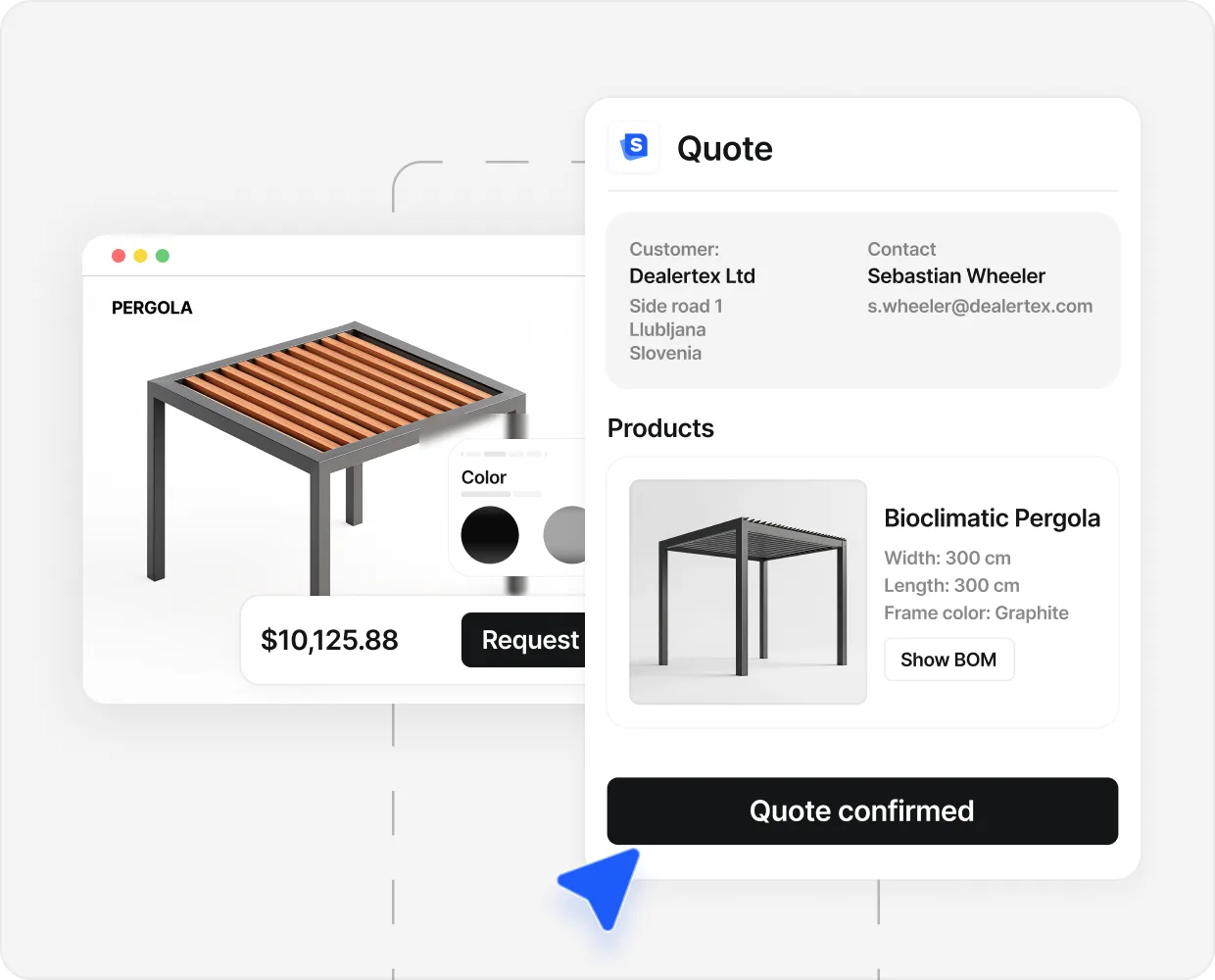
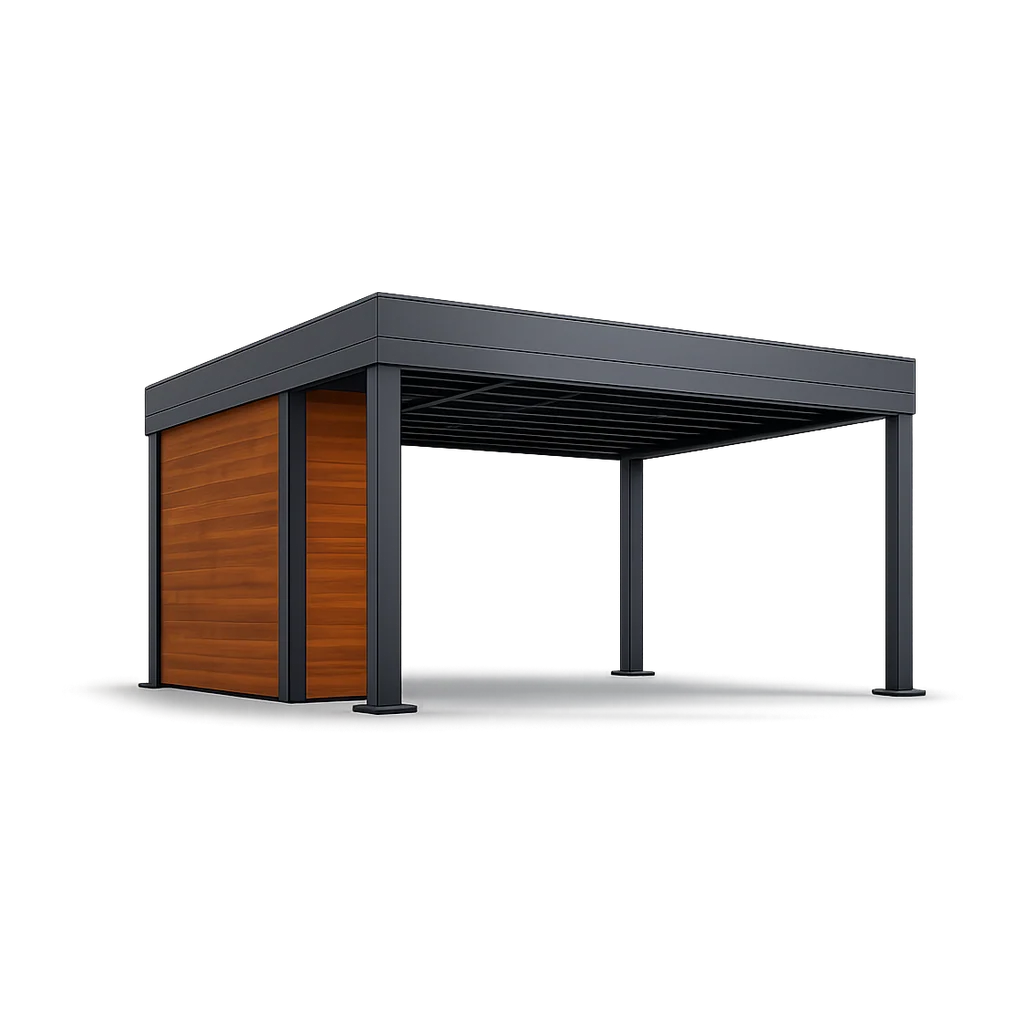
This is what guided selling is for. A configurator with live pricing walks the buyer through the decisions, and the output, a configured PDF, a 3D render, a CRM record, lands in the same session. The Sunday-evening buyer finishes a 4 by 5 louvred pergola in anthracite, sees a price band, downloads the PDF, and books a Tuesday call. The 5-minute rule is met at minute 2, by a configurator that does not sleep.
- 7x more likely to qualify Lead contacted within 5 minutes vs. 30 minutes (Caseyresponse / MIT dataset, replicated across categories).
- 21x more likely to qualify Lead contacted within 5 minutes vs. 1 hour (same dataset; the cliff is in the first 60 seconds).
- 40 leads on Monday morning Spolding and Sons (UK, garden rooms) after a Saturday launch; 475 leads and £168K of new sales in 12 weeks.
- 508 leads in 90 days Caribbean Blinds (UK, pergolas); instant quote turnaround, 40 percent arriving already configured.
Public proof from the case studies and the Caseyresponse benchmark.
Caribbean Blinds moved from a multi-day turnaround to an instant one. Spolding and Sons launched on a Saturday afternoon and woke to 40 configured leads on Monday, shipping 475 leads and £168K in new sales over 12 weeks.
What teams who hit the rule do differently#
They treat after-hours as the default case. The configurator model assumes the inquiry arrives at 9pm on Sunday and gets resolved without a human, instead of staffing a weekend phone line to catch it.
They publish the price. A configurator that hides the number until a “request a quote” step has shifted the buyer back into the human-first round trip it was supposed to remove. Buyers who walk because the price is too high walk in minute 2, not week 3 of an email thread.
They remove the translation step. A configurator wired to a pricing engine resolves the spec, price, and parts list in one pass, so the step that consumes 80 percent of the round-trip time disappears. This is what the auto-quoting layer does.
The line to take home#
Teams who miss the rule are working inside a response model whose floor is the round trip from inquiry to human to quote and back, hours at best. No SLA moves that floor under 5 minutes. The buyer on Sunday at 9:14pm is on a competitor’s site by 9:18. The fix is not to call them back faster on Monday. It is to be the company that gave them the price by 9:16. For the separate question of how long the full priced quote itself should take, see quote turnaround time.
People also ask.
What is the 5-minute rule for lead response?
A sales lead contacted within 5 minutes of submitting an inquiry is dramatically more likely to convert than one contacted later. The original research from MIT and InsideSales (now Caseyresponse) found a 7x lift in qualification odds at 5 minutes versus 30, and a 21x lift versus 1 hour. It is the single best-replicated finding in B2B response-time research.
What does the data say about response time and win rate?
Qualification odds drop sharply after the first 5 minutes and keep falling through the first hour. Close rates roughly halve every 24 hours a lead waits, in the first week. Buyers who fill a form on a competitor's site in the same session are roughly 4 times more likely to sign with that competitor.
Why can't most teams hit a 5-minute response?
Because the response model is human-first. A salesperson sees the inquiry, pulls the spec, recalculates the price, formats a quote, and emails it back, a round trip that takes hours on a good day. The 5-minute clock starts at form submission, not at Monday's standup. The bottleneck is the design of the response, not the discipline of the team.
Is automation cheating on the 5-minute rule?
No. The rule is about the buyer's experience, not whether a human typed the reply. A configured quote delivered in 90 seconds by a 3D configurator beats a hand-built quote delivered in 4 hours, on every metric the buyer cares about. The salesperson's job moves from spec translation to closing.
What is the simplest first step to get response time under 5 minutes?
Decouple the first response from the salesperson. The buyer should reach a priced, configured spec without a human in the loop, on the page where they landed. The simplest implementation is a guided configurator with live pricing; the salesperson still calls, but after the buyer has self-qualified.