
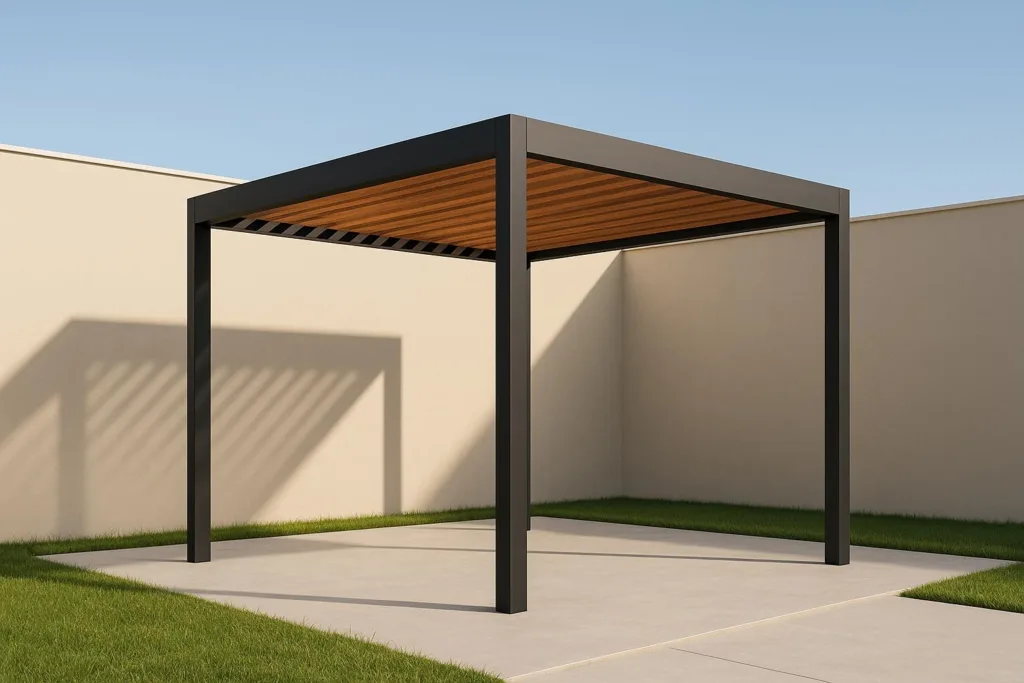

3D rendering transforms how customers shop for outdoor living products by addressing key challenges like size, scale, and customization. Instead of relying on static photos, buyers can interact with lifelike models, customize designs in real-time, and visualize products in their own spaces. This technology boosts confidence, shortens decision times, and reduces returns, making it essential for businesses selling high-value items like pergolas and outdoor kitchens.
Key Benefits of 3D Rendering:
- Interactive Exploration: Rotate, zoom, and view products from all angles.
- Real-Time Customization: Instantly adjust sizes, colors, and features.
- Device Accessibility: Seamless experience on phones, tablets, and desktops.
- Improved Sales Metrics: Up to 64% higher purchase intent and faster quote generation.
- Lower Returns: Clear visualizations reduce buyer uncertainty.
Companies using 3D configurators report higher conversion rates, faster sales processes, and better customer satisfaction. For example, one business closed 30 sales in 90 days, while another quadrupled its quote output. 3D rendering isn’t just a tool – it’s a game-changer for creating confident, informed buyers.
How 3D Rendering Solves Visualization Problems
Let’s dive into how 3D rendering technology tackles the challenges customers face by delivering a dynamic and immersive product experience.
Interactive Product Exploration
Static images can only show a single perspective, leaving much to the imagination. With 3D rendering, customers can rotate models 360°, zoom in, and closely examine every detail. This hands-on approach turns passive browsing into active engagement, helping customers better understand a product’s features and visualize how it fits into their space.
The technology behind this experience relies on WebGL and cloud-based rendering, enabling smooth, responsive interactions directly in web browsers. No downloads or extra software are needed – just click and explore. This kind of interactivity also paves the way for instant customization options.
Real-Time Customization and Updates
One of the standout benefits of 3D rendering is the ability to provide immediate visual feedback. For example, when a customer adjusts the size of a pergola – say, from 12×16 ft. to 14×20 ft. – or changes its color, the updates appear instantly. This quick response allows users to experiment freely until they find the perfect configuration.
Real-world results back up this advantage. SaleSqueze reports that Spa Solutions achieved a 17% conversion rate from inquiries to customers after launching a 3D pergola configurator. Similarly, Dekor sencila quadrupled the number of pergola offers prepared by combining real-time customization with automated quote generation.
“The 3D configurator saves a lot of time with low-quality leads, price calculations, and quote preparation. We also closed 30 sales in just 90 days as a new pergola business on the market.”
– Domantas P., Co-founder & Sales leader, Nordin
This ability to make instant updates not only enhances the shopping experience but also streamlines the decision-making process for customers.
Easy Access Across All Devices
Modern 3D rendering platforms are built with accessibility in mind. Whether customers are browsing on an iPhone, Android tablet, laptop, or desktop, they can enjoy the same high-quality visualization experience. This flexibility ensures customers can explore products wherever they are – at home, on the go, or even while consulting with family or contractors.
Main Benefits of 3D Rendering for Customer Experience
Switching from static images to interactive 3D experiences isn’t just about aesthetics – it delivers measurable improvements for both customers and businesses. These advantages go beyond visuals, driving results that directly impact revenue and customer satisfaction.
Better Customer Engagement
3D visualizations revolutionize how customers interact with products online. Instead of passively scrolling through flat images, they can actively explore products – rotating, zooming, and customizing in real time. This interactive experience keeps customers engaged longer, as they delve into every detail at their own pace.
Features like 4K zoom and 360° spins create a sense of discovery, offering a “wow” factor that captures attention and builds an emotional bond with the product. For outdoor living products, this is especially impactful. Customers can see how a pergola’s louvered roof functions, experiment with different awning colors, or examine the craftsmanship of a garden room – all from the comfort of their homes.
Better Decision-Making
3D rendering takes the guesswork out of buying decisions, giving customers a clear and detailed view of what they’re purchasing. This is particularly important for high-value outdoor products, where buyers need to feel confident before making a commitment.
By visualizing products in their actual settings, customers can better understand how a pergola might fit into their backyard or how a motorized screen system would complement their patio. This added clarity reduces uncertainty and boosts confidence in their choices.
Studies back this up – 3D product visualization can increase purchase intent by as much as 64% compared to traditional images. When customers can explore and customize products thoroughly before buying, they’re more informed and satisfied with their decisions. This not only builds trust but also shortens the decision-making process.
Faster Sales Processes
Integrating 3D visualization with automated tools significantly speeds up sales cycles while reducing the workload for sales teams. Tasks like quote preparation, which used to take hours, can now be completed in minutes, allowing teams to focus on building stronger customer relationships.
Real-time 3D configurators streamline the process. As customers customize products, pricing updates instantly, and professional PDF quotes are generated on the spot. This eliminates the usual back-and-forth often required for custom orders.
The results speak for themselves. Dekor sencila, for example, quadrupled the number of pergola offers they could prepare after adopting 3D configurators. Similarly, a modular home manufacturer generated 40 quotes totaling $10.8 million in just one month using a visual configure-price-quote system. Customers appreciate the quick responses and polished presentations, allowing them to explore options, get instant pricing, and proceed with confidence – without days of waiting or multiple consultations.
Real-World Uses of 3D Rendering in Outdoor Living Products
The outdoor living industry has embraced 3D rendering technology to tackle customer visualization challenges head-on. Whether it’s creating custom pergola designs or planning a full outdoor kitchen, businesses are using interactive tools to completely change how customers shop for big-ticket outdoor products.
Dynamic Configurators for Custom Products
Today’s 3D configurators allow buyers to make real-time adjustments to every aspect of their purchase. From dimensions to materials, customers can fine-tune their choices with remarkable precision.
Take SaleSqueze’s 3D configurator, for example. It offers an interactive platform where customers can explore products like louvered pergolas, glass roofs, and garden rooms. Buyers can tweak dimensions down to the inch, experiment with aluminum or wood finishes, and play with color combinations that complement their home’s exterior. The configurator supports 2D, 3D, and 360° visualizations, giving customers a complete view of their custom designs.
This isn’t just about aesthetics. For outdoor kitchens, customers can arrange appliances, choose countertop materials, and see how everything fits together. This hands-on experience makes the buying process transparent and helps customers feel confident about their decisions.
Integration with Sales and Quoting Systems
3D rendering doesn’t just enhance visualization – it also streamlines sales operations. By integrating directly with quoting systems, these platforms eliminate the delays of manual quote preparation, cutting down hours of work to just minutes.
SaleSqueze exemplifies this efficiency by linking its 3D configurators to backend systems. As customers customize their outdoor products, the platform automatically calculates prices based on materials, dimensions, and add-ons. It then generates professional PDF quotes instantly, complete with detailed specs and price breakdowns.
The results speak for themselves. Nordin, a pergola company, closed 30 sales in just 90 days after adopting SaleSqueze’s integrated system. With full visibility into inquiries and orders from both direct customers and dealers, sales teams can track conversions, identify bottlenecks, and fine-tune their processes. This seamless integration bridges the gap between visualization and efficient sales.
Better Dealer and Manufacturer Collaboration
3D rendering tools don’t just benefit individual customers – they also strengthen the connection between manufacturers and their dealer networks. By providing branded, high-quality visualization tools, manufacturers ensure consistent product presentation across all sales channels, leaving no room for mismatched marketing materials or generic product photos.
SaleSqueze’s dealer management model is a great example. Manufacturers can roll out premade 3D configurators tailored to their brand, ready to launch in just one day. Dealers gain access to these tools, delivering the same engaging, high-quality visual experience as the manufacturer.
“Premade 3D configurators for outdoor living products fully adjusted to your brand and ready to go live in 1 day!” – SaleSqueze
This system benefits everyone. Dealers avoid the costs of custom development while manufacturers maintain control over product presentation and gain insights into dealer performance. They can see which dealers generate the most leads, identify popular configurations, and pinpoint where customers drop off in the sales process. Armed with this data, manufacturers can offer targeted support and replicate successful strategies across their network.
For instance, a carport manufacturer saw a fivefold increase in qualified leads and a 40% jump in sales within three months by adopting this collaborative approach. The improved oversight not only streamlines the entire sales process but also boosts customer service. Manufacturers can step in to help with complex orders or technical issues, giving dealers the confidence to handle larger, more ambitious projects.
sbb-itb-ec816af
Measuring 3D Rendering Results: Outcomes and Metrics
3D rendering is a game-changer for businesses, improving conversion rates, speeding up sales cycles, and cutting down on product returns. These measurable outcomes highlight how advanced 3D rendering enhances customer satisfaction while driving business growth.
Higher Conversion Rates
3D product visualization has proven to significantly boost purchase intent, with studies showing an increase of up to 64% compared to traditional photography. Moreover, 80% of online shoppers express a preference for viewing products in 3D before making a purchase. This immersive experience – allowing users to rotate, zoom, and customize products in real time – instills confidence and reduces hesitation.
For example, Spa Solutions saw a 17% jump in inquiry-to-customer conversion rates after introducing a 3D pergola configurator. Similarly, businesses using SaleSqueze’s 3D configurators reported remarkable results, including a 40% rise in sales within just three months. One carport manufacturer even experienced a fivefold increase in qualified leads and a 40% sales boost. These improvements not only drive higher conversions but also contribute to more streamlined and effective sales processes.
Faster Sales Cycles and Operational Efficiency
3D rendering tools simplify and accelerate the sales process. Automated 3D configurators can slash quoting times by up to 70% compared to manual methods. They also enable businesses to produce up to four times as many quotes, helping sales teams engage with more prospects without needing to expand their workforce.
Take FollHaus, for instance. By implementing a CPQ system, the company generated 40 quotes worth $10 million in just its first month. These tools free up sales teams to focus on building relationships and closing deals while giving customers the flexibility to explore products anytime, even outside traditional business hours.
Fewer Product Returns
Beyond speeding up sales, 3D rendering significantly reduces product returns by offering clear and accurate visualizations. When customers can view every detail – dimensions, materials, finishes – they’re less likely to encounter surprises upon delivery. This clarity is especially valuable for high-value, custom products, where returns can be costly and disruptive. Industry reports consistently link improved product visualization to lower return rates in e-commerce.
Reducing returns not only cuts operational costs but also enhances customer satisfaction. With fewer returns to handle, customer service teams can dedicate more time to supporting new sales and installations, further contributing to business growth.
“Features like 4K zoom and 360° spins deliver fast, realistic product experiences that drive higher purchase intent and satisfaction.” – Jostein Pedersen, VP Product at Chaos
Conclusion: Changing Customer Experience with 3D Rendering
3D rendering has revolutionized how businesses present their products, turning flat, static images into dynamic, interactive experiences that inspire confidence and encourage purchases. By offering realistic product visualizations, real-time customization options, and instant access to detailed information across devices, this technology solves key challenges faced by both businesses and consumers.
The results speak for themselves. Studies and real-world examples demonstrate that 3D visualization can significantly increase conversion rates, shorten sales cycles, and reduce product returns. These aren’t just abstract benefits – they translate into tangible outcomes. For instance, platforms like SaleSqueze have made it easier for outdoor living product dealers and manufacturers to leverage these tools effectively. With features like 2D, 3D, and 360° visualizations, businesses can quickly develop advanced configurators. Real-world success stories highlight the potential: Spa Solutions achieved a 17% inquiry-to-customer conversion rate, while Nordin closed 30 sales within just 90 days of implementing 3D configurators.
Beyond boosting sales, 3D rendering simplifies operations by automating up to 70% of the quote preparation process. This allows sales teams to spend more time building relationships and closing deals rather than getting bogged down in administrative work.
As customer expectations continue to rise, 3D rendering has become a must-have tool for businesses aiming to stay ahead. It addresses current visualization challenges while paving the way for future success. Companies that embrace this technology now are not only meeting today’s consumer demands but also positioning themselves to thrive in an increasingly visual and competitive market. The real question isn’t whether to adopt 3D rendering, but how quickly businesses can implement these solutions to maintain their edge.
FAQs
How does 3D rendering improve the customer experience compared to static images?
3D rendering transforms the way customers interact with products by offering dynamic, real-time visualizations that go far beyond what static images can achieve. It allows customers to view products from every angle, tweak features to their liking, and immediately see how those changes look. This not only makes the shopping experience more engaging but also helps buyers feel more confident in their choices.
For businesses, this technology simplifies the sales process by delivering precise pricing and quotes instantly, cutting down on delays and reducing the risk of manual errors. The outcome? A smoother, more interactive buying journey that boosts customer trust and leads to better conversion rates.
What does a business need to implement 3D rendering, and how easily can customers access it on their devices?
To bring 3D rendering to life, businesses require tools that enable visual product configurators. These configurators let customers interact with products in real time, helping them visualize different features and customization options. This interactive approach makes the shopping experience more engaging and straightforward.
Platforms such as SaleSqueze make this process easier by providing solutions that support 2D, 3D, and 360° visualizations. These tools are designed to work effortlessly across devices – from smartphones to desktops – without the need for specialized software or advanced technical skills.
How does 3D rendering enhance the sales process and improve customer satisfaction?
3D rendering has revolutionized the sales process, making it smoother and more customer-focused. By using real-time visual configurators, businesses can streamline quoting, reduce mistakes, and speed up the ordering process, creating a hassle-free experience for both customers and sales teams.
Take platforms like SaleSqueze, for instance. They enable businesses to provide interactive 3D product visualizations, where customers can customize items, explore them from every angle, and get instant pricing. This not only helps customers make quicker, more confident decisions but also leads to improved customer satisfaction, shorter lead times, and better sales efficiency.