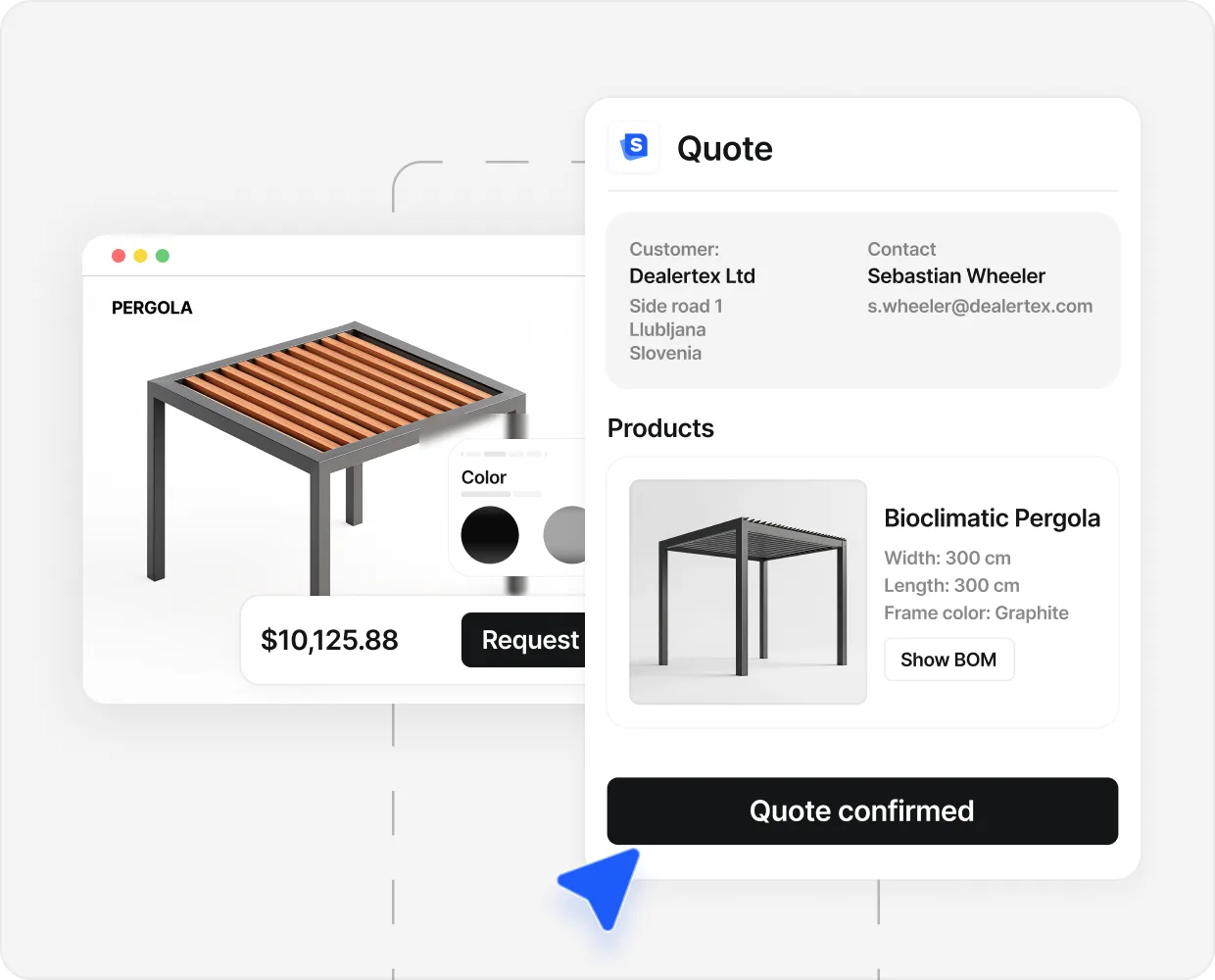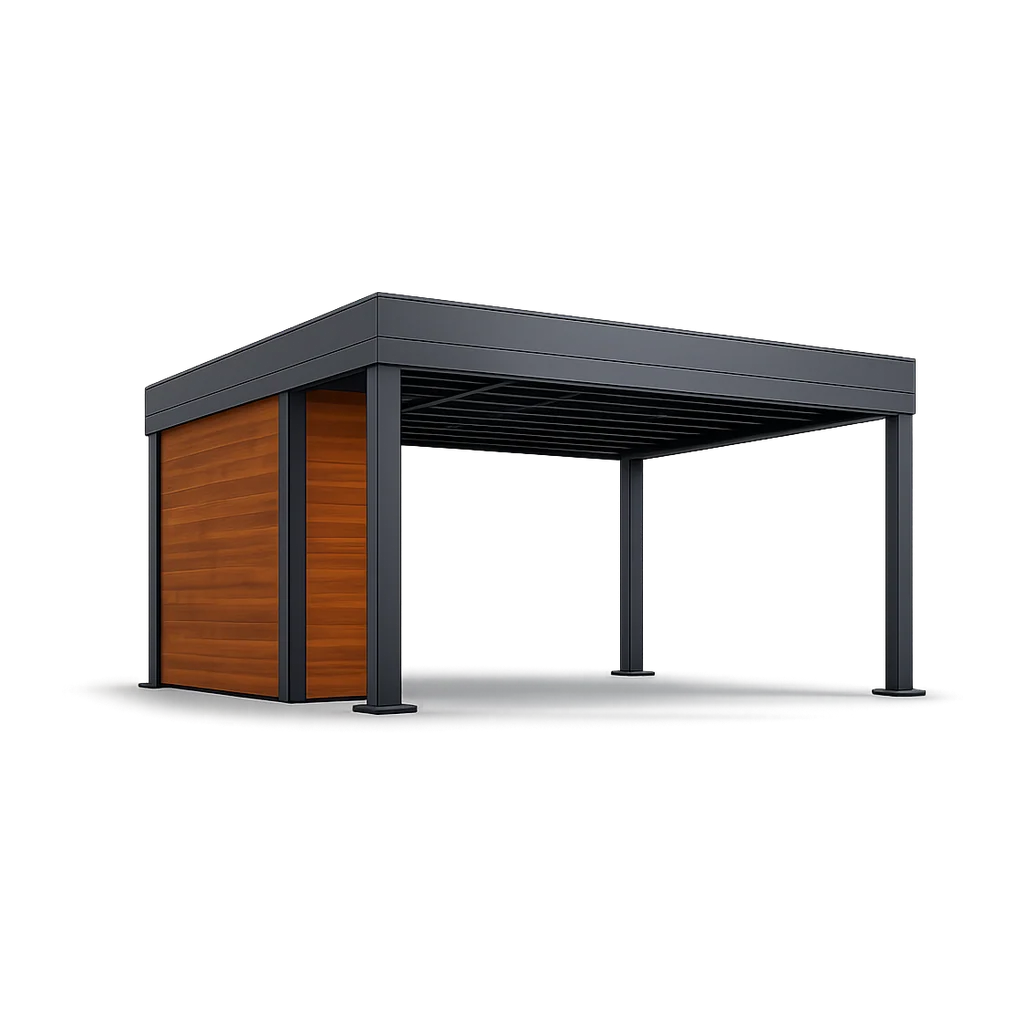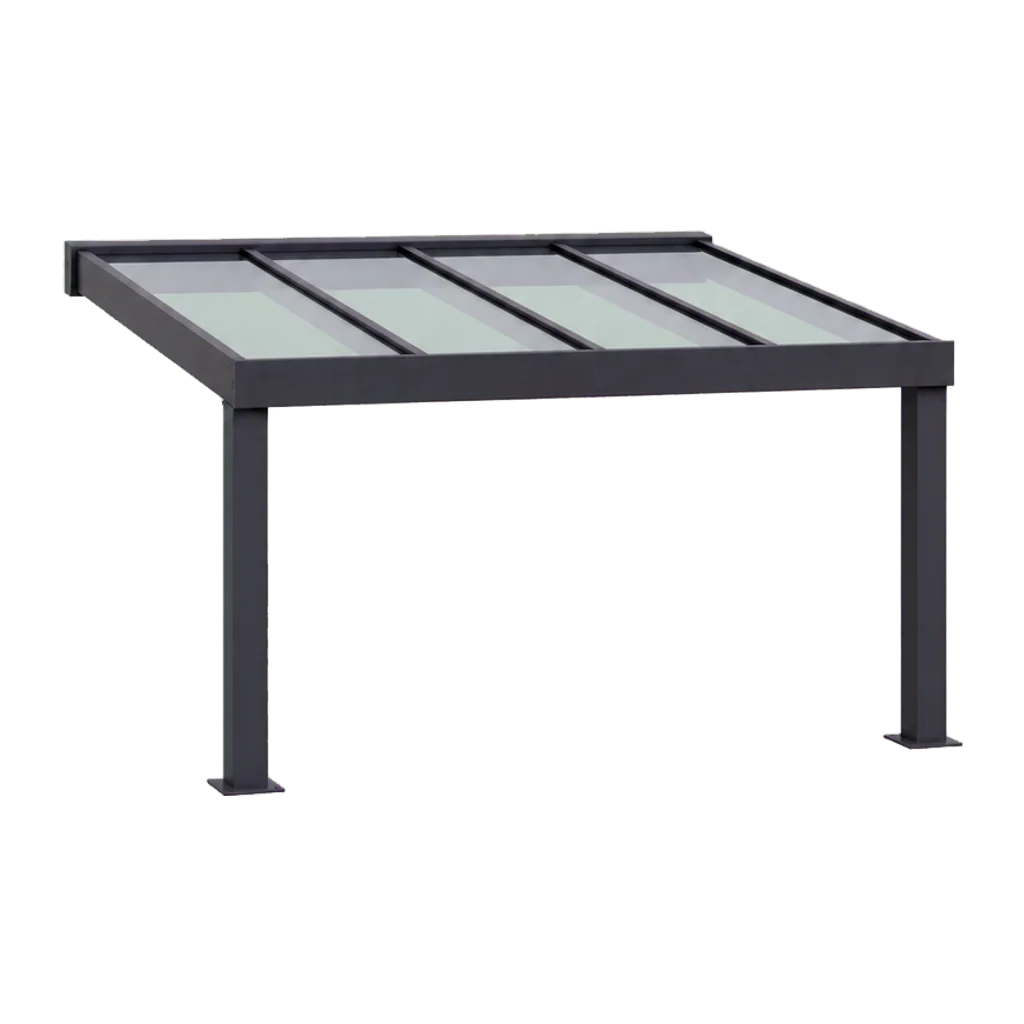


A 3D configurator puts the product on the website and lets the buyer build it. They pick the size, the roof, the material, the finish. The model draws itself as they go, a real price sits underneath, and a designed PDF lands in their inbox before they close the tab. That is the fastest path found yet from “I am interested” to “here is your price.”
It replaces one of the most expensive habits in outdoor living: the multi-day custom quote. A buyer fills in a form on Tuesday. The dealer calls Wednesday. A site visit lands Friday. The factory returns a bill of materials Monday, the revised quote goes out Thursday, and by the time the buyer reads it, a faster competitor has already quoted them twice. The deal was not lost on price. It was lost on the calendar.
Why a custom quote takes 3 days, and it is not the math#
The price-per-square-metre exists. The factory has made the same five roof spans for a decade. The lookup tables sit in a spreadsheet. The calculation is not what takes 3 days.
What takes 3 days is the round trip, repeated four or five times. The seller asks for dimensions. The buyer answers two days later. The seller asks about roof and colour, looks up the new price, drafts a PDF, and waits again. Every handoff is a place the buyer can go quiet, and in a market where quote turnaround time decides the deal, most of them do.
This is why hiring another estimator never fixes it. It speeds up the legs of the loop without removing the loop. The same problem shows up as manual quoting errors: when the rules live in one person’s head, a number gets dropped and the buyer gets a quote that has to be walked back. A configurator does not make the loop faster. It deletes the loop.
What the buyer does instead, on screen#
The configurator hands the spec work to the buyer, who is happy to do it. They see three things and nothing else: a live 3D model that rebuilds the moment they change an option, a real price underneath that updates with every choice, and one button that promises a PDF in seconds. No “we will get back to you within one business day.”
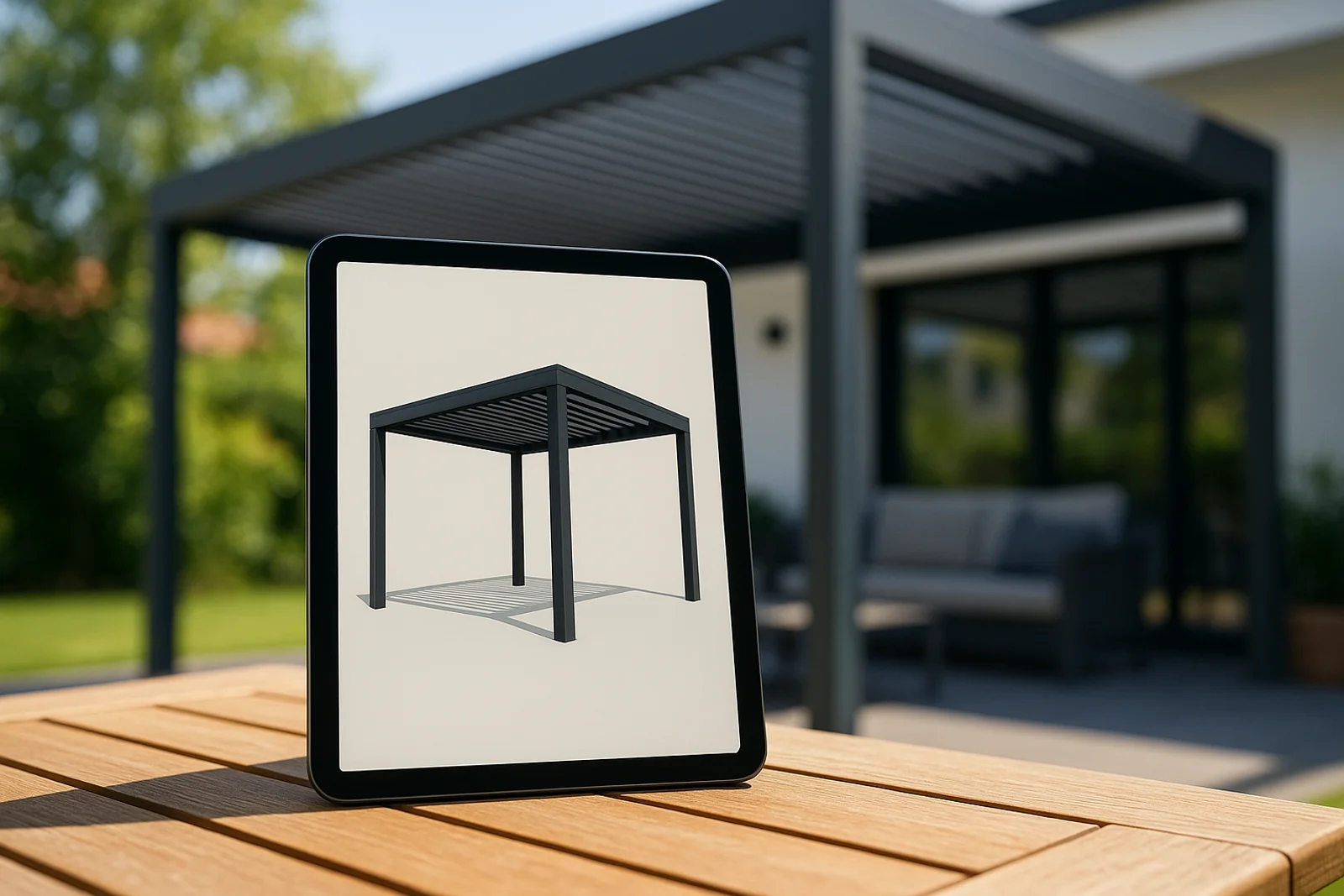
The screen has to work on a phone. More than half of outdoor living traffic is mobile, and if the 3D scene takes more than five seconds to render on 4G, the session ends inside the first ten. Get it right and something changes in the buyer’s head: a pergola stops feeling like a project that needs three quotes and a site visit, and starts feeling like buying a car. Pick the trim, see the number, submit.
What happens the moment they hit submit#
This is where speed actually pays off. A viewer shows a nice model and dumps the buyer into a contact form. A configurator turns submit into a chain of finished work: a branded PDF in the buyer’s inbox and the same spec in the seller’s CRM, in the same minute. The first conversation is no longer “what size were you thinking,” it is “here is how the install week looks.”
The strongest setups carry the spec further. The configured order becomes a bill of materials the factory can build from, with work orders and procurement triggers flowing from the same source of truth the buyer just created. If a tool stops at a pretty render and a contact form, it has not removed the loop, it has only decorated the front of it. The full buying checklist is in the guide to choosing 3D configurator software.
The numbers behind faster quotes#
Speed shows up in revenue, lead volume, and hours handed back to the team.
The pattern repeats. Caribbean Blinds moved its pergola quoting to instant and sees 508 leads in 90 days, with 40 percent already configured. Impol, a fencing maker, went from 50 to 700 inquiries a year while cutting quote prep from an hour to five minutes. Hrovat has run 133 million euros of quotes through its configurator and saved 10,835 hours of manual quoting.
- +40% Revenue in 3 months Armat (Slovenia, carports); no new sales hires.
- 133M Euros quoted Hrovat (Slovenia, garden rooms), cumulative through the configurator.
- 14x More inquiries per year Impol (Slovenia, fencing): 50 to 700.
- 166 hrs Saved in 4 months YourPergola (Hungary): quote drafting moved to the tool.
Named numbers from the live customer stories linked above.
The configurator did not invent these buyers. They were already on the site, leaving before anyone gave them a price. What changed is that the price now arrives while they are still looking. That is the whole argument for the 5-minute rule on quote response: first to quote wins almost every time, and a configurator lets a small team be first to every quote at once.
What to check before you buy#
- 01
It returns a real price, not a 'from' number
The actual price for the actual configuration, options and taxes included. A 'from 5,000' placeholder is a viewer wearing a configurator's clothes.
- 02
It loads and stays smooth on your phone, on your data
Open it on 4G, not the office wifi. If the scene stutters, most mobile buyers never see the price.
- 03
The PDF lands branded and designed, in seconds
Your logo, the configured spec, the price, a clean cover. A scruffy auto-generated A4 undoes the work.
- 04
It fires events to your CRM and ad accounts
On open, configure, and submit. Without those events you cannot tie ad spend to real configurator engagement.
- 05
It carries the spec into production
Bill of materials, assembly files, work orders. This is what turns a faster quote into a faster build.
When a 3D configurator is not the fix#
A configurator is a conversion layer on top of existing traffic and an existing catalogue. It does not replace either.
If none of those is you, the payback is usually quick. One or two extra closed jobs a month covers the configurator and a chunk of the ad budget, inside the first quarter for most dealers.
The shift is the timing, not the 3D#
The 3D model is what makes the buyer comfortable enough to configure. The timing is what wins the deal. Whoever puts a real, priced answer in front of the buyer first, while they are still deciding, usually walks away with the work. A configurator is the fastest way found yet to be first to every quote, without adding a single person to the team.
If you want to see what a finished one looks like, the live configurator gallery shows the standard catalogues most teams start from, and the pergola configurator is a good place to start.
People also ask.
What is a 3D configurator?
It is an interactive tool on the manufacturer's website where the buyer builds the product on screen and gets a priced quote. It moves four jobs to the public site: show the product, apply the rules, price the spec, hand over a PDF. The buyer does the spec work, the rep does the closing.
How much faster are quotes with a 3D configurator?
Days to minutes. A manual custom quote in outdoor living usually takes 2 to 3 working days and several emails. A configurator returns a priced PDF the moment the buyer hits submit. One manufacturer reported quotes 70 percent faster once the whole process moved off a spreadsheet.
How does a configurator actually speed up quoting?
It removes the round trip. The slow part of a custom quote is not the calculation, it is the back-and-forth. A configurator collapses that because the buyer makes every choice in one sitting and the pricing engine answers in the same second.
How long does a 3D configurator take to launch?
A premade configurator for a known category (pergolas, carports, garden rooms) goes live in 1 to 10 days, because the models and rules already exist. A generic vendor building your product from scratch usually quotes 3 to 6 months.
Is a 3D configurator the same as CPQ?
Close. CPQ software was built for sales reps behind a login. A 3D configurator does the same three jobs, configure, price, quote, but in front of the buyer, on the public website, at 9pm on a Sunday. It is CPQ pulled forward to the homepage.